

Every Muslim eventually experiences a moment of unexpected, tragic news when six Arabic words spontaneously rise to the lips: “Inna Lillahi Wa Inna Ilayhi Raji’un.” This phrase, spoken at funerals, hospital corridors, or during personal hardships, conveys centuries of theology, comfort, and surrender.
Despite its widespread use, many people may not completely comprehend the significance of what they are saying. This guide from Miftah Al-Huda Academy delves into the origins, actual meaning, and right usage of this phrase, demonstrating how saying it with genuine understanding can change how believers deal with loss and grief.
Understanding the Phrase Itself
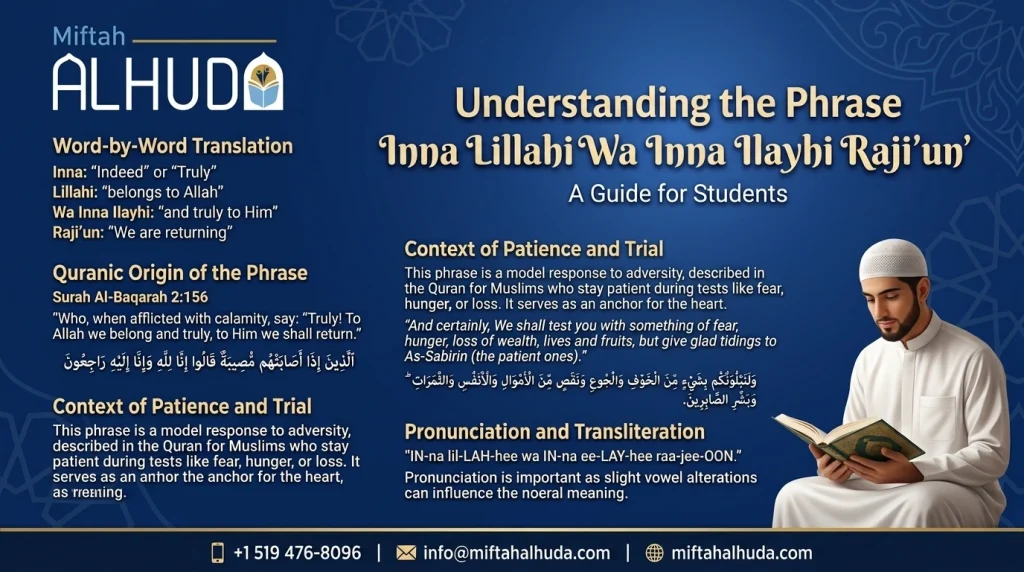
Pronunciation and Transliteration
The phrase is transliterated as Inna Lillahi Wa Inna Ilayhi Raji’un (also written Inna lillahi wa inna ilayhi raajioon). The pronunciation is essentially as follows: “IN-na lil-LAH-hee wa IN-na ee-LAY-hee raa-jee-OON.” Pronunciation is important in Arabic because slight vowel alterations can influence meaning.
Word-by-Word Translation
Broken down, the phrase reveals like this:
- Inna: “Indeed” or “Truly”.
- Lillahi – “belongs to Allah” (from “li” meaning “to/for” and “Allah”).
- Wa – “and” Inna Ilayhi – “truly to Him”.
- Raji’un: “We are returning”.
It says as follows: “Indeed, we belong to Allah, and we are returning to Him.”
The Quranic Origin of the Phrase
Surah Al-Baqarah 2:156:
Who, when afflicted with calamity, say: “Truly! To Allah we belong and truly, to Him we shall return.”
الَّذِينَ إِذَا أَصَابَتْهُم مُّصِيبَةٌ قَالُوا إِنَّا لِلَّهِ وَإِنَّا إِلَيْهِ رَاجِعُونَ.
This phrase is not a folk saying; it is taken directly from the Quran. It appears in Surah Al-Baqarah, where Muslims who stay patient during adversity are described as replying to disaster with this same proclamation.
The Context of Patience and Trial
The verse is part of a larger passage that discusses tests of fear, hunger, loss of wealth, loss of life, and crop failure. The Quran portrays these trials as unavoidable aspects of human existence, and the phrase serves as a model response, providing an anchor for the heart when the ground feels unstable.
“And certainly, We shall test you with something of fear, hunger, loss of wealth, lives and fruits, but give glad tidings to As-Sabirin (the patient ones, etc.).”
وَلَنَبْلُوَنَّكُم بِشَيْءٍ مِّنَ الْخَوْفِ وَالْجُوعِ وَنَقْصٍ مِّنَ الْأَمْوَالِ وَالْأَنفُسِ وَالثَّمَرَاتِ ۗ وَبَشِّرِ الصَّابِرِينَ.
What the Surrounding Verses Teach ?
Following this declaration, the next verse portrays those who say it as getting blessings and compassion from their Creator and being counted among the wisely guided. This context changes the words from a passive expression of sadness to an active act of faith.
They are those on whom are the Salawat (i.e. blessings, etc.) (i.e. who are blessed and will be forgiven) from their Lord, and (they are those who) receive His Mercy, and it is they who are the guided-ones.
أُولَٰئِكَ عَلَيْهِمْ صَلَوَاتٌ مِّن رَّبِّهِمْ وَرَحْمَةٌ ۖ وَأُولَٰئِكَ هُمُ الْمُهْتَدُونَ.
The Core Meaning

Everything Belongs to Allah
At its core, the term is an assertion of ownership. Nothing a person owns is genuinely theirs, including health, money, family, and life itself. A greater source holds everything in trust.
Reframing Life and Death
According to this viewpoint, death is not the end, but rather a return to the source of creation. This does not eradicate grief, but rather places it within a larger, valuable perspective.
Connection to Tawakkul (Trust in Allah)
The expression is closely related to the larger Islamic concept of tawakkul, or total trust in Allah’s wisdom. Saying it’s an active surrender not resignation, but trust that whatever happened is part of a greater purpose than what we can see in the present.
When Muslims Say This Phrase ?
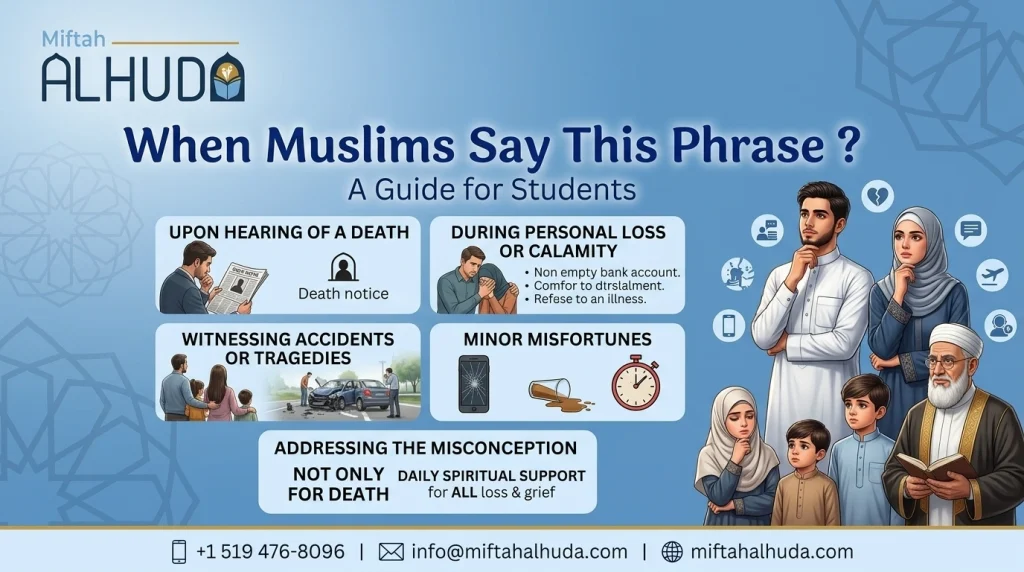
Upon Hearing of a Death
The most prevalent use is when someone passes ,whether a family member, a friend, or even a stranger whose death is reported in the news.
During Personal Loss or Calamity
Beyond death, the expression is used during illness, financial loss, natural disasters, or any other serious adversity that upsets a person’s sense of stability.
Witnessing Accidents or Tragedies
Even if the loss does not directly affect the speaker, such as a car accident on the road or a tragedy reported from another country, many Muslims will use the phrase to convey support and reflection.
Minor Misfortunes
Scholars point out that the phrase can refer to even minor setbacks: a shattered phone, a spilled drink, or a missed flight. Anything that indicates loss, no matter how tiny, can prompt this declaration as a reminder of life’s impermanence.
Addressing the Misconception That It’s Only for Death
One of the most popular misconceptions is that this phrase is only used as a “death phrase.” In truth, its reach encompasses all types of loss or grief, making it a daily spiritual support rather than a rare, solemn recital.
The Etiquette (Adab) of Saying It
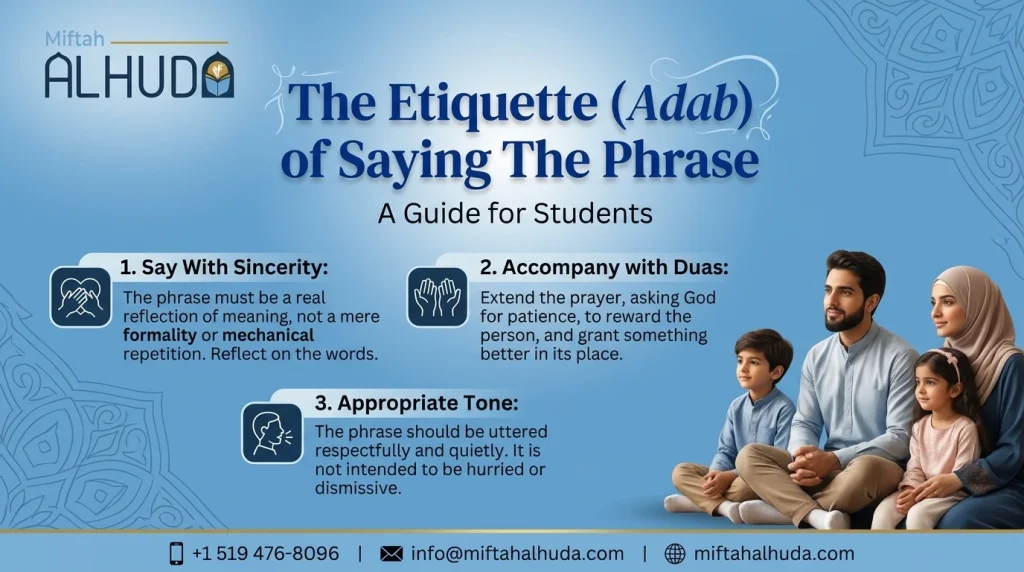
Saying It With Sincerity
The phrase should never be said as a mere formality. Its impact comes from real reflection on the meaning of the words, not mechanical repetition.
Recommended Accompanying Duas
Many scholars recommend pairing the phrase with an extended prayer to God, asking Him to reward the person for their patience and to grant something better in place of what was lost.
Appropriate Tone and Demeanor
Whether it’s a somber occasion or a modest personal setback, the phrase is usually uttered quietly and respectful. It is not intended to be hurried or dismissive.
4 Spiritual Benefits of Reciting “Inna Lillahi Wa Inna Ilayhi Raji’un”
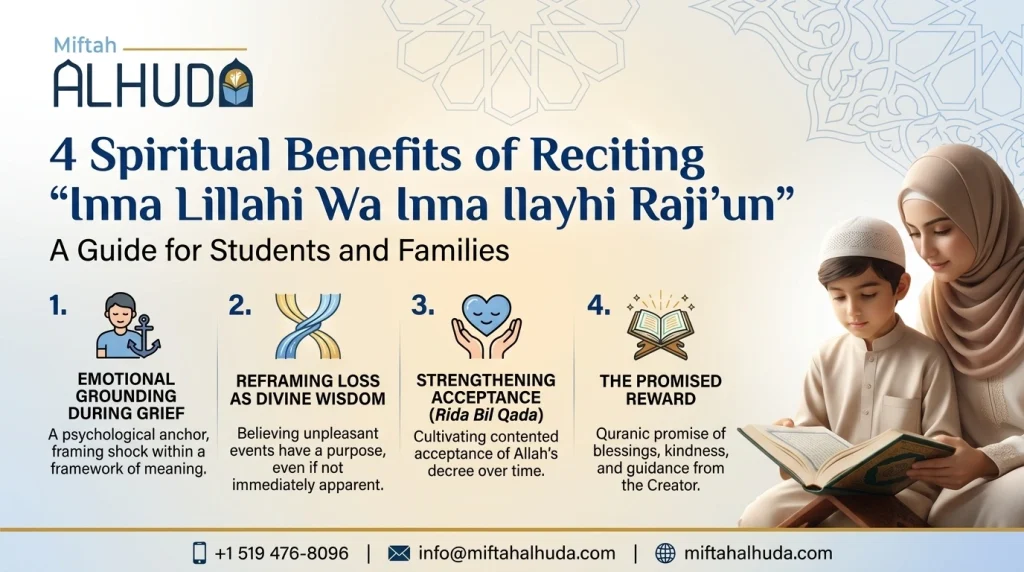
-
Emotional Grounding During Grief
For many people, stating the phrase gives an immediate psychological anchor, allowing them to process shock and suffering within a framework of meaning rather than chaos.
-
Reframing Loss as Divine Wisdom
The expression urges people to believe that even unpleasant events have a purpose, even if it isn’t immediately apparent.
-
Strengthening Acceptance (Rida Bil Qada)
Repeated recitation, particularly during adversity, is supposed to cultivate rida, or contented acceptance of Allah’s decree, over time.
-
The Promised Reward
According to the Quranic passage from which this phrase is derived, persons who respond to difficulties in this manner are said to get blessings, kindness, and guidance from their Creator.
What Comes After: The Full Prophetic Practice
Hadith References and The Promise of a Better Replacement
Umm Salama, the wife of the Messenger of Allah (ﷺ), reported Allah’s Messenger (ﷺ) as saying:
If any servant (of Allah) who suffers a calamity says:” We belong to Allah and to Him shall we return; O Allah, reward me for my affliction and give me something better than it in exchange for it,” ‘ Allah will give him reward for affliction, and would give him something better than it in exchange. She (Umm Salama) said: When Abu Salama died. I uttered (these very words) as I was commanded (to do) by the Messenger of Allah (ﷺ). So Allah gave me better in exchange than him. i. e. (I was taken as the wife of) the Messenger of Allah (ﷺ). Sahih Muslim 918b
Narrated Umm Salamah:
The Messenger of Allah (ﷺ) as saying: When one of you is afflicted with a calamity, he should say: “We belong to Allah, and to Him we do return.” O Allah, I expect reward from Thee from this affliction, so give me reward for it, and give me a better compensation. Sahih (Al-Albani)
Common Situations and Real-Life Examples
At a Funeral or Janazah
The phrase is frequently repeated throughout funeral proceedings, both individually and collectively.
Informing Others of a Death
When someone shares news of a death, it is usual to begin or end the message with this declaration.
In Written Condolence Messages
The phrase is commonly used in text messages, obituaries, and social media posts as a polite approach to express loss.
In Everyday Hardships
opportunity, many Muslims adopt the phrase into their daily conversation as a spiritual reaction.
Common Misconceptions and Mistakes
Believing It’s Only for Death
As previously discussed, this is one of the most common misconceptions: the phrase refers to any loss, not just death.
Reciting Without Understanding
Saying the words without understanding their significance turns the declaration into an empty ritual rather than a real act of faith.
Mispronunciations That Alter Meaning
Because Arabic relies greatly on perfect pronunciation, incorrect recitation can affect the phrase’s intended meaning.
How to Teach This Phrase to Children and New Muslims?
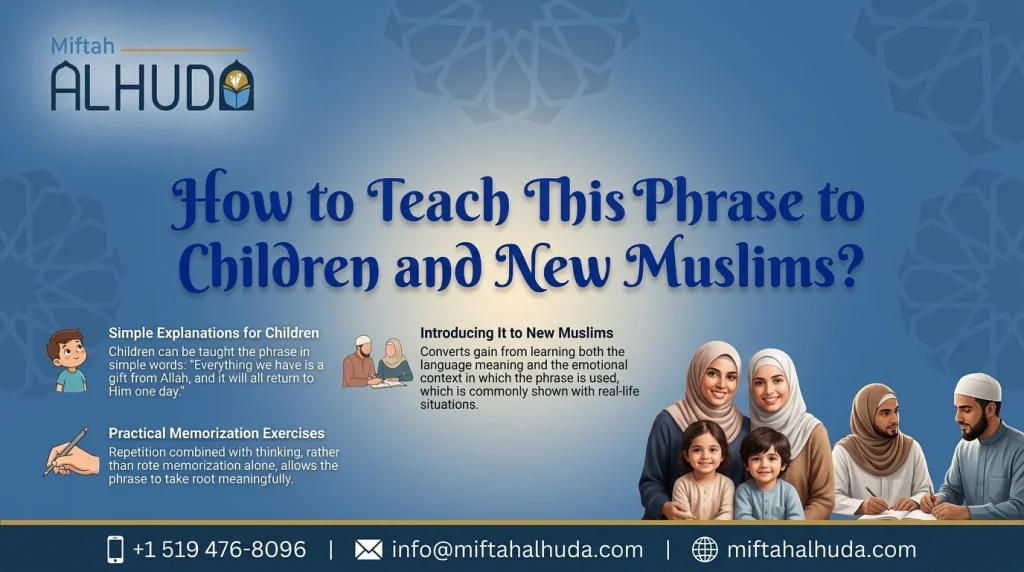
Simple Explanations for Children
Children can be taught the phrase in simple words: “Everything we have is a gift from Allah, and it will all return to Him one day.”
Introducing It to New Muslims
Converts gain from learning both the language meaning and the emotional context in which the phrase is used, which is commonly shown with real-life situations.
Practical Memorization Exercises
Repetition combined with thinking, rather than rote memorization alone, allows the phrase to take root meaningfully.
Conclusion
“Inna Lillahi Wa Inna Ilayhi Raji’un” is more than just a tragic phrase. It serves as a reminder that nothing in this life is actually possessed, and every ending is, in fact, a return. Saying it mindfully rather than habitually can turn periods of loss into moments of thought, trust, and even calm tranquility.
Whether muttered at a funeral, emailed in a sympathy letter, or murmured after a little daily setback, these words contain an invitation: to hold life gently, to release what must be released, and to believe in the return to our creator.
Turn Knowledge into Lifelong Practice
Understanding the depth of “Inna Lillahi Wa Inna Ilayhi Raji’un” is just the beginning of building true spiritual resilience.
At Miftah Al-Huda Academy, we help you connect deeply with the Quran’s language, meanings, and daily prophetic practices. Take the next step in your spiritual journey today.
Contact Us
- WhatsApp: +1 519 476-8096
- E-Mail: in**@**********da.com
- Facebook: https://www.facebook.com/MiftahAlhudaOfficial
- Instagram: https://www.instagram.com/miftahalhudaa
- Youtube: https://www.youtube.com/@MiftahAl-huda
- Tiktok: https://www.tiktok.com/@miftahalhuda00
Frequently Asked Questions
1. Is there a mandatory response when hearing “Inna Lillahi Wa Inna Ilayhi Raji’un”?
No, there is no required verbal response. However, it is common and recommended to react with a prayer for the departed or the afflicted, such as “May Allah grant you patience” or “May Allah have mercy on them.”
2. Can a menstruating woman recite it?
Yes, repeating this phrase with the goal of Dhikr (remembrance), supplication, or responding to a disaster is quite permitted.
3. Are there places where reciting it is forbidden?
Yes. To respect Allah’s names and the Quranic text, it should not be said in bathrooms, restrooms, or any other structurally impure places.
4. Is it sinful to cry excessively while saying it?
No, natural crying and shedding tears are expressions of human mercy and grief that are acceptable. It is only sinful when accompanied by wailing, screaming, or questioning Allah’s decree.
5. How did the Sahabah implement it during communal crises?
The Companions used this phrase to promote public stability. During plagues, famines, and military setbacks, they repeated it as a group to shift the community’s mindset from panic and despair to structural patience and divine trust.