
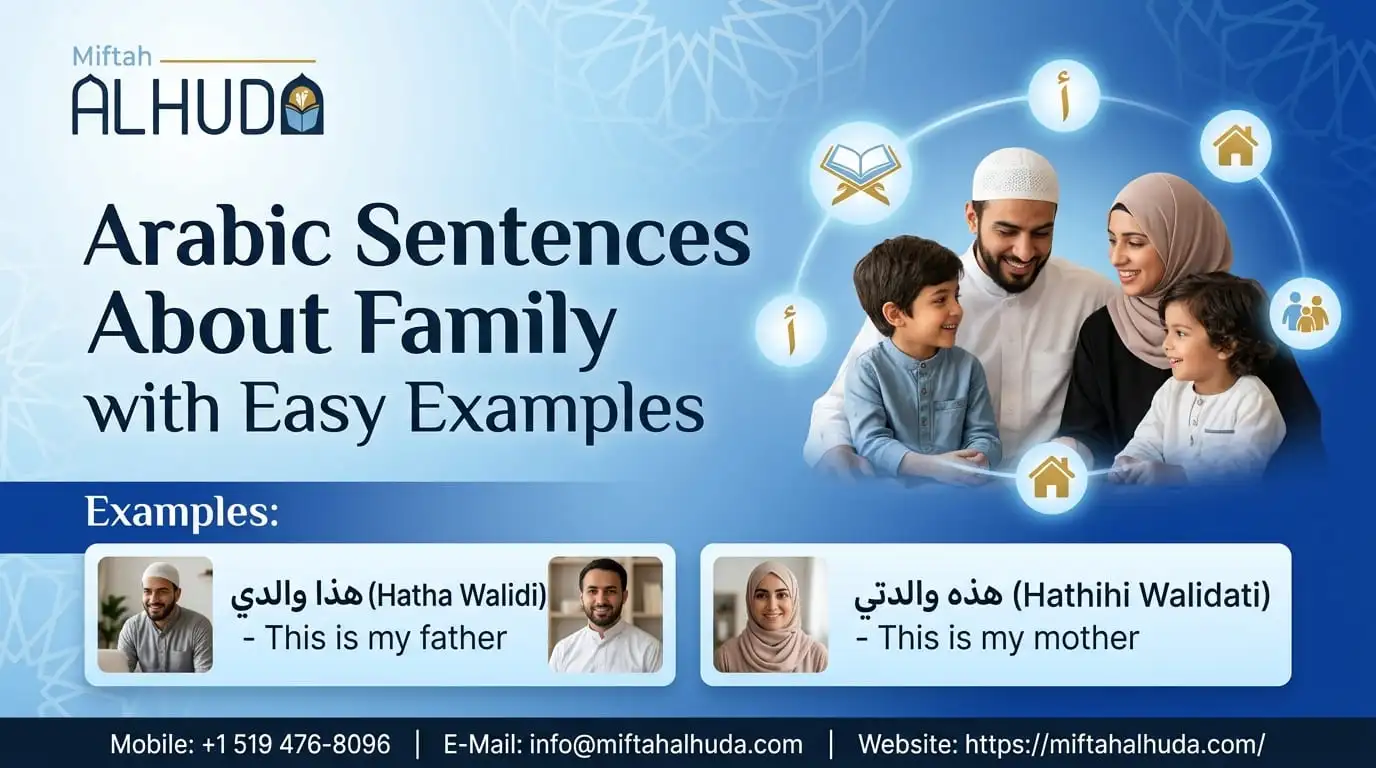
Arabic sentences about family vocabulary are some of the quickest means to start talking in the Arabic language. The first thing you’d probably ask someone who you met for the first time whether you are talking to your classmate, neighbor or any native speaker from the Internet, would be family.
This guide doesn’t rely on a large list of words, but rather on complete and complete sentences that you can start speaking as soon as you begin studying the language.
You will now find simple sentences, questions, vocabulary and short paragraphs about family, with Arabic translations and easy transliterations, which you will be able to read even before you learn Arabic script.
Arabic Sentences About Family for Beginners
If you can only remember a few phrases, go with these. They explain the most frequently used expression patterns in everyday Arabic related to family.
| Arabic | Transliteration | English |
| عائلتي كبيرة | A’ilati kabirah | My family is big |
| هذه أمي | Hadhihi ummi | This is my mother |
| هذا أبي | Hadha abi | This is my father |
| عندي أخ وأخت | Indi akh wa ukht | I have a brother and a sister |
| أحب عائلتي | Uhibbu a’ilati | I love my family |
You already have five sentences to help you start an introduction. Continue reading and add to them using additional Arabic sentences pertaining to family in various scenarios.
Basic Arabic sentences that are related to family.
After some initial knowledge, you can move on to a more extensive description of your family life.
Simple Sentences About Your Family
The following are short sentences that are easy to learn and practice in the real world:
عائلتي كبيرة (A’ilati kabirah) – My family is big
عائلتي صغيرة (A’ilati saghirah) – My family is small
عندي عائلة صغيرة (Indi a’ilah saghirah) – I have a small family
أعيش مع عائلتي (A’ishu ma’a a’ilati) – I live with my family
أحب عائلتي كثيرا (Uhibbu a’ilati kathiran) – I love my family very much
تعيش عائلتي في القاهرة (Ta’ishu a’ilati fil Qahirah) – My family lives in Cairo
في عائلتي خمسة أفراد (Fi a’ilati khamsah afrad) – There are five people in my family
See how each sentence has the same basic structure. If you master one, it will be easy to create the rest independently.
Sentences for Introducing Your Family
When you meet someone you’re looking to connect with others in the space, these phrases should come in handy.
هذا أبي (Hadha abi) – This is my father
هذه أمي (Hadhihi ummi) – This is my mother
هذا أخي (Hadha akhi) – This is my brother
هذه أختي (Hadhihi ukhti) – This is my sister
هؤلاء والداي (Ha’ula’ walidaya) – These are my parents
عندي أخوان (Indi akhawan) – I have two brothers
عندي أخت واحدة (Indi ukht wahidah) – I have one sister
Arabic Sentences About Family Members
This section divides family sentences into the following categories: relationship, allowing you to concentrate on the family members that are most relevant to your own discussions.
Sentences About Parents
أبي طبيب (Abi tabib) – My father is a doctor
أمي تعمل في مدرسة (Ummi ta’malu fi madrasah) – My mother works at a school
والداي يعيشان في دبي (Walidaya ya’ishani fi Dubai) – My parents live in Dubai
أبي يحب القراءة (Abi yuhibbu al-qira’ah) – My father loves reading
Sentences About Brothers and Sisters
أخي أكبر مني (Akhi akbaru minni) – My brother is older than me
أختي أصغر مني (Ukhti asgharu minni) – My sister is younger than me
عندي ثلاثة إخوة (Indi thalathatu ikhwah) – I have three siblings
أخي طالب في الجامعة (Akhi talibun fil jami’ah) – My brother is a university student
Sentences About Children
عندي ابن وابنة (Indi ibnun wa ibnah) – I have a son and a daughter
ابني يدرس العربية (Ibni yadrusu al-arabiyyah) – My son studies Arabic
ابنتي تحب الرسم (Ibnati tuhibbu ar-rasm) – My daughter loves drawing
Sentences About Grandparents
جدي كبير في السن (Jaddi kabirun fis-sinn) – My grandfather is elderly
جدتي تطبخ جيدا (Jaddati tatbukhu jayyidan) – My grandmother cooks well
أزور جدي وجدتي كل أسبوع (Azuru jaddi wa jaddati kulla usbu’) – I visit my grandfather and grandmother every week
Sentences about extended family in Arabic.
The Arabic names for extended family are very exact and the more you know them, the more natural family sentences in Arabic will sound.
Sentences of Aunts and Uncles.
Arabic separates relatives on the father’s side from relatives on the mother’s side.
عمي يعيش في الأردن (Ammi ya’ishu fil Urdun) – My paternal uncle lives in Jordan (amm)
عمتي تحب الطبخ (Ammati tuhibbu at-tabkh) – My paternal aunt loves cooking (ammah)
خالي يعمل مهندسا (Khali ya’malu muhandisan) – My maternal uncle works as an engineer (khal)
خالتي تسكن قريبا مني (Khalati taskunu qariban minni) – My maternal aunt lives near me (khalah)
Sentences About Cousins
ابن عمي يدرس الطب (Ibnu ammi yadrusu at-tibb) – My paternal cousin studies medicine
بنت خالتي صديقتي المفضلة (Bintu khalati sadiqati al-mufaddalah) – My maternal cousin is my favorite friend.
Each of these terms helps more when used in conjunction with a sentence rather than simply memorized.
Arabic Sentences for Describing Your Family
After you have presented your relatives to them, the next step is to tell them more about your family.
Talking About Family Size
عائلتي كبيرة (A’ilati kabirah) – My family is big
في عائلتي أربعة أفراد (Fi a’ilati arba’atu afrad) – There are four people in my family
عندي أخوان وأخت (Indi akhawani wa ukht) – I have two brothers and one sister
Talking About Family Members’ Jobs
أبي مهندس (Abi muhandis) – My father is an engineer
أمي معلمة (Ummi mu’allimah) – My mother is a teacher
أخي طالب (Akhi talib) – My brother is a student
أختي تعمل في مستشفى (Ukhti ta’malu fi mustashfa) – My sister works in a hospital
Talking About Where Your Family Lives
تعيش عائلتي في مصر (Ta’ishu a’ilati fi Misr) – My family lives in Egypt
والداي يعيشان في القاهرة (Walidaya ya’ishani fil Qahirah) – My parents live in Cairo
أخي يعيش في دبي (Akhi ya’ishu fi Dubai) – My brother lives in Dubai
Talking About Family Activities
نأكل العشاء معا (Na’kulu al-asha’a ma’an) – We eat dinner together
نزور جدي وجدتي (Nazuru jaddi wa jaddati) – We visit our grandparents
تسافر عائلتي معا (Tusafiru a’ilati ma’an) – My family travels together
Arabic Questions About Family
Being able to ask about someone’s family is just as useful as talking about your own.
How to Ask About Someone’s Family in Arabic
كم عدد أفراد عائلتك؟ (Kam adadu afradi a’ilatik?) – How many people are in your family?
هل عندك إخوة؟ (Hal indaka ikhwah?) – Do you have siblings?
أين تعيش عائلتك؟ (Ayna ta’ishu a’ilatuk?) – Where does your family live?
هل أنت متزوج؟ (Hal anta mutazawwij?) – Are you married?
هل عندك أولاد؟ (Hal indaka awlad?) – Do you have children?
Common Answers About Family
عندي ثلاثة إخوة (Indi thalathatu ikhwah) – I have three siblings
عائلتي تعيش في مصر (A’ilati ta’ishu fi Misr) – My family lives in Egypt
نعم، عندي ابن واحد (Na’am, indi ibnun wahid) – Yes, I have one son
Together you can practice these questions and answers and make vocabulary a true, alive conversation.
Useful Arabic Family Vocabulary
It is still useful to have a short vocabulary reference along with your sentences, particularly when researching words.
| English | Arabic | Transliteration |
| Family | عائلة | A’ilah |
| Father | أب | Ab |
| Mother | أم | Umm |
| Brother | أخ | Akh |
| Sister | أخت | Ukht |
| Son | ابن | Ibn |
| Daughter | ابنة / بنت | Ibnah / Bint |
Extended Family Members
Grandfather: جد (Jadd)
Grandmother: جدة (Jaddah)
Paternal uncle: عم (Amm)
Paternal aunt: عمة (Ammah)
Maternal uncle: خال (Khal)
Maternal aunt: خالة (Khalah)
Cousin: ابن عم / بنت عم / ابن خال / بنت خال
Husband: زوج (Zawj)
Wife: زوجة (Zawjah)
Relatives: أقارب (Aqarib)
You may also come across the word أسرة (usrah), which is often used for the immediate household, while عائلة (a’ilah) can refer to the wider family.
Creating simple sentences with words from Arabic language.
Rather than just repeating examples, you can learn the patterns in the examples and create your own sentences.
Use of ‘My’ with Family Words
The Arabic letter ي is suffixed to a word to indicate “my”:
أبي (abi) – my father
أمي (ummi) – my mother
أخي (akhi) – my brother
أختي (ukhti) – my sister
عائلتي (a’ilati) – my family
Explore the use of the “I Have” language to discuss family.
The word عندي (indi) means “I have” and is used with any of the family members:
أخي Akhī, my brother
Use some other family words to create your own sentences.
Using Simple Adjectives to Describe Family
There are a couple of adjectives for describing family in Arabic:
كبير / كبيرة (kabir / kabirah) – big
صغير / صغيرة (saghir / saghirah) – small
سعيد / سعيدة (sa’id / sa’idah) – happy
قريب / قريبة (qarib / qaribah) – close, nearby
متزوج / متزوجة (mutazawwij / mutazawwijah) – married
Short Paragraph about my family in Arabic.
Here is a very basic paragraph that is easy to modify with your own information.
اسمي أحمد. عندي عائلة صغيرة. في عائلتي أربعة أفراد. أبي مهندس. أمي معلمة. عندي أخ واحد. نعيش في القاهرة.
Ismi Ahmad. Indi a’ilah saghirah. Fi a’ilati arba’atu afrad. Abi muhandis. Ummi mu’allimah. Indi akhun wahid. Na’ishu fil Qahirah.
My name is Ahmad. I have a small family. There are four people in my family. My father is an engineer. My mother is a teacher. I have one brother. We live in Cairo.
This paragraph can be used as an easy exercise for the students to speak it with their own name, family size and details.
Arabic Family Sentences to use with everyday conversation
Real conversations don’t just end after a few words of “hi” and “hello. Below are some typical scenarios in which sentences are used in family settings.
At a Social Gathering, one speaks about one’s family.
هذه عائلتي (Hadhihi a’ilati) – This is my family
تفضل، هذا أبي وهذه أمي (Tafaddal, hadha abi wa hadhihi ummi) – Please, this is my father and this is my mother
Talking About Family With an Arabic Speaker
أريد أن أخبرك عن عائلتي (Uridu an ukhbiraka an a’ilati) – I want to tell you about my family
هل تريد أن تعرف عن عائلتي؟ (Hal turidu an ta’rifa an a’ilati?) – Would you like to know about my family?
Talking About Family Photos
هذه صورة عائلتي (Hadhihi surat a’ilati) – This is a photo of my family
هذا أخي في هذه الصورة (Hadha akhi fi hadhihi as-surah) – This is my brother in this photo
Asking About Someone’s Relatives
هل هذا عمك؟ (Hal hadha ammuk?) – Is this your uncle?
هل هذه خالتك؟ (Hal hadhihi khalatuk?) – Is this your aunt?
Some tips on practicing Arabic sentences about family.
Say each sentence out loud, rather than in your mind.
Use real names, real occupations, real locations instead of names, jobs, cities.
Read Arabic script and the transliteration.
Write a short paragraph about your family and read it each day.
Have a study partner ask the family the questions and together fill in the answers.
Look at the vocabulary table before going on to new sentence patterns
Small, regular sessions are better than one big session.
Our Arabic courses provide in-depth instruction on sentence construction, grammar, and speaking skills, so if you prefer instruction rather than self-study, they are for you.
Need some guidance and direction on where to begin? A free trial session is available and a customizable plan is available depending on the individual’s level.
Contact Us
WhatsApp: +1 519 476-8096
E-Mail: in**@**********da.com
Facebook: https://www.facebook.com/MiftahAlhudaOfficial
Instagram: https://www.instagram.com/miftahalhudaa
Youtube: https://www.youtube.com/@MiftahAl-huda
Tiktok: https://www.tiktok.com/@miftahalhuda00“.
FAQs
How do you say “family” in Arabic?
Family is عائلة (a’ilah). You may also hear أسرة (usrah) used for the immediate household.
How do you say “my family” in Arabic?
“My family” is عائلتي (a’ilati).
How do you introduce your family in Arabic?
Use simple sentences like هذا أبي (this is my father) or هذه أختي (this is my sister), then add عائلتي كبيرة or عائلتي صغيرة to describe its size.
How do you ask “How many people are in your family?
” in Arabic? Say كم عدد أفراد عائلتك؟ (Kam adadu afradi a’ilatik?).
What are the Arabic words for family members?
The core words are أب (father), أم (mother), أخ (brother), أخت (sister), ابن (son), and ابنة (daughter), with جد and جدة for grandparents.
How do you say “I love my family” in Arabic?
Say أحب عائلتي (Uhibbu a’ilati).