
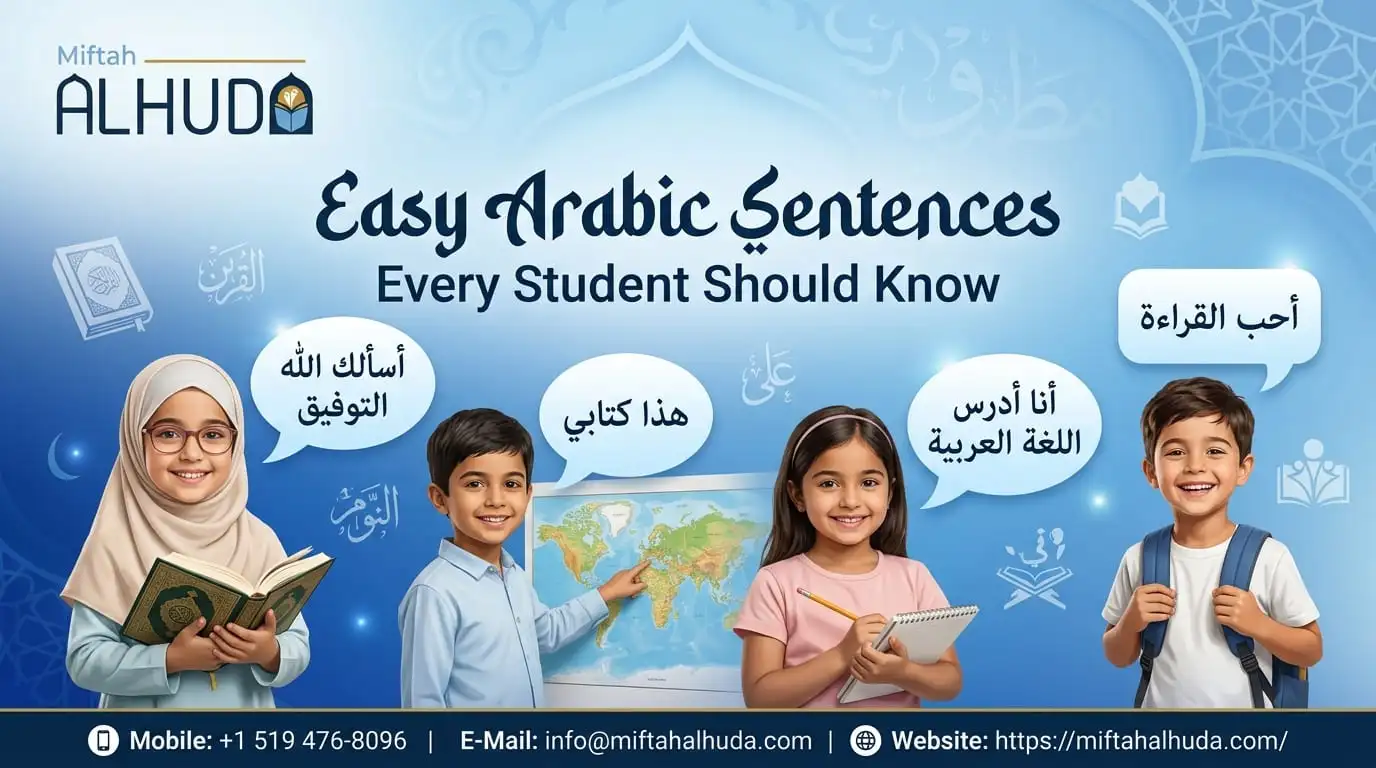
When learning a new language, it’s always about the little bits you need and can use. When you’re on the hunt for Arabic sentences for students, you’re likely seeking phrases that can help you in class, while doing your homework, at the time of an exam, or just when you’re talking to a teacher or classmate.
This guide combines the most useful Arabic sentences in students’ life in real situations to help students use Arabic immediately rather than memorizing random words.
In school, at university or with private study, these sentences are presented in Modern Standard Arabic (MSA), translated into English and with a simple pronunciation. This is beneficial to everyone from the absolute beginner to those requiring a quick review before a lesson or exam.
Useful Arabic Sentences for Students
All learners must have a point of origin. These are general Arabic sentences that can be used in any classroom or study situation, from introducing yourself to discussing your studies and seeking assistance.
| English | Arabic | Pronunciation |
| I am a student. | أنا طالب / أنا طالبة | Ana talib / Ana taliba |
| I am studying Arabic. | أنا أدرس العربية | Ana adrusu al arabiyyah |
| I don’t understand. | أنا لا أفهم | Ana la afham |
| Can you help me? | هل يمكنك مساعدتي؟ | Hal yumkinuka musa’adati? |
| I have a question. | لدي سؤال | Ladayya su’al |
Here are some suggestions to remember when you use these sentences:
Read aloud as opposed to silently.
Identify the difference between male and female forms, e.g. طالب and طالبة.
Use one word in each sentence to create a new sentence.
Arabic Classroom Sentences for Students
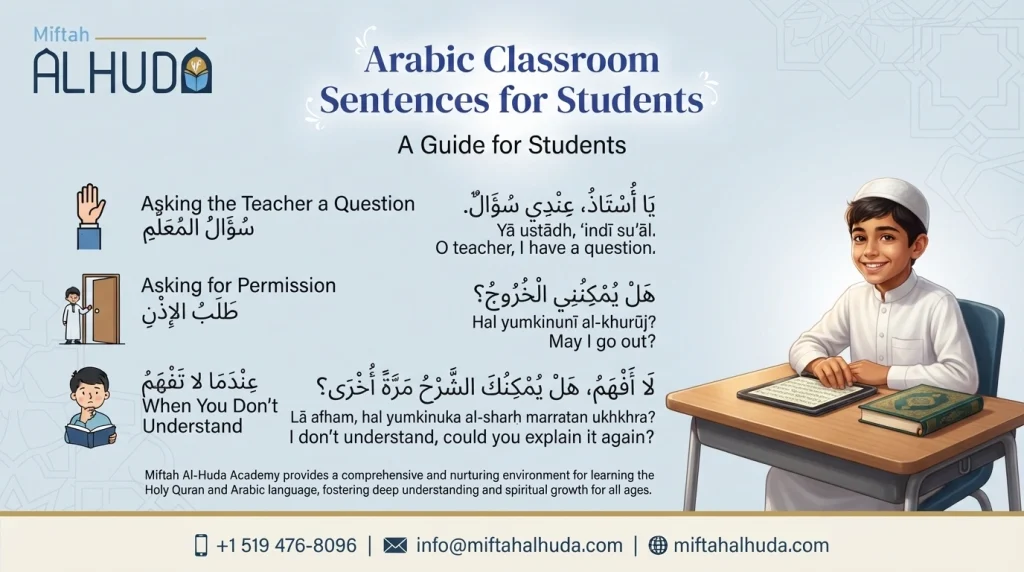
One of the most frequent ways one would look up Arabic sentences for students is classroom scenarios. The phrases are used for asking questions from the teacher, asking permission, and in situations where the teacher’s lesson is unclear.
Asking the Teacher a Question
Can you explain this? هل يمكنك أن تشرح هذا؟ (Hal yumkinuka an tashraha hatha?)
What does this word mean? ماذا تعني هذه الكلمة؟ (Matha ta’ni hathihi al-kalima?)
Can you repeat that? هل يمكنك أن تعيد ذلك؟ (Hal yumkinuka an tu’id thalik?)
How do I say this in Arabic? كيف أقول هذا بالعربية؟ (Kayfa aqulu hatha bil arabiyyah?)
Can I ask a question? هل يمكنني أن أسأل سؤالا؟ (Hal yumkinuni an as’ala su’alan?)
Asking for Permission
May I come in? هل يمكنني الدخول؟ (Hal yumkinuni al-dukhul?)
May I leave? هل يمكنني المغادرة؟ (Hal yumkinuni al-mughadara?)
May I go to the bathroom? هل يمكنني الذهاب إلى الحمام؟ (Hal yumkinuni al-thahab ila al-hammam?)
Can I open the window? هل يمكنني فتح النافذة؟ (Hal yumkinuni fath al-nafitha?)
Can I use your book? هل يمكنني استخدام كتابك؟ (Hal yumkinuni istikhdam kitabik?)
When You Don’t Understand
I don’t understand. لا أفهم (La afham)
I don’t understand this lesson. لا أفهم هذا الدرس (La afham hatha al-dars)
Could you explain it again? هل يمكنك أن تشرحه مرة أخرى؟ (Hal yumkinuka an tashrahahu marra ukhra?)
Could you speak slowly? هل يمكنك التحدث ببطء؟ (Hal yumkinuka al-tahaduth bibut’?)
Can you give me an example? هل يمكنك أن تعطيني مثالا؟ (Hal yumkinuka an tu’tiyani mithalan?)
The Arabic classroom sentences that you will end up using most frequently are based on the day-to-day interactions between students and teachers.
Arabic Sentences About Studying
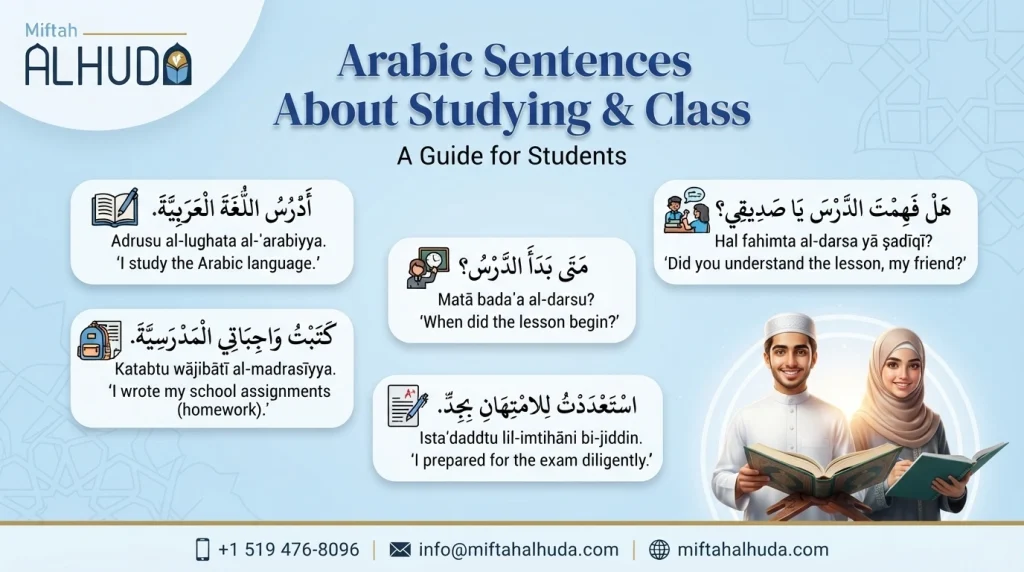
Beyond the classroom, students often need to talk about their study routine, their subjects, and their homework. This section of Arabic sentences for students focuses on daily study life.
Discuss Academic Activities
I am a student. أنا طالب (Ana talib)
I study Arabic. أدرس العربية (Adrusu al arabiyyah)
I am studying at school. أدرس في المدرسة (Adrusu fil madrasa)
I have an Arabic class today. لدي حصة عربية اليوم (Ladayya hissa arabiyyah al-yawm)
I like studying Arabic. أحب دراسة العربية (Uhibbu dirasat al arabiyyah)
Talking About Homework
I have homework. لدي واجب (Ladayya wajib)
I finished my homework. أنهيت واجبي (Anhaytu wajibi)
I haven’t finished my homework. لم أنهِ واجبي (Lam unhi wajibi)
When is the homework due? متى موعد تسليم الواجب؟ (Mata maw’id taslim al-wajib?)
Can you help me with my homework? هل يمكنك مساعدتي في واجبي؟ (Hal yumkinuka musa’adati fi wajibi?)
Sentences About School and Classes in Arabic
There are words and brief phrases that are repeated throughout the day in school. These Arabic sentences are essential to make school life easier.
Discussing Your Class
My class starts at eight. تبدأ حصتي في الساعة الثامنة (Tabda’u hissati fil sa’a al-thamina)
The lesson is easy. الدرس سهل (Al-dars sahl)
The lesson is difficult. الدرس صعب (Al-dars sa’b)
Where is the classroom? أين الفصل؟ (Ayna al-fasl?)
The teacher is in the classroom. المعلم في الفصل (Al-mu’allim fil fasl)
Talking to Classmates
Can you help me? هل يمكنك مساعدتي؟ (Hal yumkinuka musa’adati?)
What page are we on? في أي صفحة نحن؟ (Fi ayy safha nahnu?)
What is the answer? ما هي الإجابة؟ (Ma hiya al-ijaba?)
Did you finish the exercise? هل أنهيت التمرين؟ (Hal anhayta al-tamrin?)
Let’s study together. لندرس معا (Linadrus ma’an)
Arabic Sentences for Exams and Tests
Vocabulary for the test. Here are some Arabic sentences that will help you speak about tests and seek clarification and cope with exam stress in Arabic.
I have an exam today. لدي امتحان اليوم (Ladayya imtihan al-yawm)
When is the exam? متى الامتحان؟ (Mata al-imtihan?)
I am ready for the exam. أنا مستعد للامتحان (Ana musta’id lil imtihan)
I don’t know the answer. لا أعرف الإجابة (La a’rif al-ijaba)
Can you explain the question? هل يمكنك أن تشرح السؤال؟ (Hal yumkinuka an tashraha al-su’al?)
I need more time. أحتاج إلى وقت أكثر (Ahtaju ila waqt akthar)
I finished the exam. أنهيت الامتحان (Anhaytu al-imtihan)
This section is added to many general phrase lists, as exams and tests are almost a part of every student’s life.
Arabic Sentences for University Students
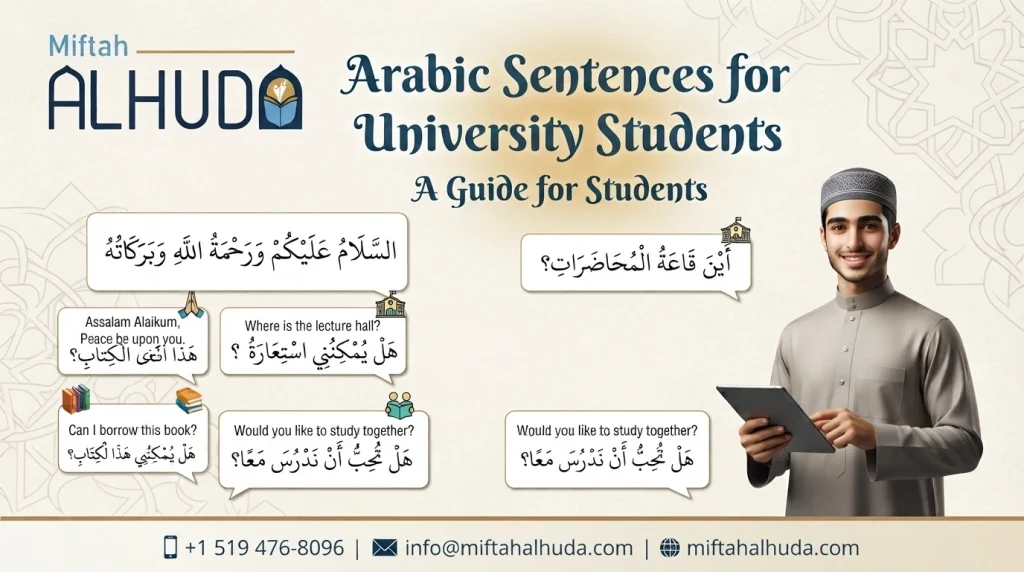
Life at University presents other scenarios. These phrases will be more relevant when you are looking for some Arabic phrases for college or university students.
university جامعة (jami’a)
major تخصص (takhassus)
course مقرر (muqarrar)
professor أستاذ (ustath)
lecture محاضرة (muhadara)
assignment واجب (wajib)
project مشروع (mashru’)
Useful University Conversations
What is your major? ما هو تخصصك؟ (Ma huwa takhassusuk?)
Which course are you taking? ما المقرر الذي تأخذه؟ (Ma al-muqarrar allathi ta’khuthuhu?)
When is the lecture? متى المحاضرة؟ (Mata al-muhadara?)
Where is the lecture hall? أين قاعة المحاضرات؟ (Ayna qa’at al-muhadarat?)
Did you attend the lecture? هل حضرت المحاضرة؟ (Hal hadarta al-muhadara?)
When is the assignment due? متى موعد تسليم المشروع؟ (Mata maw’id taslim al-mashru’?)
A series of polite Arabic sentences for students to learn.
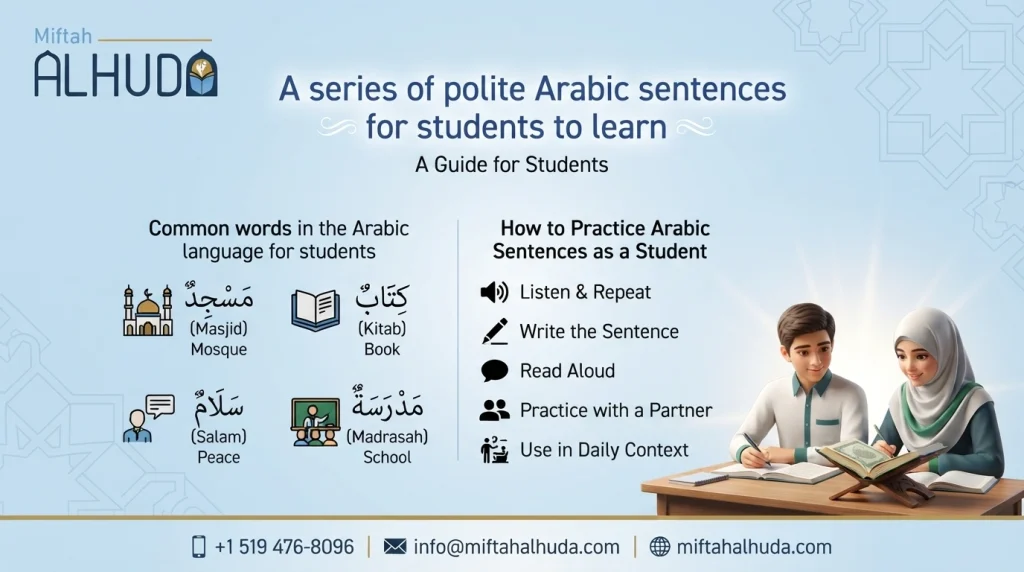
When it comes to the classroom, whether it’s a language class, a university hall, or an online lesson, it’s a safe bet to say that politeness is important. These mini-sentences complete your collection of Arabic sentences for students and make you seem respectful to your teachers and classmates.
Please. من فضلك (Min fadlik)
Thank you. شكرا (Shukran)
You’re welcome. عفوا (Afwan)
Excuse me. عذرا (Uthran)
I’m sorry. أنا آسف (Ana asif)
Could you help me? هل يمكنك مساعدتي؟ (Hal yumkinuka musa’adati?)
Could you repeat that, please? هل يمكنك إعادة ذلك من فضلك؟ (Hal yumkinuka i’adat thalik min fadlik?)
These are polite words that you will use frequently with the teacher, professors, staff, and classmates, so it is best to memorize them early.
Common words in the Arabic language for students.
Once you have mastered the basic building blocks, a short vocabulary table will help you to create new sentences on your own.
| Arabic | English |
| طالب | student (male) |
| طالبة | student (female) |
| مدرسة | school |
| جامعة | university |
| فصل | classroom |
| درس | lesson |
| معلم | teacher (male) |
| معلمة | teacher (female) |
| أستاذ | professor |
| كتاب | book |
| دفتر | notebook |
| قلم | pen |
| واجب | homework |
| امتحان | exam |
| سؤال | question |
| إجابة | answer |
| دراسة | study |
| مادة | subject |
| محاضرة | lecture |
How to Practice Arabic Sentences as a Student
Once you know a list of sentences, it’s the first step. The key to making vocabulary into real Arabic conversation skills is practice.
Read each sentence out loud rather than silently as it will help with pronunciation.
Create examples of your own by replacing one word in a familiar sentence.
Use short dialogues, based on real classroom situations, to practice with a classmate.
Memorize your list of sentences over time, not all at once, with the help of spaced repetition or flashcards.
Students who pay attention to sentences, not words, will gain confidence sooner, since they have something to put into practice into real dialogue.
Short Arabic Dialogue – between two students.
Context is important when you have sentences to remember, as they are easier to memorize when they are paired together. Below is a brief, spontaneous conversation between two students.
Student A: السلام عليكم (Assalamu alaikum) Student B: وعليكم السلام (Wa alaikum assalam) Student A: هل أنهيت الواجب؟ (Hal anhayta al-wajib?) — Did you finish the homework? Student B: نعم، أنهيته. هل تحتاج إلى مساعدة؟ (Na’am, anhaytuhu. Hal tahtaju ila musa’ada?) — Yes, I finished it. Do you need help?
These dialogues demonstrate how individual Arabic sentences for students flow together naturally in daily speech, as opposed to being presented in a list.
Tips for Learning Arabic as a Student
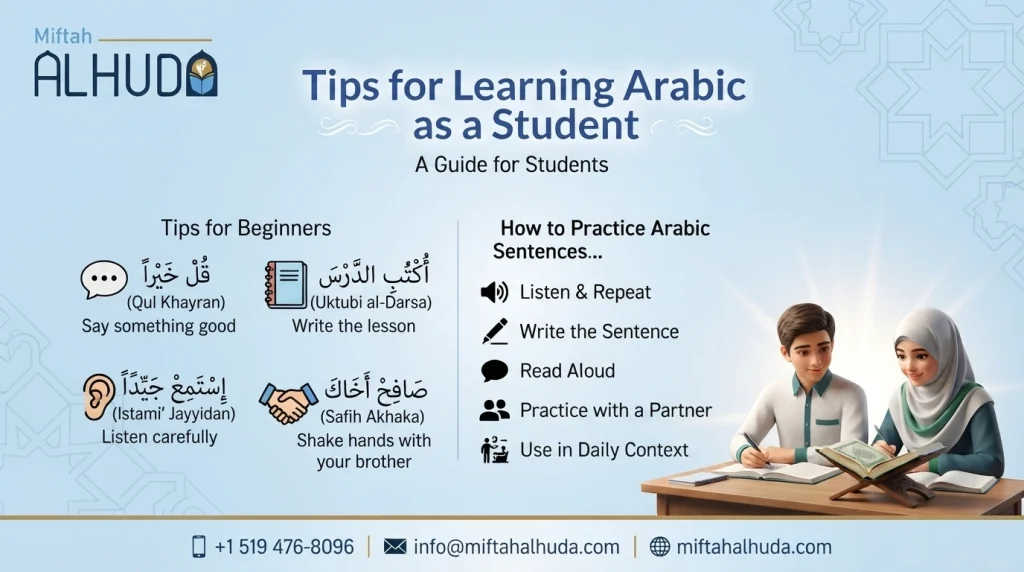
There are a few habits that can make a big difference to anyone studying Arabic words for school, university or self-study:
Read complete sentences rather than single words; sentences teach you how grammar works.
Be aware of the difference in gender since Arabic changes most of its words based on gender.
Listen to native speakers as much as possible by watching videos, listening to audio lessons, or having conversations with them.
With real conversation, use new sentences immediately after you learn them, rather than when you’re ready.
Practice your sentences regularly, to make them a habit.
A quality Arabic course is available if you are looking for a structured approach rather than self-study. Our Arabic courses can provide you with a clear path for learning with a real teacher.
Still not sure which course to choose? You can sign up for a free trial lesson and experience the lessons without any obligation.
Contact Us
WhatsApp: +1 519 476-8096
E-Mail: in**@**********da.com
Facebook: https://www.facebook.com/MiftahAlhudaOfficial
Instagram: https://www.instagram.com/miftahalhudaa
Youtube: https://www.youtube.com/@MiftahAl-huda
Tiktok: https://www.tiktok.com/@miftahalhuda00“.
Commonly asked questions about Arabic sentences for learners.
What are some useful Arabic sentences for students?
Sentences like “أنا طالب” (I am a student), “لا أفهم” (I don’t understand), and “هل يمكنك مساعدتي؟” (Can you help me?) are among the most useful for daily classroom use.
How do you say “I am a student” in Arabic?
A male speaker says “أنا طالب” (Ana talib). A female speaker says “أنا طالبة” (Ana taliba).
How do you ask a teacher a question in Arabic?
You can say “هل يمكنني أن أسأل سؤالا؟” (Hal yumkinuni an as’ala su’alan?), which means “Can I ask a question?”
How do you say “I don’t understand” in Arabic?
The simplest way is “لا أفهم” (La afham), which directly means “I don’t understand.”
What Arabic phrases should students learn first?
Start with self introductions, basic classroom requests, and polite expressions, since these come up in almost every lesson.
How can students practice speaking Arabic?
Practice by reading sentences aloud, using them with a classmate, and reviewing them regularly with flashcards or short dialogues.
Final Thoughts
Students learning Arabic sentences doesn’t have to be overwhelming. You will begin by developing the situational phrases that you can use in practice in the classroom, at home, during tests, or while at university, and then move onto the more advanced phrases.
Continue to use these sentences in authentic conversations, read them regularly and add more with repetition. These micro steps evolve into real confidence in Arabic with the time, whether you are a school student, university student or you’re learning Arabic on your own.