
The first time you sit in an Arabic class or a Quran circle and someone turns to you and says “عرّف عن نفسك” (introduce yourself), the room goes quiet in your head before it goes quiet outside it. You know your own name in English just fine. In Arabic, even that one sentence suddenly feels far away.
So most beginners try to fix this the wrong way. They cram vocabulary lists the night before class and hope something sticks. It doesn’t, usually.
A list of random words isn’t the same thing as a sentence you can actually say out loud while someone’s looking at you, waiting.
However, this article takes an alternate route. The Arabic self introduction sentences will be taught to you in stages, starting from the first thing you would like to introduce yourself with – your name, then country, city, age, work/studies, and finally ending with a courteous conclusion. At the end of it all, you’ll have your own unique introduction.
How to Introduce Yourself in Arabic?
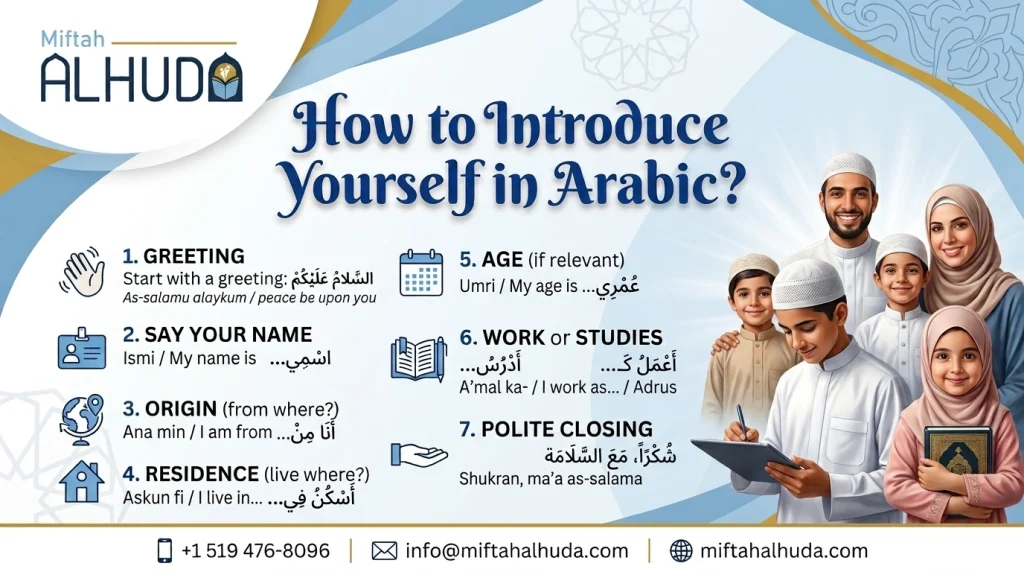
There’s a simple order to an Arabic self introduction. Learn the order once, and you can build almost any introduction after that.
Start with a greeting
Say your name
Say where you are from
Say where you live
Mention your age if relevant
Talk about your work or studies
Close with a polite phrase
It is exactly how native Arabic speakers do it instinctively when they either meet a new classmate or welcome a guest to their house. It is also the base for all of those Arabic self-introduction sentences that will be discussed in this article.
Basic Arabic Self Introduction Formula
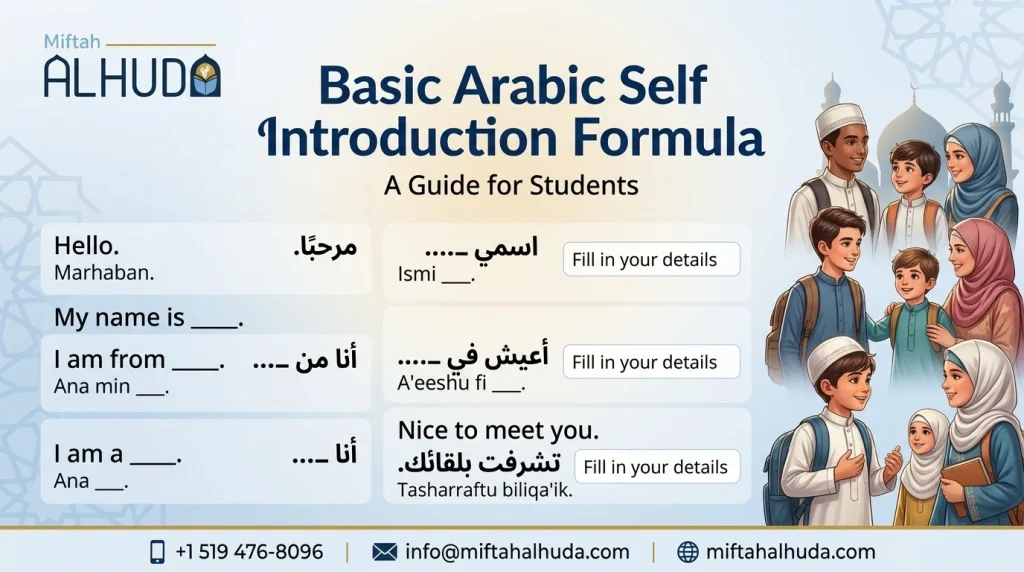
Here’s a short formula you can memorize today.
Hello. My name is ___.
I am from ___.
I live in ___.
I am a ___.
Nice to meet you.
In Arabic:
مرحبًا. اسمي ___. أنا من ___. أعيش في ___. أنا ___. تشرفت بلقائك.
Marhaban. Ismi ___. Ana min ___. A’eeshu fi ___. Ana ___. Tasharraftu biliqa’ik.
Fill in your own details and that’s a working Arabic self introduction. Nothing fancy needed.
Common Arabic Self Introduction Sentences
This table is the vocabulary bank you’ll keep coming back to. Bookmark it, honestly, because these are the Arabic self introduction sentences everything else in this article builds on.
| English | Arabic | Transliteration |
| Hello | مرحبًا | Marhaban |
| My name is… | اسمي… | Ismi… |
| I am from… | أنا من… | Ana min… |
| I live in… | أعيش في… | A’eeshu fi… |
| I am a student | أنا طالب / طالبة | Ana talib / talibah |
| I work as… | أعمل كـ… | A’malu ka… |
| I am … years old | عمري … سنة | Umri … sanah |
| My hobby is… | هوايتي هي… | Hiwayati hiya… |
| Nice to meet you | تشرفت بلقائك | Tasharraftu biliqa’ik |
| See you later | إلى اللقاء | Ila al-liqa’ |
My Name Is…
اسمي (Ismi) means “my name is.” It’s the one phrase you’ll use more than any other. Add your name right after it and you’re done.
اسمي أحمد. (Ismi Ahmad.) My name is Ahmad.
اسمي سارة. (Ismi Sarah.) My name is Sarah.
I Am From…
أنا من (Ana min) means “I am from,” followed by your country or city. That’s the whole rule.
أنا من مصر. (Ana min Misr.) I am from Egypt.
أنا من كندا. (Ana min Kanada.) I am from Canada.
I Live In…
أعيش في (A’eeshu fi) means “I live in.” Use it even if it’s not where you’re originally from, which honestly describes most people these days.
أعيش في دبي. (A’eeshu fi Dubai.) I live in Dubai.
أعيش في لندن. (A’eeshu fi London.) I live in London.
My Age Is…
Arabic doesn’t say “I am [number].” It says عمري (Umri), “my age,” and then the number.
عمري عشرون سنة. (Umri ‘ishruna sanah.) I am twenty years old.
عمري خمس وعشرون سنة. (Umri khamsa wa ‘ishruna sanah.) I am twenty five years old.
My Job or Studies
أنا طالب. (Ana talib.) I am a student. (male)
أنا طالبة. (Ana talibah.) I am a student. (female)
أعمل معلمًا. (A’malu mu’alliman.) I work as a teacher.
أدرس اللغة العربية. (Adrusu al-lughah al-‘arabiyyah.) I study the Arabic language.
My Hobbies
هوايتي القراءة. (Hiwayati al-qira’ah.) My hobby is reading.
أحب كرة القدم. (Uhibbu kurat al-qadam.) I like football.
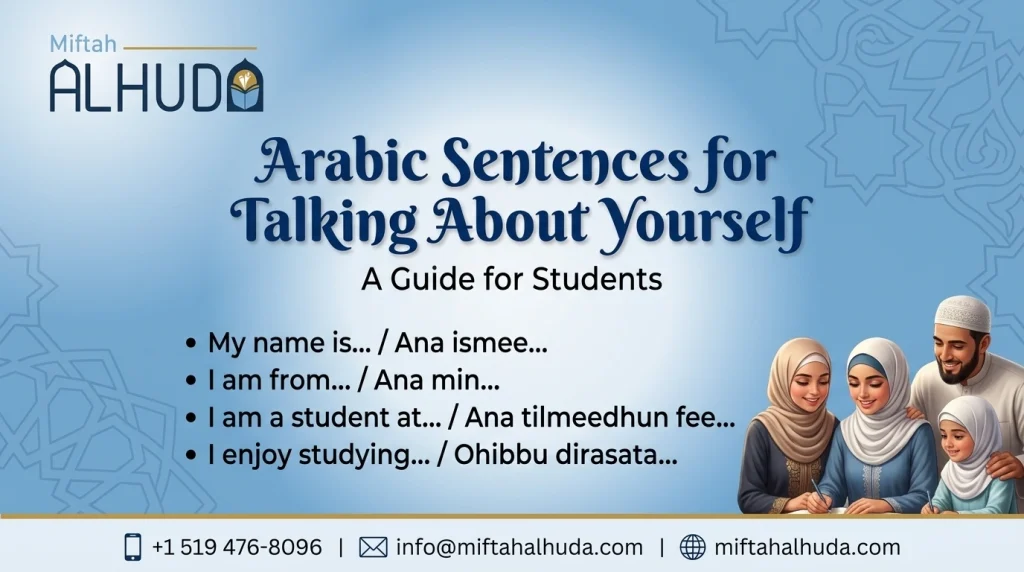
Arabic Sentences for Talking About Yourself
Once the basics feel solid, these sentences are what stop your Arabic self introduction from sounding like a script you’re reading off a card.
Talking About Your Family
عندي أخ واحد. (‘Indi akh wahid.) I have one brother.
عندي أختان. (‘Indi ukhtan.) I have two sisters.
هذه عائلتي. (Hadhihi ‘a’ilati.) This is my family.
أنا متزوج. (Ana mutazawwij.) I am married. (male speaker)
Talking About Your Hobbies
أحب السفر. (Uhibbu al-safar.) I enjoy traveling.
أحب تعلم اللغات. (Uhibbu ta’allum al-lughat.) I like learning languages.
أحب الاستماع إلى الموسيقى. (Uhibbu al-istima’ ila al-musiqa.) I love listening to music.
Talking About Where You Live
أعيش مع عائلتي. (A’eeshu ma’a ‘a’ilati.) I live with my family.
أعيش بالقرب من المسجد. (A’eeshu bil-qurb min al-masjid.) I live near the mosque.
Formal vs. Informal Arabic Self Introductions
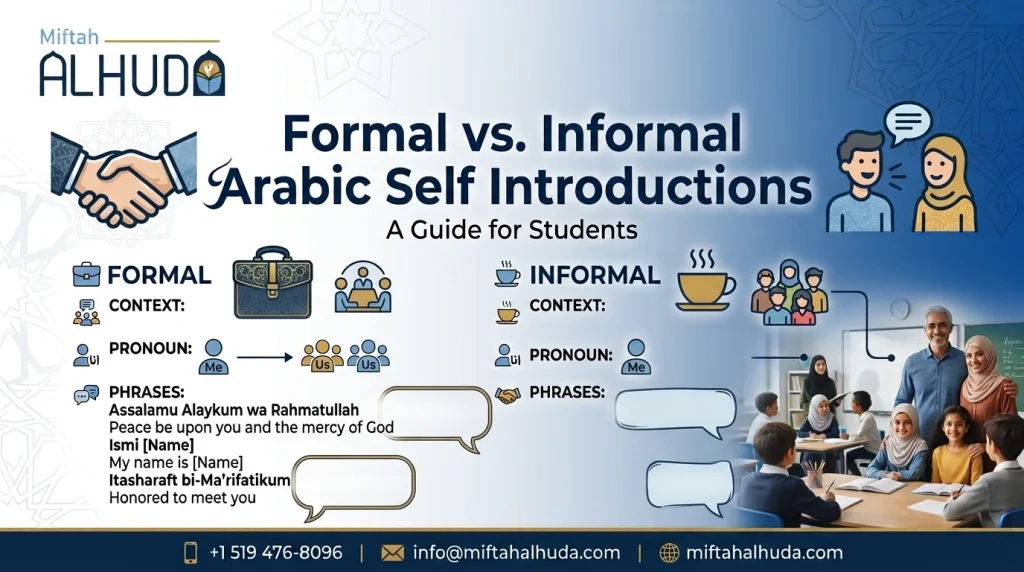
Same words, wrong room, and you’ll feel it immediately. Arabic self introduction sentences shift depending on who’s in front of you.
Use a formal Arabic self introduction in these settings:
Job interviews
Business meetings
University classrooms
Speaking to elders or teachers
Formal events and presentations
A more casual Arabic self introduction fits these instead:
Talking with friends
Meeting new classmates
Everyday social situations
Traveling
Informal conversations with people your own age
The vocabulary barely changes. What changes is tone, pace, and sometimes the pronoun you use for the person you’re talking to.
Arabic Greetings to Use Before Introducing Yourself
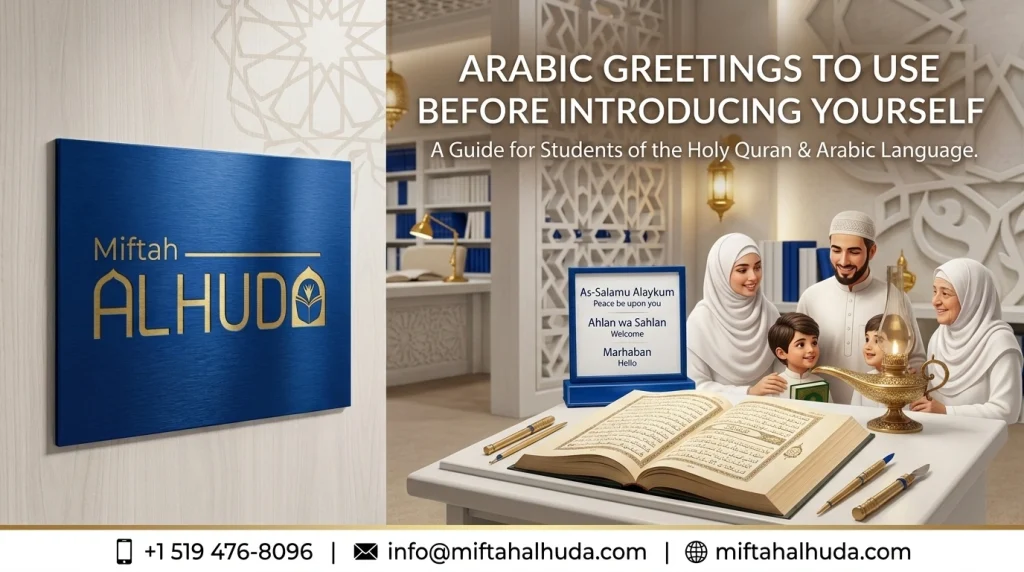
No Arabic self introduction starts without a greeting, and in Islam that greeting is doing more work than you’d think.
السلام عليكم – As-Salamu Alaykum
This is the peace greeting between Muslims, which is “Peace be upon you”. This peace greeting is closely connected with faith and love for each other in Islam. According to the Prophet Muhammad (pbuh), this is one of the ways to achieve faith and love among people (Book of Faith, Hadith 54).
That’s part of why this hadith is usually the first thing taught in Arabic courses at Miftah Alhuda. A greeting here isn’t small talk. It’s the door every Arabic self introduction walks through.
The response is وعليكم السلام (Wa ‘alaykum as-salam), “and peace be upon you too.”
مرحبًا – Marhaban
An everyday, all-purpose “hello.” Formal, informal, doesn’t matter.
أهلًا وسهلًا – Ahlan wa Sahlan
A warmer welcome, one that suggests the person has arrived among family, on easy ground. You’ll hear this a lot when someone’s receiving a guest.
The Prophet ﷺ also said salam isn’t just for people you already know. He told Muslims to greet with it both the people they recognize and the strangers they don’t (Sahih al-Bukhari, Book of Asking Permission, Hadith 6236).
Keep that in mind the next time you feel too shy to say salam to someone new in a Quran class or at the masjid. It’s not just an icebreaker. It’s worship.
Complete Arabic Self Introduction Examples
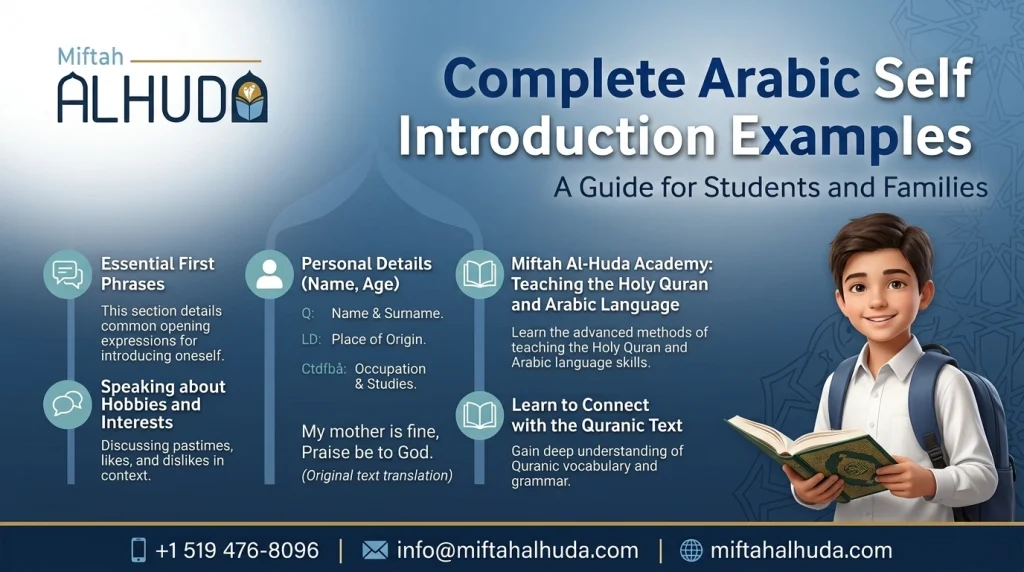
Now let’s put the pieces together into introductions you could actually use.
Short Arabic Self Introduction for Beginners
السلام عليكم. اسمي فاطمة. أنا من الأردن. أعيش في عمّان. تشرفت بلقائك.
As-salamu alaykum. Ismi Fatimah. Ana min al-Urdun. A’eeshu fi ‘Amman. Tasharraftu biliqa’ik.
Peace be upon you. My name is Fatimah. I am from Jordan. I live in Amman. Nice to meet you.
Arabic Self Introduction for Students
اسمي يوسف. عمري تسع عشرة سنة. أنا طالب في الجامعة. أدرس اللغة العربية. هوايتي القراءة.
Ismi Yusuf. Umri tis’a ‘ashrata sanah. Ana talib fil-jami’ah. Adrusu al-lughah al-‘arabiyyah. Hiwayati al-qira’ah.
My name is Yusuf. I am nineteen years old. I am a university student. I study the Arabic language. My hobby is reading.
Arabic Self Introduction for Work
اسمي عمر. أعمل مهندسًا في دبي. عندي خبرة خمس سنوات. تشرفت بلقائك.
Ismi Omar. A’malu muhandisan fi Dubai. ‘Indi khibrah khamsa sanawat. Tasharraftu biliqa’ik.
My name is Omar. I work as an engineer in Dubai. I have five years of experience. Nice to meet you.
Arabic Self Introduction for a Casual Conversation
أهلًا! اسمي ليلى. أنا من مصر. أحب السفر وتعلم اللغات. وأنت؟
Ahlan! Ismi Layla. Ana min Misr. Uhibbu al-safar wa ta’allum al-lughat. Wa anta?
Hi! My name is Layla. I am from Egypt. I love traveling and learning languages. What about you?
Arabic Self Introduction Dialogue
Here’s how two Arabic self introduction sentences actually sound bouncing back and forth in real conversation.
Person A: السلام عليكم Person B: وعليكم السلام Person A: اسمي أحمد. ما اسمك؟ Person B: اسمي محمد. تشرفت بلقائك. Person A: تشرفت بلقائك أيضًا.
Transliteration and meaning:
As-salamu alaykum. Peace be upon you.
Wa ‘alaykum as-salam. And peace be upon you.
Ismi Ahmad. Ma ismuk? My name is Ahmad. What is your name?
Ismi Muhammad. Tasharraftu biliqa’ik. My name is Muhammad. Nice to meet you.
Tasharraftu biliqa’ik aydan. Nice to meet you too.
How to Ask Someone About Themselves in Arabic?
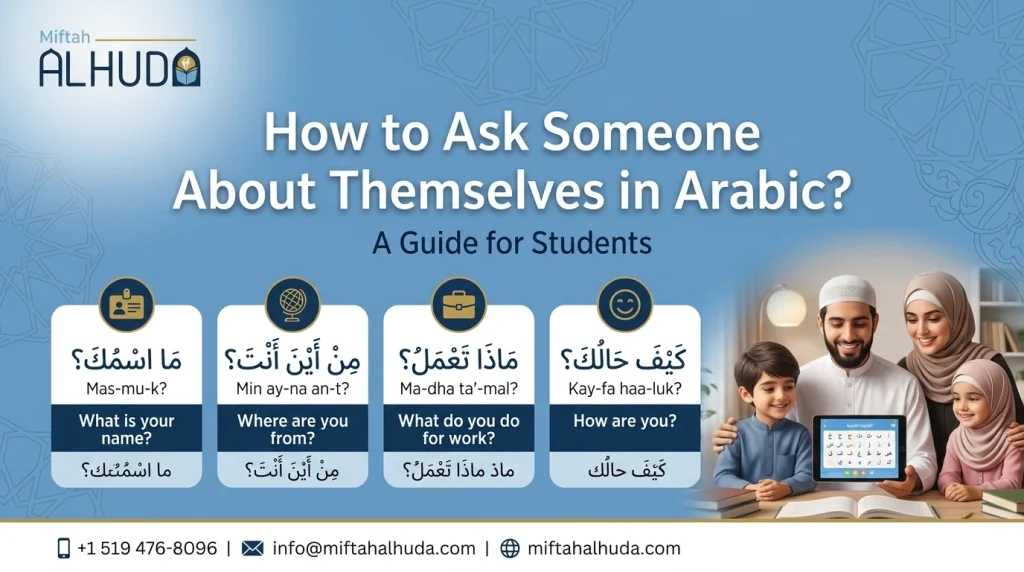
An introduction that only goes one way gets awkward fast. Here’s how to ask it back.
ما اسمك؟ (Ma ismuk?) What is your name? (to a male)
ما اسمكِ؟ (Ma ismuki?) What is your name? (to a female)
من أين أنت؟ (Min ayna anta/anti?) Where are you from?
أين تعيش؟ (Ayna ta’eesh?) Where do you live?
ماذا تعمل؟ (Madha ta’mal?) What do you do?
ما هوايتك؟ (Ma hiwayatuk?) What is your hobby?
Arabic Self Introduction in Different Dialects
Start with Modern Standard Arabic. It’s understood from Morocco to the Gulf, and once you’ve got that down, dialect differences stop being confusing and start being interesting.
Modern Standard Arabic
MSA shows up in the Quran, formal writing, the news, and most classrooms. If you’re studying for religious reasons, or you’ll be talking with Arabs from different countries, this is your base.
Egyptian Arabic
Egyptians rarely say ما اسمك؟ in daily speech. You’ll hear إسمك إيه؟ (Ismak eih?) instead.
Levantine Arabic
In Syria, Lebanon, Jordan, and Palestine, “where are you from” often comes out as من وين إنت؟ (Min wein inta?) rather than the MSA version.
Arabic Self Introduction for Different Situations
Same building blocks every time, but what you lead with changes depending on where you’re standing.
Introducing yourself at school or university, where age, major, and year of study matter most
Introducing yourself at a job interview, where profession and experience take priority
Introducing yourself to new friends, where hobbies and interests open the conversation
Introducing yourself while traveling, where country and language ability come up first
Introducing yourself in a business meeting, where formality and your role matter more than personal details
Tips for Practicing Arabic Self Introduction Sentences
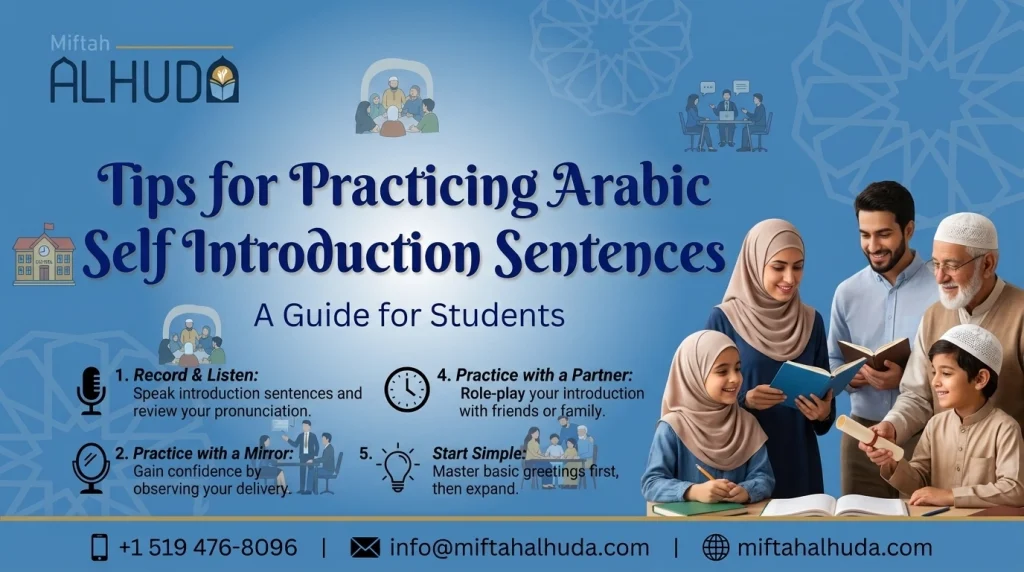
- Practice speaking your introduction aloud, not just reading it silently
- Memorize sentence patterns rather than isolated vocabulary words
- Pay attention to Arabic pronunciation, especially letters that don’t exist in English
- Learn both the masculine and feminine forms of key phrases
- Record yourself and listen back for clarity
- Practice with a teacher or native speaker whenever possible
- Start with a short introduction before building a longer one
The Courses Worth Your Time
If going through all these Arabic self introduction sentences made you wish someone would just correct your pronunciation already, that’s exactly what Miftah Alhuda’s Arabic courses are for.
Ready to move from memorized Arabic self introduction sentences to a real conversation? Explore Miftah Alhuda’s Arabic courses and find the one that fits your level.
Not sure where to start? Book a free trial session. One of our teachers will walk you through your first steps.
Contact Us
WhatsApp: +1 519 476-8096
E-Mail: in**@**********da.com
Facebook: https://www.facebook.com/MiftahAlhudaOfficial
Instagram: https://www.instagram.com/miftahalhudaa
Youtube: https://www.youtube.com/@MiftahAl-huda
Tiktok: https://www.tiktok.com/@miftahalhuda00“.
Frequently Asked Questions About Arabic Self Introductions
How do you introduce yourself in Arabic?
Greet first with مرحبًا (Marhaban), say your name with اسمي (Ismi), say where you’re from with أنا من (Ana min), then close with تشرفت بلقائك.
How do you say “my name is” in Arabic?
اسمي (Ismi). Add your name right after it, nothing else needed.
What is the easiest Arabic self introduction for beginners?
مرحبًا. اسمي ___. أنا من ___. تشرفت بلقائك. Four lines. Greeting, name, origin, closing. That’s it.
How do you say “nice to meet you” in Arabic?
تشرفت بلقائك (Tasharraftu biliqa’ik). You’ll hear this at the end of almost every introduction.
Should I learn Modern Standard Arabic or a dialect first?
MSA first. It’s understood everywhere Arabic is spoken, and you’ll need it for the Quran anyway.
How do you ask someone their name in Arabic?
ما اسمك؟ (Ma ismuk?) for a male, ما اسمكِ؟ (Ma ismuki?) for a female.
What Your Introduction Says Before You Do
Every Arabic self introduction you practice, mirror or classroom, real conversation or not, is a small piece of that verse playing out. The grammar gets easier with repetition. The sincerity behind it was never really about grammar in the first place.
Which sentence from this guide will you say out loud first, and to whom?