
You write down a new word. By tomorrow, it’s gone. Like it was never there at all.
Everyone who is learning a language faces this very barrier, and that is why basic sentences in Arabic make more sense to beginners than a random group of words. The sentence gives the word a home. It tells you about the word’s behavior and context of use.
So that’s what this is. Simple Arabic sentences for beginners, sorted by the situations you’ll actually run into: greetings, introductions, everyday conversation, all of it. Arabic script, an easy pronunciation guide, the English meaning. Start speaking from day one, in sha Allah.
Why Learn Simple Arabic Sentences as a Beginner?
Isolated words fade fast. Genuinely, embarrassingly fast. A sentence gives that word context, and context is what your memory actually holds onto.
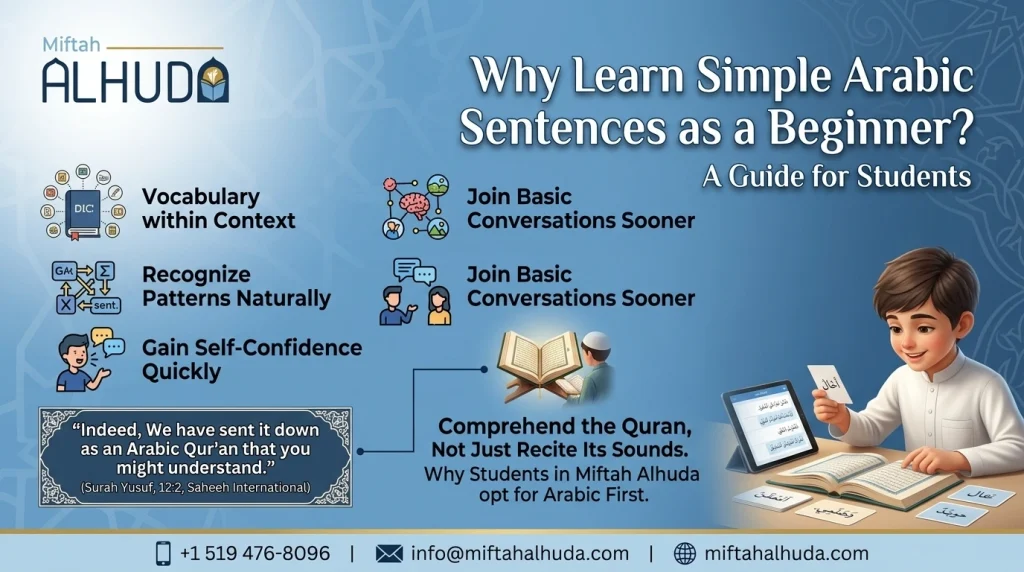
This is how things get better if you study basic sentences in Arabic rather than just individual words:
- You acquire your vocabulary within context, not in isolation.
- You recognize patterns without even opening a grammar book.
- You gain self-confidence since you already have your sentences ready.
- You can join a basic conversation sooner than you’d think.
- Sentences stick. Your brain remembers a scene far more easily than one lone word.
Arabic carries something extra for Muslims too. Allah says in the Quran:
“Indeed, We have sent it down as an Arabic Qur’an that you might understand.” (Surah Yusuf, 12:2, Saheeh International)
Having some understanding of Arabic can allow you to comprehend the Quran rather than just reciting its sounds. This is the reason why so many students in Miftah Alhuda opt for learning Arabic first.
Simple Arabic Sentences for Beginners
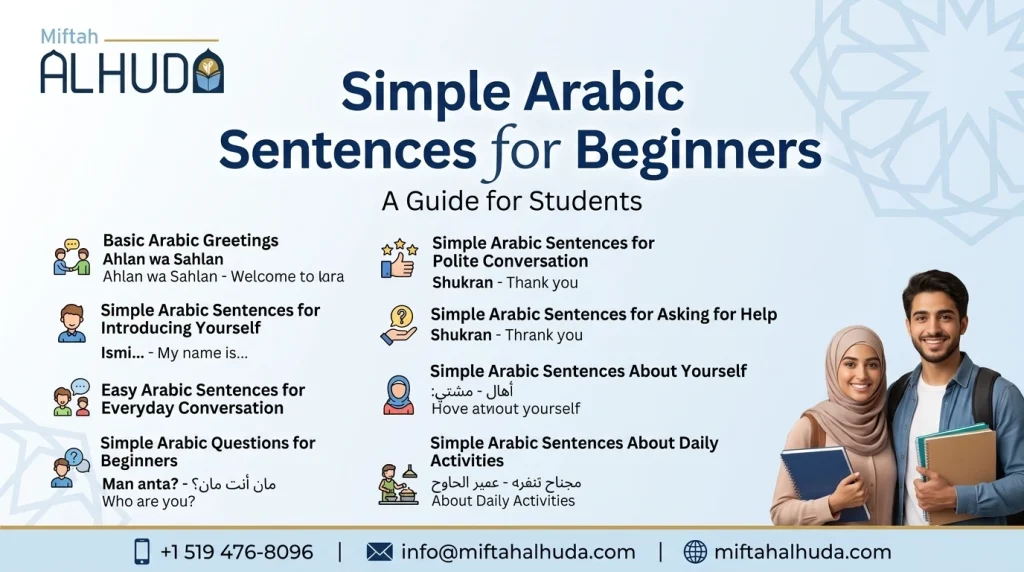
Here’s the core list. Read each one out loud. Then again, without looking.
Basic Arabic Greetings
| English | Arabic | Pronunciation |
| Hello | مرحبًا | Marhaban |
| Peace be upon you | السلام عليكم | As-salamu alaykum |
| And peace be upon you too | وعليكم السلام | Wa alaykum as-salam |
| Good morning | صباح الخير | Sabah al-khayr |
| Good evening | مساء الخير | Masa’ al-khayr |
| How are you? | كيف حالك؟ | Kayfa haluk? |
| I am fine, thank you | أنا بخير، شكرًا | Ana bikhayr, shukran |
| Goodbye | مع السلامة | Ma’a as-salama |
Every list like this starts with greetings. Makes sense. You’ll use these every single day for the rest of your life.
Simple Arabic Sentences for Introducing Yourself
| English | Arabic | Pronunciation |
| My name is… | اسمي… | Ismi… |
| What is your name? | ما اسمك؟ | Ma ismuk? |
| I am from… | أنا من… | Ana min… |
| Where are you from? | من أين أنت؟ | Min ayna anta? |
| I live in… | أنا أعيش في… | Ana a’eesh fi… |
| I speak a little Arabic | أتكلم عربي قليلًا | Atakallam arabi qaleelan |
| I am learning Arabic | أنا أتعلم العربية | Ana ata’allam al-arabiyya |
| Nice to meet you | تشرفنا | Tasharrafna |
Easy Arabic Sentences for Everyday Conversation
Once greetings and introductions stop feeling like a script you’re reciting, this is the next layer of simple Arabic sentences for beginners.
| English | Arabic | Pronunciation |
| What are you doing? | ماذا تفعل؟ | Matha taf’al? |
| Where are you going? | إلى أين تذهب؟ | Ila ayna tathhab? |
| Where are you? | أين أنت؟ | Ayna anta? |
| What is this? | ما هذا؟ | Ma hatha? |
| I don’t understand | لا أفهم | La afham |
| I don’t know | لا أعرف | La a’rif |
| Please speak slowly | تكلم ببطء من فضلك | Takallam bibut’ min fadlik |
| Can you repeat that? | هل يمكنك أن تعيد؟ | Hal yumkinuka an tu’eed? |
Simple Arabic Questions for Beginners
Questions carry most of any conversation. That’s just true in every language. Which is probably why this ends up being the busiest section in any guide to simple Arabic sentences for beginners.
| English | Arabic | Pronunciation |
| What time is it? | كم الساعة؟ | Kam as-sa’a? |
| Where is the bathroom? | أين الحمام؟ | Ayna al-hammam? |
| What does this mean? | ماذا يعني هذا؟ | Matha ya’ni hatha? |
| Do you speak Arabic? | هل تتكلم العربية؟ | Hal tatakallam al-arabiyya? |
| How much is this? | بكم هذا؟ | Bikam hatha? |
| Can you help me? | هل يمكنك مساعدتي؟ | Hal yumkinuka musa’adati? |
Simple Arabic Sentences for Polite Conversation
- Thank you: شكرًا (Shukran)
- Thank you very much: شكرًا جزيلًا (Shukran jazeelan)
- You’re welcome: عفوًا (Afwan)
- Please: من فضلك (Min fadlik)
- Excuse me: عفوًا / المعذرة (Afwan / al-ma’thira)
- I’m sorry: أنا آسف (Ana asif)
- No problem: لا مشكلة (La mushkila)
- Have a nice day: أتمنى لك يومًا سعيدًا (Atamanna laka yawman sa’idan)
The Prophet Muhammad, peace be upon him, said: “Make things easy for the people, and do not make it difficult for them” (Sahih al-Bukhari 6125, narrated by Anas ibn Malik). That’s really what politeness in speech comes down to, in any language. Ease. Gentleness with people.
Simple Arabic Sentences for Asking for Help
I need help: أحتاج إلى مساعدة (Ahtaj ila musa’ada)
I am lost: أنا تائه (Ana ta’ih)
Where can I find…?: أين يمكنني أن أجد…؟ (Ayna yumkinuni an ajid…?)
Can you show me?: هل يمكنك أن تريني؟ (Hal yumkinuka an turini?)
What should I do?: ماذا يجب أن أفعل؟ (Matha yajib an af’al?)
Simple Arabic Sentences About Yourself
I am a student: أنا طالب (Ana talib)
I am tired: أنا متعب (Ana mut’ab)
I am happy: أنا سعيد (Ana sa’eed)
I am hungry: أنا جائع (Ana ja’i’)
I like Arabic: أحب اللغة العربية (Uhibbu al-lugha al-arabiyya)
I work in…: أعمل في… (A’mal fi…)
Simple Arabic Sentences About Daily Activities
I eat breakfast: أتناول الفطور (Atanawal al-futoor)
I drink water: أشرب الماء (Ashrab al-ma’)
I go to work: أذهب إلى العمل (Athhab ila al-‘amal)
I study Arabic: أدرس اللغة العربية (Adrus al-lugha al-arabiyya)
I read a book: أقرأ كتابًا (Aqra’ kitaban)
I wake up early: أستيقظ مبكرًا (Astayqizu mubakkiran)
Basic Arabic Sentence Patterns Beginners Should Know
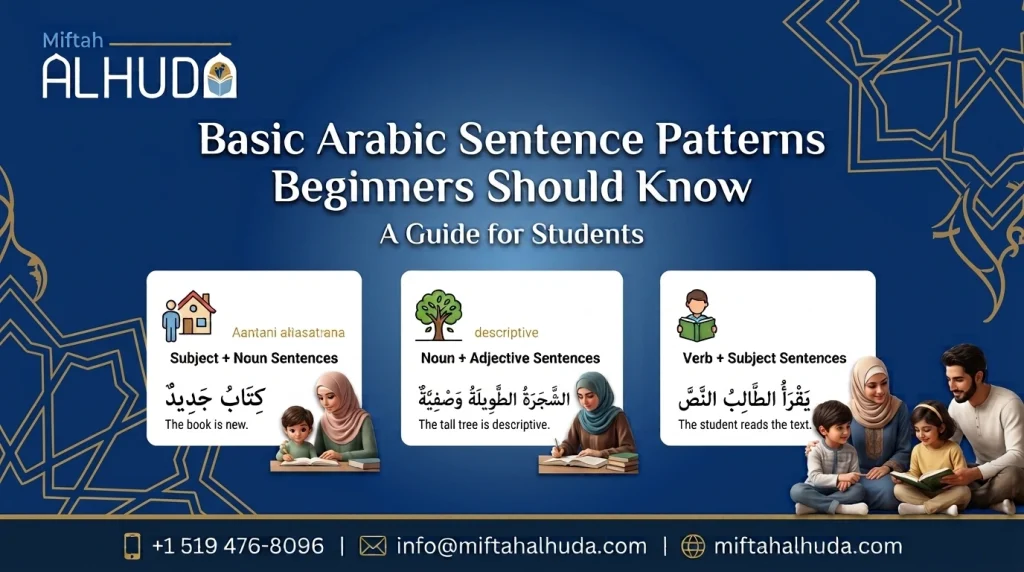
A sentence teaches you more than words. It shows you the actual shape of the language. And once you see it, you can’t really unsee it.
Subject + Noun Sentences
أنا طالب (Ana talib) means “I am a student.” Look closely. There’s no word for “am” in there at all. Arabic nominal sentences skip the linking verb constantly. The subject just sits right next to the noun or description. No fuss.
Noun + Adjective Sentences
البيت كبير (Al-baytu kabir) means “The house is big.” الكتاب جديد (Al-kitabu jadid) means “The book is new.” Notice the adjective comes after the noun. English does it the other way around. Small thing, but it trips people up constantly.
Verb + Subject Sentences
Arabic often puts the verb first, before the subject, which feels backward if English is all you know. ذهب محمد إلى المدرسة means “Muhammad went to school.” The verb “ذهب” (went) leads the whole sentence.
Using Arabic Pronouns in Simple Sentences
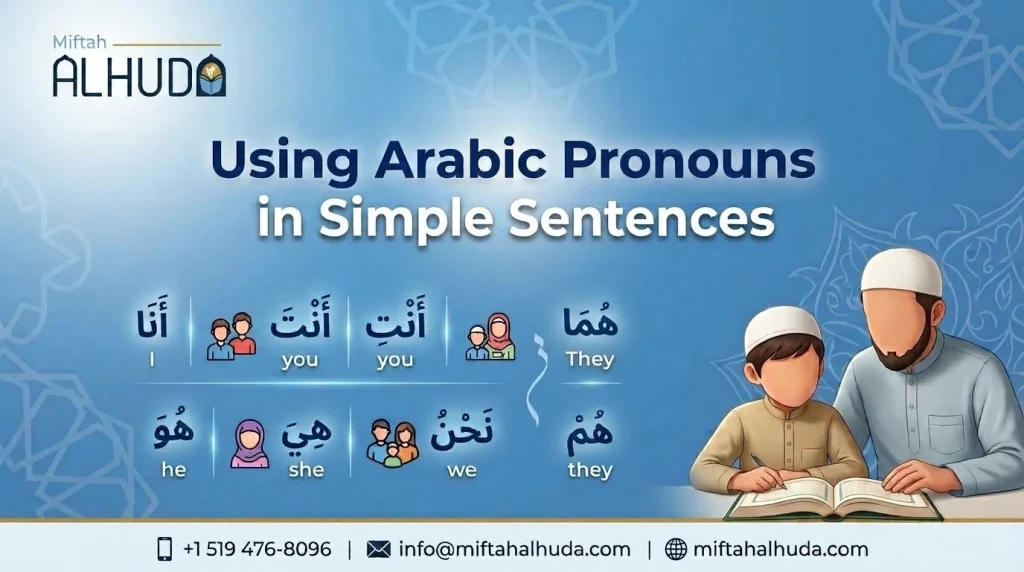
أنا = I
أنتَ = you (masculine)
أنتِ = you (feminine)
هو = he
هي = she
نحن = we
هم = they
Try one for each pronoun yourself. “أنا سعيد” (I am happy). “هي طالبة” (she is a student). “نحن نتعلم” (we are learning). Nothing fancy. But they’re your sentences now, not the book’s.
Simple Arabic Sentences With English Translation
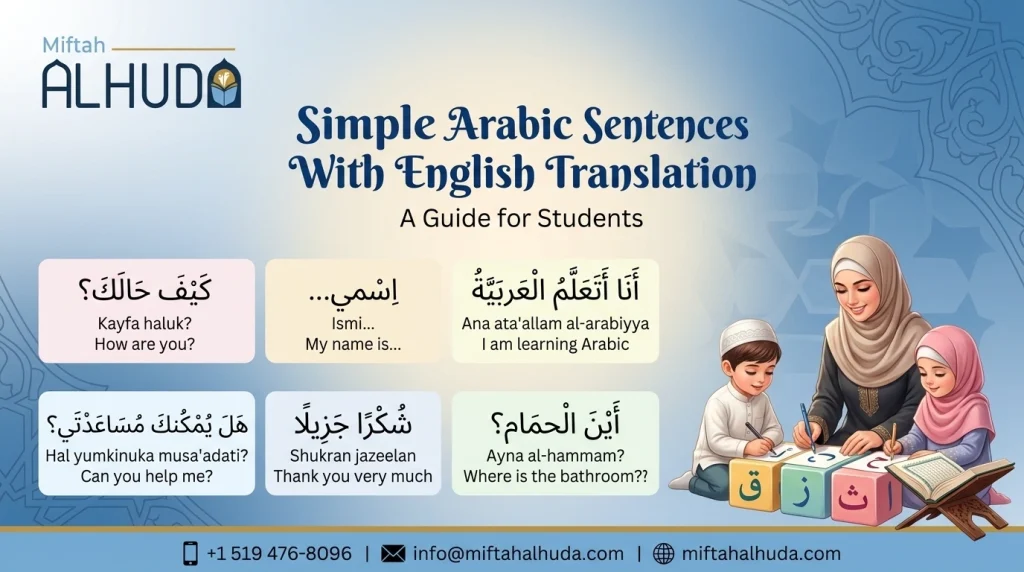
A short list worth bookmarking. Pulled straight from everything above.
| Arabic | English | Transliteration |
| كيف حالك؟ | How are you? | Kayfa haluk? |
| اسمي… | My name is… | Ismi… |
| أنا أتعلم العربية | I am learning Arabic | Ana ata’allam al-arabiyya |
| هل يمكنك مساعدتي؟ | Can you help me? | Hal yumkinuka musa’adati? |
| شكرًا جزيلًا | Thank you very much | Shukran jazeelan |
| أين الحمام؟ | Where is the bathroom? | Ayna al-hammam? |
Simple Arabic Sentences With Pronunciation
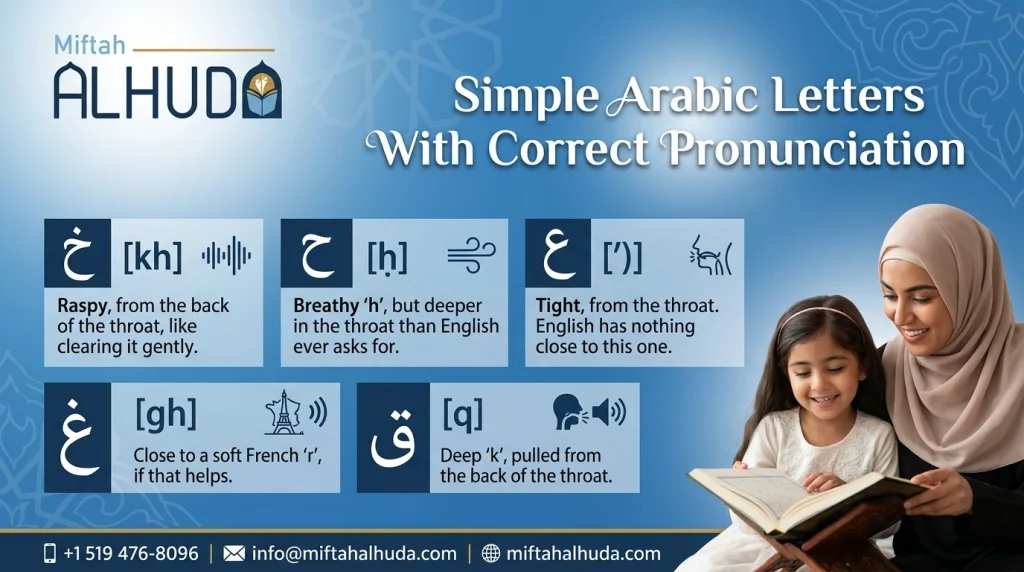
A few of these letters just don’t exist in English. So here’s the quick version, nothing academic:
- خ (kh): raspy, from the back of the throat, like clearing it gently.
- ح (ḥ): a breathy “h,” but deeper in the throat than English ever asks for.
- ع (‘): tight, from the throat. English has nothing close to this one.
- غ (gh): close to a soft French “r,” if that helps.
- ق (q): a deep “k,” pulled from the back of the throat.
Do not get obsessed with having everything right from the start. Simply use these phrases sufficiently, hear them from a proper teacher or native sufficiently often, and you will automatically pick it up.
Modern Standard Arabic vs. Spoken Arabic
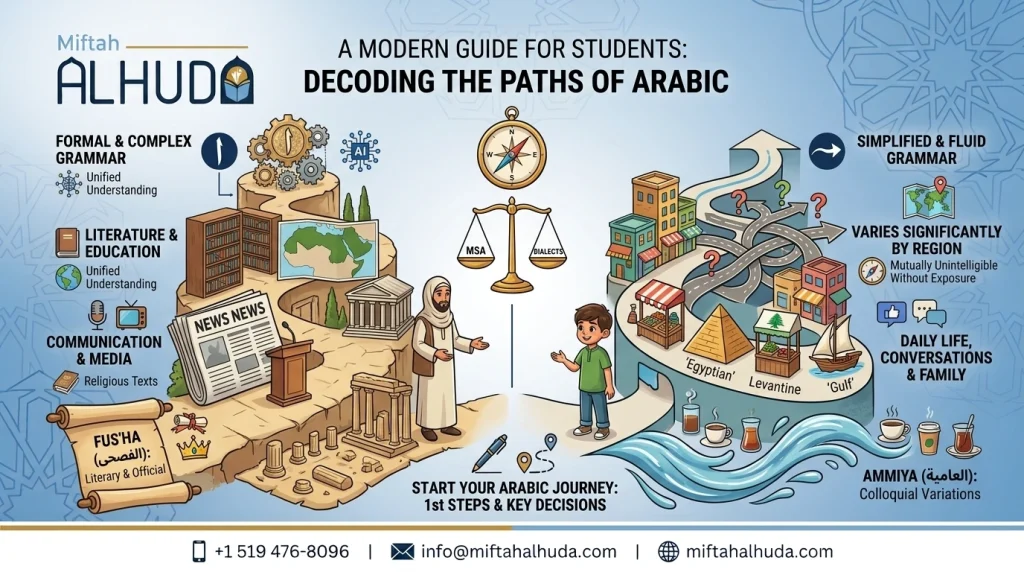
Modern Standard Arabic, MSA, or even Fusha for its Arabic name, is the Arabic used in the Quran, the news, any book, anything formal. The majority of the basic Arabic sentences in this guide are quite near to MSA. This is precisely why they are applicable regardless of which Arab country you are in.
Are These Sentences Used in Everyday Arabic? Plenty of them, yes. Greetings, polite phrases, basic questions, people get these everywhere. Some everyday phrases shift depending on where you are, though. That’s just how it goes.
MSA vs. Egyptian, Levantine, and Gulf Arabic
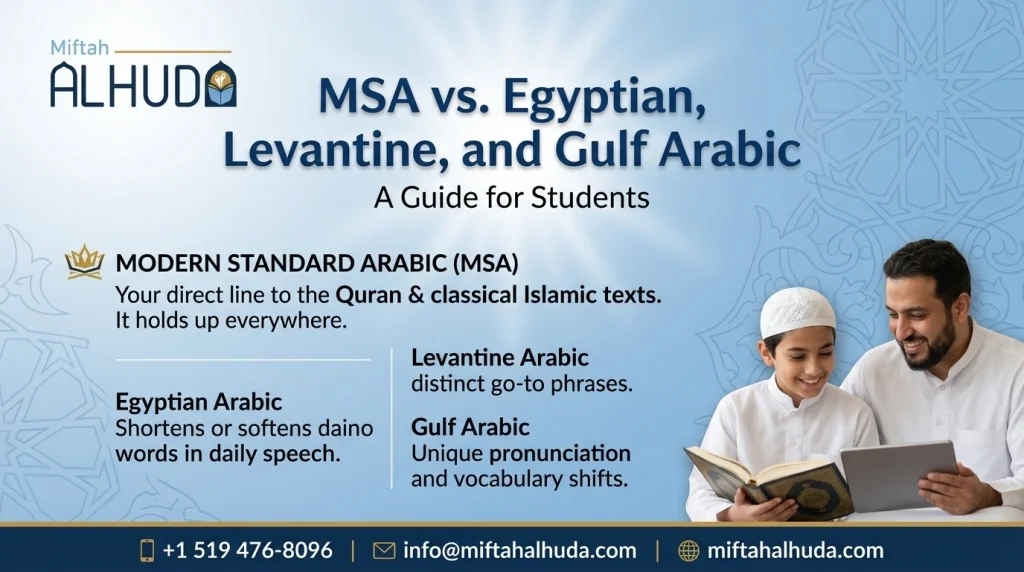
Egyptian Arabic often shortens or softens MSA words in daily speech.
Levantine Arabic (Syria, Lebanon, Jordan, Palestine) runs on its own set of go-to phrases.
Gulf Arabic has its own pronunciation and vocabulary shifts too.
Start with MSA. It holds up everywhere, and it’s your direct line to the Quran and classical Islamic texts.
How to Practice Simple Arabic Sentences
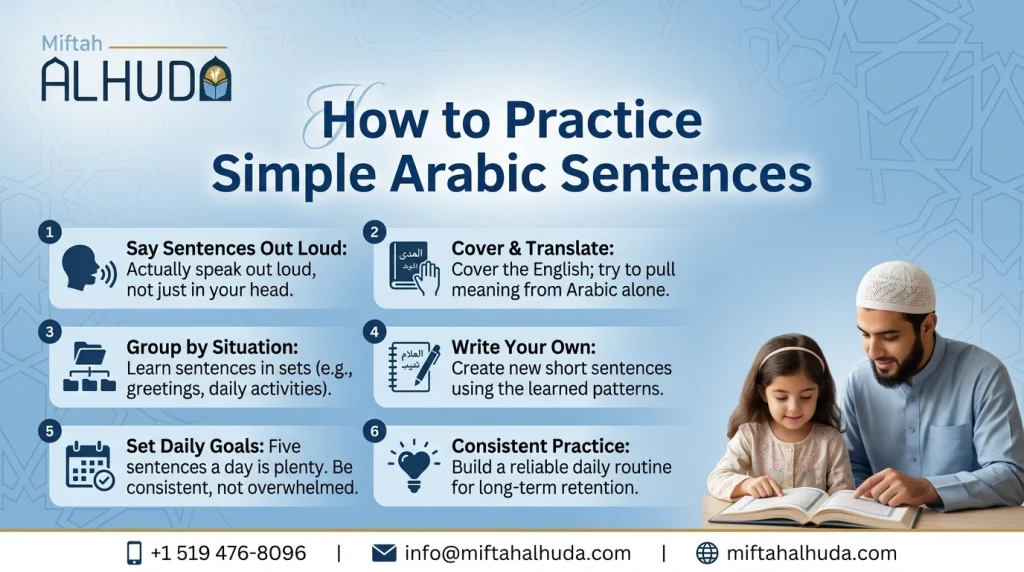
Say each sentence out loud. Actually out loud, not just in your head.
Cover the English side and try to pull the meaning from the Arabic alone.
Group sentences by situation, greetings, daily activities, whatever, and learn them as a set.
Write your own short sentences using the patterns above.
Set a small daily goal. Five sentences a day is plenty. Don’t try to swallow the whole list in one sitting.
Common Mistakes Beginners Make When Forming Arabic Sentences
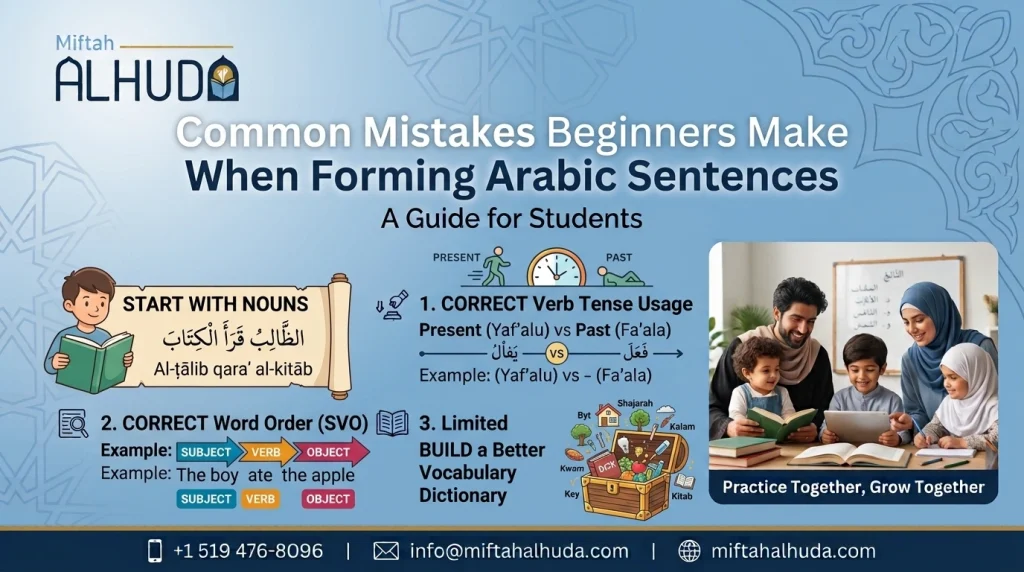
Translating word for word from English instead of just learning the Arabic pattern on its own terms.
- Adding an unnecessary “am / is / are,” when Arabic usually doesn’t want one at all.
- Ignoring the masculine and feminine forms of words and verbs.
- Putting the adjective before the noun out of old English habit.
- Leaning only on transliteration and never actually learning to read the script.
- Memorizing loose vocabulary instead of full, usable sentences.
If you’d rather have someone walk you through this instead of piecing it together on your own, Miftah Alhuda’s Arabic courses are built for exactly this stage. Complete beginners on up.
You can also book a free trial session, meet an actual teacher, and figure out which level fits you, in sha Allah.
Contact Us
WhatsApp: +1 519 476-8096
E-Mail: in**@**********da.com
Facebook: https://www.facebook.com/MiftahAlhudaOfficial
Instagram: https://www.instagram.com/miftahalhudaa
Youtube: https://www.youtube.com/@MiftahAl-huda
Tiktok: https://www.tiktok.com/@miftahalhuda00“.
Frequently Asked Questions
What are the easiest Arabic sentences for beginners?
Greetings and short introductions, hands down. “مرحبًا” (hello) and “اسمي…” (my name is) need zero grammar to get right.
What Arabic phrases should I learn first?
Greetings, your name, “how are you,” plus “thank you” and “please.” Genuinely covers most early conversations by itself.
Is Arabic sentence structure difficult for beginners?
Different, not difficult. Once it clicks that adjectives follow nouns and verbs often lead, the whole thing stops feeling random.
Should I learn Modern Standard Arabic or a dialect first?
MSA first. It’s understood everywhere and it’s your bridge into the Quran and formal texts. Pick up a dialect later for everyday, casual speech.
How can I practice Arabic sentences every day?
A few minutes, every day. Read sentences aloud, group them by topic, then try building your own using the patterns in this guide.
Your First Step Into Arabic Sentences
Fifty phrases won’t make you fluent. That was never the point, not even close. What these simple Arabic sentences for beginners actually give you is a starting shape. A way to greet someone, ask a question, describe your day, without freezing up mid-sentence.
Pick five from this guide. Say them out loud right now, not later. Come back tomorrow for five more.