
Okay, so here’s a thing I keep seeing, and honestly I did it myself for a while. Someone spends weeks on the alphabet, builds up a solid little pile of vocabulary, feels pretty good about it.
Then an actual Arabic speaker walks up and says “marhaban,” and their brain just goes blank. Total shutdown. I remember standing in a shop once, fully able to conjugate verbs on paper, and somehow unable to produce a single word out loud.
Let me make one thing clear. This is not a problem with intelligence. It is not even due to laziness. It is the result of gathering words without having ever tried to make them into something you can speak spontaneously in the presence of another human being, who is waiting for your response.
So skip the vocabulary list. Actually skip it, at least for now. What works instead is having Arabic sentences in Arabic for daily conversation already sitting there, ready, so you’re not building a sentence from scratch while a shopkeeper waits for you to say something. Greeting someone. Haggling. Ordering food. Asking which street the hotel’s on.
That’s this guide. 100 sentences, sorted by the situation you’ll actually be standing in, each one with the Arabic script, a transliteration, and the English meaning. Read them if you want. But say them. Out loud, even if you feel a little ridiculous doing it alone in your room. That’s the part that actually matters.
Common Arabic sentences in Arabic for daily conversation
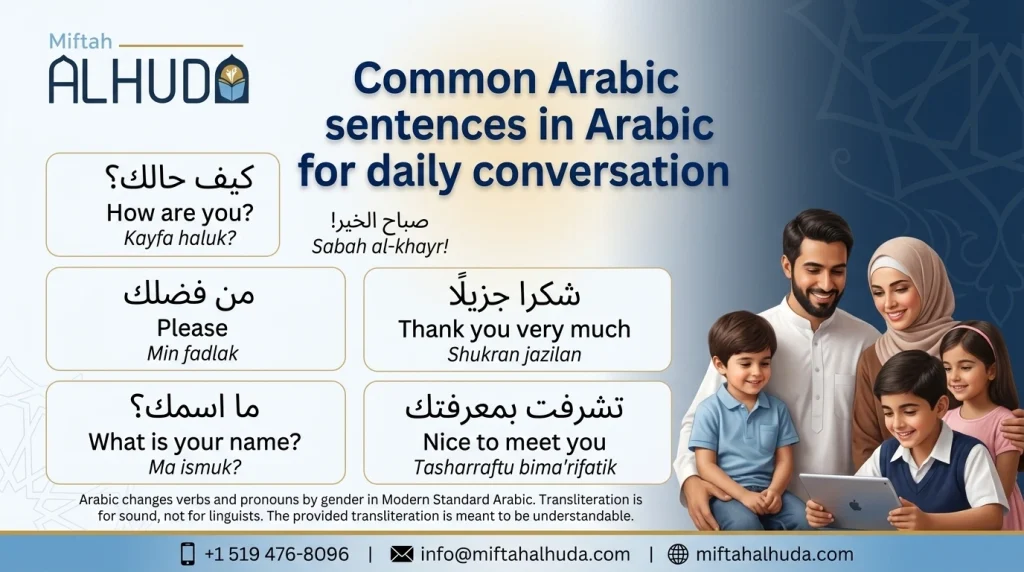
Same setup every time: Arabic script, transliteration in italics underneath it, English meaning after that. Nothing complicated. Just enough to sound it out and know exactly when you’d use it.
Just a heads-up before you dive into this lesson. Arabic can change depending on who you’re speaking to. It can change in terms of verbs and pronouns, depending on gender. So, you’ll use something when talking to a man that’s not necessarily going to be the same thing as when you’re speaking to a woman. You don’t have to worry about getting it exactly right just yet, as long as it makes sense. The transliteration provided here is meant to be understandable and not for a linguist. And all of the below is Modern Standard Arabic (MSA).
1. Arabic Greetings and Introductions
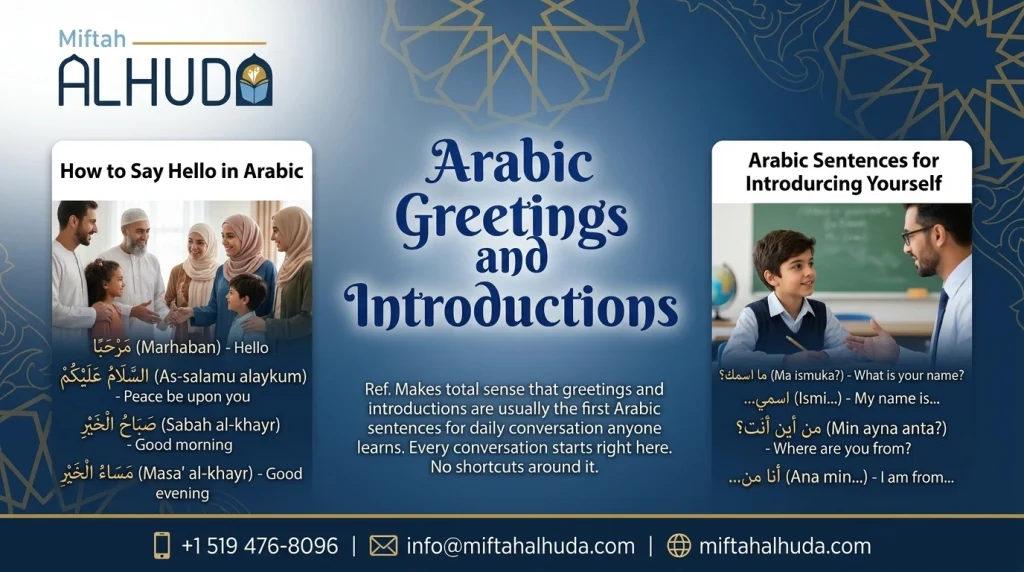
How to Say Hello in Arabic
مَرْحَبًا (Marhaban) – Hello
السَّلَامُ عَلَيْكُمْ (As-salamu alaykum) – Peace be upon you
صَبَاحُ الْخَيْر (Sabah al-khayr) – Good morning
مَسَاءُ الْخَيْر (Masa’ al-khayr) – Good evening
Arabic Sentences for Introducing Yourself
ما اسمك؟ (Ma ismuka?) – What is your name?
اسمي… (Ismi…) – My name is…
من أين أنت؟ (Min ayna anta?) – Where are you from?
أنا من… (Ana min…) – I am from…
أين تسكن؟ (Ayna taskun?) – Where do you live?
Makes total sense that greetings and introductions are usually the first Arabic sentences in Arabic for daily conversation anyone learns. Every conversation, literally every single one, starts right here. No shortcuts around it.
2. Arabic Sentences for Asking How Someone Is
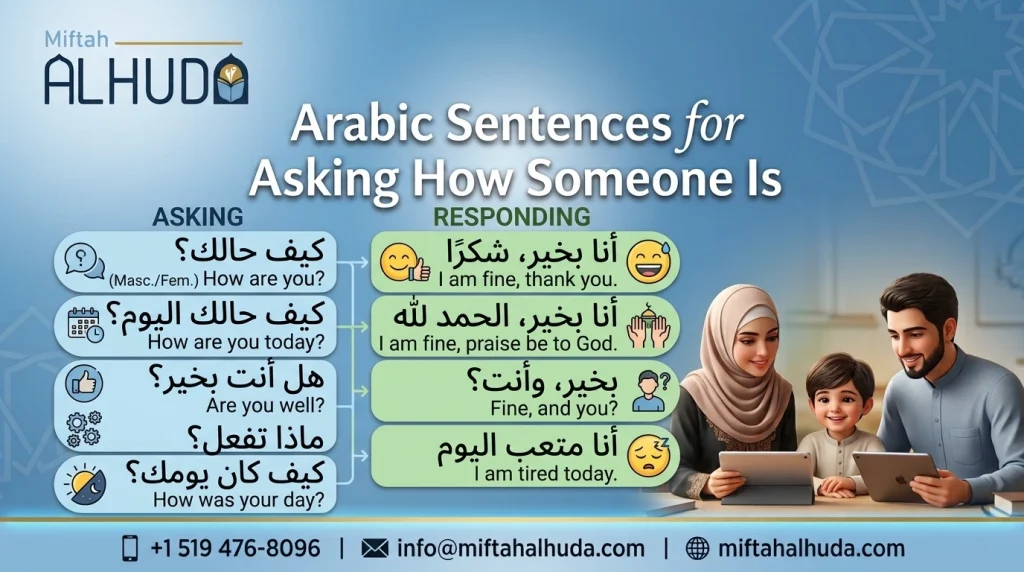
Asking About Someone’s Well-Being
كيف حالك؟ (Kayfa haluka?) – How are you?
كيف حالك اليوم؟ (Kayfa haluka al-yawm?) – How are you today?
هل أنت بخير؟ (Hal anta bikhayr?) – Are you okay?
ماذا تفعل؟ (Madha taf’al?) – What are you doing?
كيف كان يومك؟ (Kayfa kana yawmuka?) – How was your day?
How to Respond in Arabic
أنا بخير، شكرًا (Ana bikhayr, shukran) – I’m fine, thank you
أنا بخير، الحمد لله (Ana bikhayr, alhamdulillah) – I’m fine, thanks be to God
بخير، وأنت؟ (Bikhayr, wa anta?) – Fine, and you?
أنا متعب اليوم (Ana mut’ab al-yawm) – I am tired today
3. Polite Arabic Sentences You Should Know
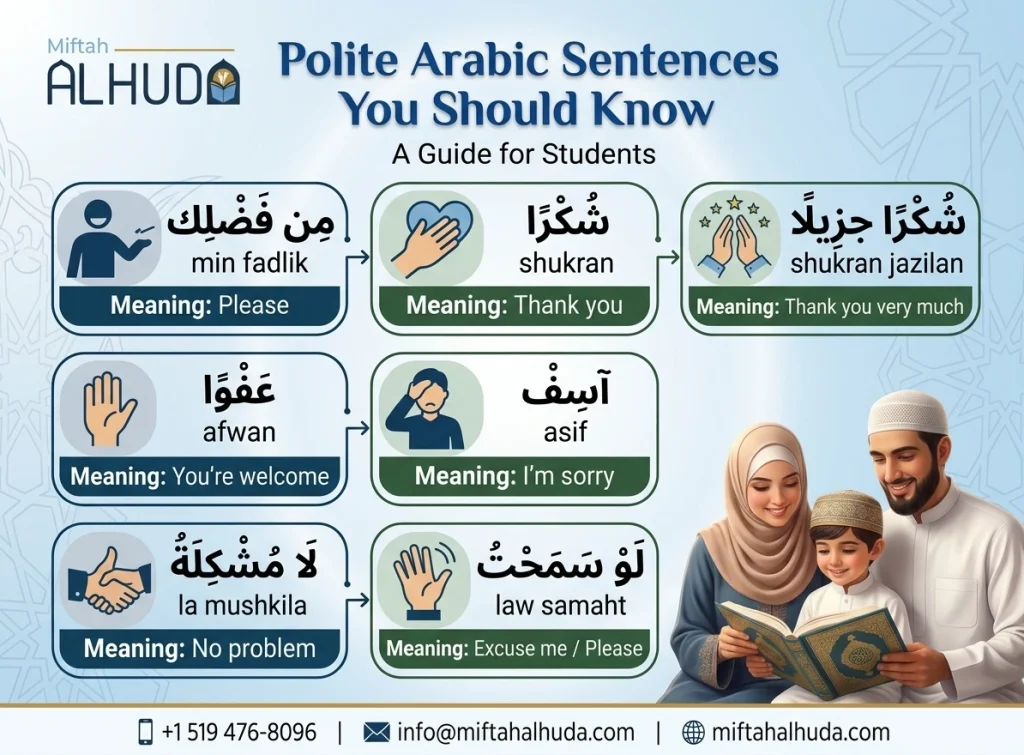
I’ll be honest, politeness does more work in Arabic than people expect. Say “min fadlik” and you’ll get treated better than someone who knows twice your vocabulary and never bothers with it. So yeah, these matter. Near the top of any list of Arabic sentences in Arabic for daily conversation, right where they belong.
من فضلك (Min fadlik) – Please
شكرًا (Shukran) – Thank you
شكرًا جزيلًا (Shukran jazilan) – Thank you very much
عفوًا (Afwan) – You’re welcome or excuse me
آسف (Asif) – I’m sorry
لا مشكلة (La mushkila) – No problem
لو سمحت (Law samaht) – Please or excuse me
4. Arabic Sentences for Everyday Small Talk
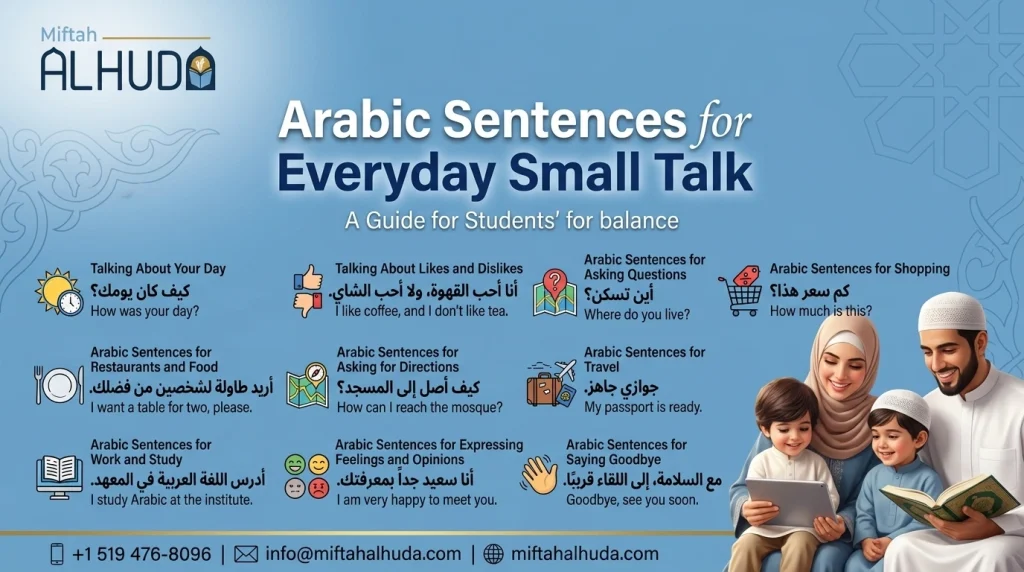
Talking About Your Day
ماذا تفعل اليوم؟ (Madha taf’al al-yawm?) – What are you doing today?
ماذا فعلت اليوم؟ (Madha fa’alta al-yawm?) – What did you do today?
أنا ذاهب إلى العمل (Ana dhahib ila al-‘amal) – I am going to work
أنا ذاهب إلى المنزل (Ana dhahib ila al-manzil) – I am going home
Talking About Likes and Dislikes
أحب هذا (Uhibbu hatha) – I like this
لا أحب هذا (La uhibbu hatha) – I don’t like this
أحب القهوة (Uhibbu al-qahwa) – I like coffee
ما رأيك؟ (Ma ra’yuka?) – What do you think?
هذا جميل جدًا (Hatha jamil jiddan) – This is very beautiful
Arabic Sentences for Asking Questions
Common Arabic Question Words
Arabic Meaning
ماذا What
أين Where
متى When
لماذا Why
كيف How
من Who
كم How much or how many
هل Question particle
Useful Questions in Arabic Conversation
ماذا تريد؟ (Madha turid?) – What do you want?
أين أنت؟ (Ayna anta?) – Where are you?
متى ستأتي؟ (Mata sata’ti?) – When will you come?
لماذا؟ (Limadha?) – Why?
كم السعر؟ (Kam as-si’r?) – How much is the price?
هل تتحدث العربية؟ (Hal tatahaddath al-arabiyya?) – Do you speak Arabic?
Arabic Sentences for Asking for Help
هل يمكنك مساعدتي؟ (Hal yumkinuka musa’adati?) – Can you help me?
أحتاج إلى مساعدة (Ahtaju ila musa’ada) – I need help
من فضلك ساعدني (Min fadlik sa’idni) – Please help me
لا أفهم (La afham) – I don’t understand
هل يمكنك تكرار ذلك؟ (Hal yumkinuka takrar dhalik?) – Can you repeat that?
تكلم ببطء من فضلك (Takallam bibut’ min fadlik) – Please speak slowly
Arabic Sentences for Shopping
Asking About Prices
كم سعر هذا؟ (Kam si’r hatha?) – How much is this?
بكم هذا؟ (Bikam hatha?) – How much is this?
هل هذا غالي؟ (Hal hatha ghali?) – Is this expensive?
هل يمكنك تخفيض السعر؟ (Hal yumkinuka takhfid as-si’r?) – Can you lower the price?
Buying Something
أريد شراء هذا (Uridu shira’a hatha) – I want to buy this
هل لديكم هذا؟ (Hal ladaykum hatha?) – Do you have this?
أريد واحدًا من فضلك (Uridu wahidan min fadlik) – I want one please
هل لديكم مقاس أكبر؟ (Hal ladaykum maqas akbar?) – Do you have a bigger size?
Arabic Sentences for Restaurants and Food
أريد قائمة الطعام (Uridu qa’imat at-ta’am) – I want the menu
ماذا تنصحني؟ (Madha tansahuni?) – What do you recommend?
أريد هذا من فضلك (Uridu hatha min fadlik) – I want this please
بدون سكر من فضلك (Bidoon sukkar min fadlik) – Without sugar please
هذا لذيذ جدًا (Hatha ladhidh jiddan) – This is very delicious
الحساب من فضلك (Al-hisab min fadlik) – The bill please
هل يمكنني الحصول على الماء؟ (Hal yumkinuni al-husul ala al-ma’?) – Can I get some water?
Arabic Sentences for Asking for Directions
Asking Where Something Is
أين الحمام؟ (Ayna al-hammam?) – Where is the bathroom?
أين أقرب محطة؟ (Ayna aqrab mahatta?) – Where is the nearest station?
أين الفندق؟ (Ayna al-funduq?) – Where is the hotel?
أين السوق؟ (Ayna as-suq?) – Where is the market?
Asking How to Get Somewhere
كيف أصل إلى…؟ (Kayfa asilu ila…?) – How do I get to…?
هل هذا الطريق صحيح؟ (Hal hatha at-tariq sahih?) – Is this the right way?
هل هو قريب؟ (Hal huwa qarib?) – Is it close?
هل هو بعيد؟ (Hal huwa ba’id?) – Is it far?
Arabic Sentences for Travel
أين المطار؟ (Ayna al-matar?) – Where is the airport?
أريد سيارة أجرة (Uridu sayyarat ujra) – I want a taxi
كم سعر التذكرة؟ (Kam si’r at-tadhkara?) – How much is the ticket?
متى يصل القطار؟ (Mata yasil al-qitar?) – When does the train arrive?
أين يمكنني شراء تذكرة؟ (Ayna yumkinuni shira’ tadhkara?) – Where can I buy a ticket?
أحتاج إلى فندق (Ahtaju ila funduq) – I need a hotel
Arabic Sentences for Work and Study
أنا أعمل في… (Ana a’malu fi…) – I work at…
ماذا تعمل؟ (Madha ta’mal?) – What do you do for work?
أنا أدرس العربية (Ana adrusu al-arabiyya) – I am studying Arabic
أحتاج إلى وقت إضافي (Ahtaju ila waqt idafi) – I need extra time
متى يبدأ الدرس؟ (Mata yabda’ ad-dars?) – When does the lesson start?
هل فهمت؟ (Hal fahimta?) – Did you understand?
Arabic Sentences for Expressing Feelings and Opinions
Expressing Feelings
أنا سعيد (Ana sa’id) – I am happy
أنا حزين (Ana hazin) – I am sad
أنا متعب (Ana mut’ab) – I am tired
أنا جائع (Ana ja’i’) – I am hungry
أنا عطشان (Ana atshan) – I am thirsty
أنا متحمس (Ana mutahammis) – I am excited
Giving Your Opinion
أعتقد أن هذا جيد (A’taqidu anna hatha jayyid) – I think this is good
أوافق (Uwafiq) – I agree
لا أوافق (La uwafiq) – I disagree
هذا رائع (Hatha ra’i’) – This is great
لا أعتقد ذلك (La a’taqidu dhalik) – I don’t think so
ماذا تعتقد؟ (Madha ta’taqid?) – What do you think?
Arabic Sentences for Saying Goodbye
مع السلامة (Ma’a as-salama) – Goodbye
إلى اللقاء (Ila al-liqa’) – See you
أراك لاحقًا (Araka lahiqan) – See you later
أراك قريبًا (Araka qariban) – See you soon
تصبح على خير (Tusbih ala khayr) – Good night
يوم سعيد (Yawm sa’id) – Have a nice day
Arabic Sentences You Need When You Don’t Understand
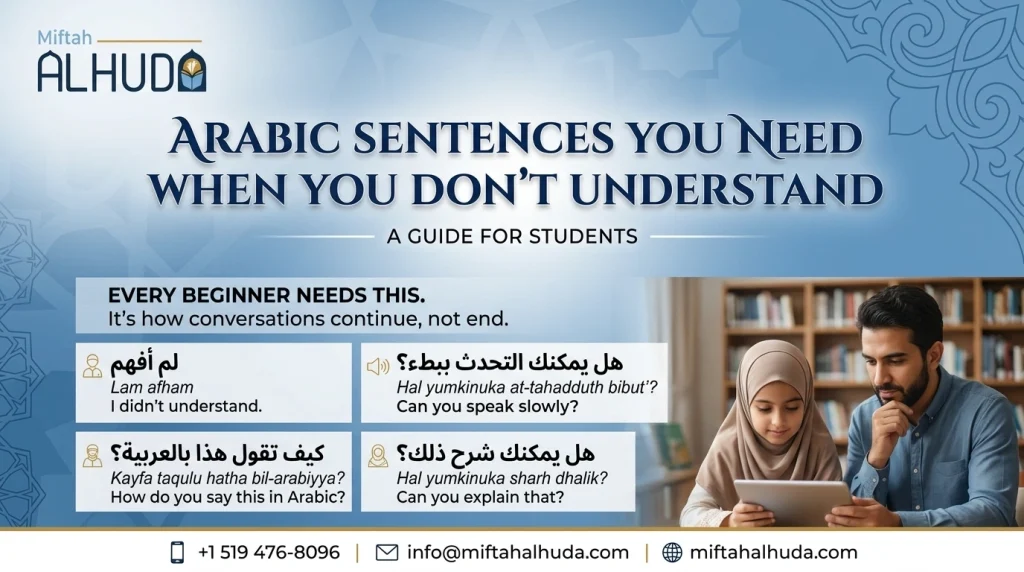
Every beginner needs this section. Not most beginners. Every single one. This is what keeps a conversation limping along instead of just dying the second you hit a word you don’t recognize.
لم أفهم (Lam afham) – I didn’t understand
هل يمكنك التحدث ببطء؟ (Hal yumkinuka at-tahadduth bibut’?) – Can you speak slowly?
ماذا تعني هذه الكلمة؟ (Madha ta’ni hadhihi al-kalima?) – What does this word mean?
كيف تقول هذا بالعربية؟ (Kayfa taqulu hatha bil-arabiyya?) – How do you say this in Arabic?
هل يمكنك شرح ذلك؟ (Hal yumkinuka sharh dhalik?) – Can you explain that?
MSA vs. Spoken Arabic for Daily Conversation
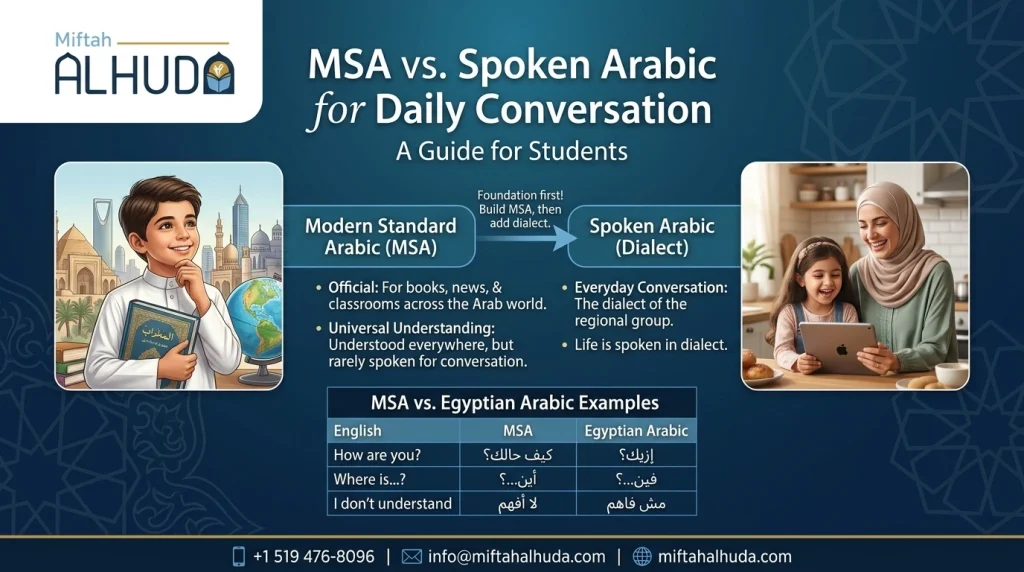
What Is Modern Standard Arabic? Modern Standard Arabic. MSA for short. It’s the “official” version, the one you’ll find in books, on the news, in classrooms, across the whole Arab world.
Is MSA Used in Everyday Conversation? Here’s the honest answer. People understand MSA pretty much everywhere. They just don’t necessarily talk to each other in it. Life becomes part of whatever the dialect of the region turns out to be.
It makes no difference to you, however. The arabic sentences that you learn through arabic for everyday use will find themselves in Cairo, Riyadh, Amman, anywhere, while the people around you speak their own dialect, which is nothing like what you learned.
MSA vs. Egyptian Arabic Examples
| English | MSA | Egyptian Arabic |
| How are you? | كيف حالك؟ | إزيك؟ |
| Where is…? | أين…؟ | فين…؟ |
| I don’t understand | لا أفهم | مش فاهم |
Start with MSA. Always. Add dialect vocabulary on top once that foundation actually feels solid. That order works. Flip it around and you’ll just confuse yourself.
Ready to stop memorizing and actually start talking? Miftah Alhuda runs one-to-one classes with a real teacher who catches your mistakes as they happen, not three lessons later when the habit’s already stuck.
Still not sure? That’s fine. Book the free trial, sit through one class, decide after that.
Contact Us
WhatsApp: +1 519 476-8096
E-Mail: in**@**********da.com
Facebook: https://www.facebook.com/MiftahAlhudaOfficial
Instagram: https://www.instagram.com/miftahalhudaa
Youtube: https://www.youtube.com/@MiftahAl-huda
Tiktok: https://www.tiktok.com/@miftahalhuda00“.
Frequently Asked Questions About Arabic Daily Conversation
What are the most common Arabic sentences?
Greetings, polite phrases, and the basics, “how are you,” “how much is this.” That’s what you’ll actually hear day to day, not the fancy stuff nobody uses.
How am I able to communicate in Arabic in daily life?
Choose a few sentences in Arabic for daily conversation, repeat these sentences aloud every day, and then apply these sentences to real people like a teacher or any language partner. It is fine to talk to oneself in front of the mirror because that’s all that is available sometimes.
What are 10 basic Arabic sentences for beginners?
Hello, thank you, please, how are you, what is your name, where are you from, I don’t understand, how much is this, goodbye, see you later. Ten phrases, way more coverage than you’d expect.
Should I learn MSA or a dialect for conversation?
MSA first, full stop. It’s understood everywhere. Add dialect vocabulary once the basic structure stops feeling forced.
What Arabic phrases should I learn first?
Greetings. Politeness. A few key questions. That’s genuinely it, and that short list covers more ground than most people assume.
How can I practice Arabic sentences every day?
Say a few out loud, every day, no excuses. Drop them into a real conversation, even a thirty second one. Get a teacher to fix your pronunciation early, before the wrong habit sets in and you have to unlearn it later.
Look. A hundred sentences won’t make you fluent. Nobody’s pretending it will. But it’s enough to stop the freeze, in a shop, on a call, in a classroom. Use them enough times and eventually they stop feeling memorized. They start feeling like something you’d actually say.