

Salah preparation entails more than simply standing on the prayer mat at the appropriate moment. It begins before the prayer, with wudu before Salah being one of Muslims’ most essential acts of preparation. Wudu, or practiced purification, prepares us to pray in a condition of physical cleanliness and spiritual readiness.
Wudu has become a natural part of many Muslims’ daily lives. We perform it before the five daily prayers, refresh it when necessary, and use those few peaceful minutes to pause, refocus, and prepare to stand before Allah.
But how should we do wudu? What are the necessary steps? What causes Wudu to break? What should we do if water isn’t available?
Let us go over the entire process in detail and practically, based on the Quran and authentic Sunnah, with guidance from Miftah Al-Huda Academy to help learners comprehend and confidently do wudu and Salah.
What Is Wudu Before Salah?

Wudu is an Islamic practice that involves purifying oneself with clean water before performing various acts of devotion, particularly Salah. It entails washing specific parts of the body in a specific way.
Wudu is intended to achieve more than just physical cleanliness. It also represents preparing for worship. When we wash our hands, lips, face, arms, head, and feet, we prepare to leave distractions behind and focus on prayer.
The Quran defines the importance of purification before prayer and lists all four basic acts of wudu together in a single verse:
“
“O you who have believed, when you rise to [perform] prayer, wash your faces and your forearms to the elbows and wipe over your heads and wash your feet to the ankles.” (Surah Al-Ma’idah, 5:6)
This verse serves as the foundation for the whole structure of wudu, as it creates four pillars of the act: washing the face, washing the arms to the elbows, wiping the head, and washing the feet to the ankles.
Why Is Wudu Important Before Salah?

Wudu Is a Requirement for Salah
Most forms of obligatory Salah require ritual purity. As a result, if a person forgets to perform wudu before praying, they must generally repeat it.
This makes wudu before Salah more than just a recommended practice. It is a crucial element of preparing for prayer, as stated in the verse above, which clearly links the act to “when you rise up for prayer.”
Wudu Helps Us Prepare Spiritually
There is also something profoundly important about washing before prayer. The process provides us with a brief opportunity to slow down.
In a well-known hadith narrated by Uthman reported God’s messenger as saying, “If anyone performs the ablution well, his sins will come out from his body, even coming out from under his nails.” (Bukhari and Muslim.)
We may have spent the past hour working, learning, traveling, conversing, or dealing with challenging situations. Then comes the call to pray. We make wudu, get away from the distractions, and prepare to worship.
In that sense, wudu could serve as a link between daily life and Salah.
When Should We Perform Wudu Before Salah?
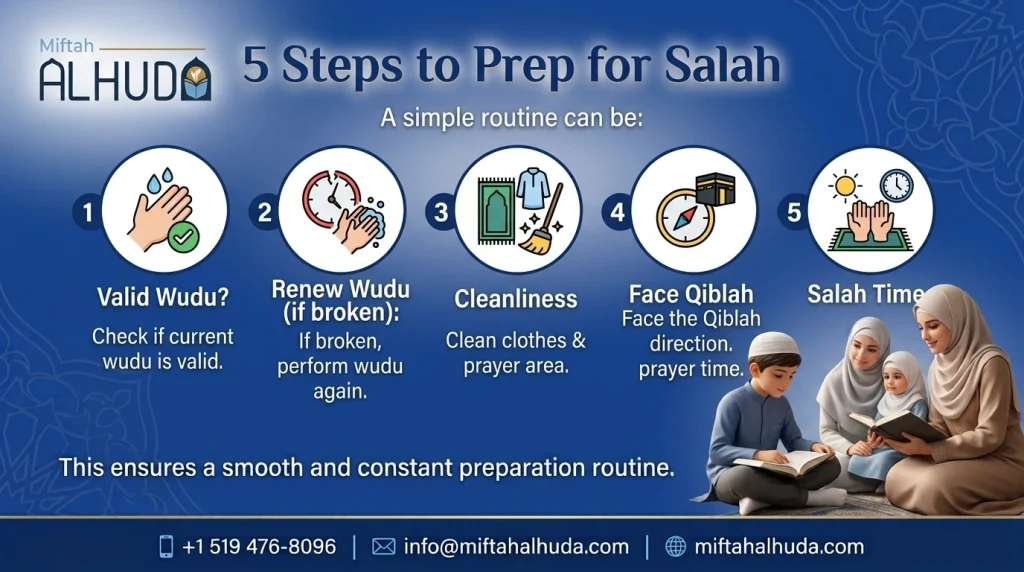
Wudu should be performed before Salah if the person is not already in a state of ritual purity.
If we have already performed wudu and nothing has happened to invalidate it, we are not required to repeat it for each prayer. This is supported by a hadith It was narrated from Ibn Buraidah that his father said:” The Messenger of Allah (ﷺ) used to perform Wudu’ for every prayer. One the day of the Conquest (of Makkah), he offered all the prayers with one Wudu’. ‘Umar said to him: ‘You have done something that you never did before.’ He said: ‘I did that deliberately, O ‘Umar.'” (Sahih Muslim). Scholars consider this narrative as evidence that renewing wudu for each prayer, while virtuous, is not required as long as the previous wudu remains valid.
A simple routine can be:
- Check if our wudu is still valid.
- If it has been broken, then do a wudu.
- Make sure our clothes and prayer area are clean.
- Face the Qiblah.
- Pray when the proper prayer time begins.
This ensures a smooth and constant preparation routine.
10 Steps to Perform Wudu
Different schools of Islamic jurisprudence have varied perspectives on wudu. The following sequence describes the generally used approach, with references to the Quranic verse above and supporting Sunnah where applicable.
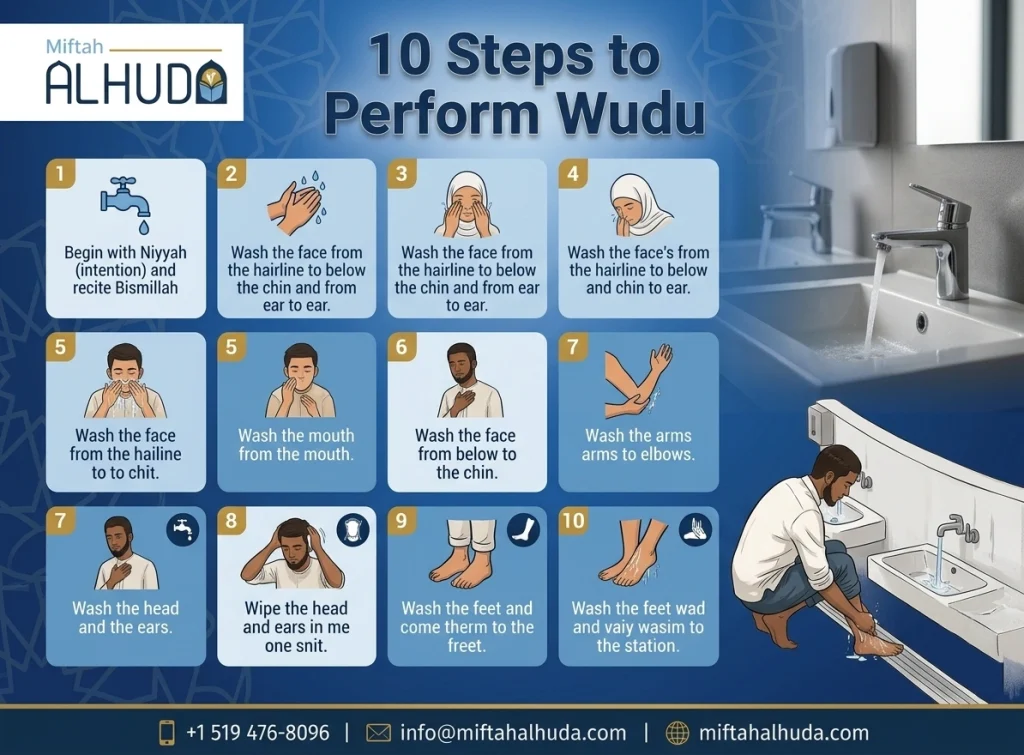
1. Make the Intention for Wudu
We begin by declaring our intention to purify ourselves for worship. The purpose is an act of the heart that does not need to be stated out loud.
This is rooted in the well-known hadith narrated by Umar ibn al-Khattab (may Allah be pleased with him), in which the Prophet ﷺ said “The reward of deeds depends upon the intentions and every person will get the reward according to what he has intended.” (Sahih al-Bukhari). This principle applies to acts of worship generally, including wudu.

2. Say Bismillah
We begin by saying “Bismillah,” which means “in the name of Allah.” This simple phrase reminds us that when performed truly for Allah, even routine actions can become associated with worship.

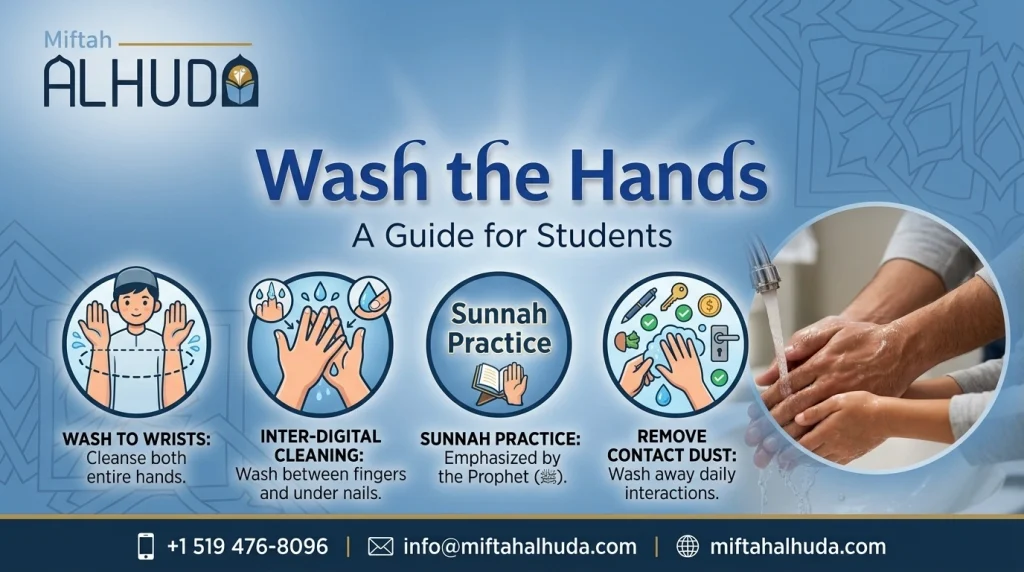
3. Wash the Hands
We wash both hands extensively, usually up to the wrists. The fingers should be properly cleaned, including the spaces between them.
The Prophet ﷺ emphasized the importance of complete hand washing before doing wudu, as the hands come into contact with many things during the day. This is a widely performed Sunnah practice.
4. Rinse the Mouth
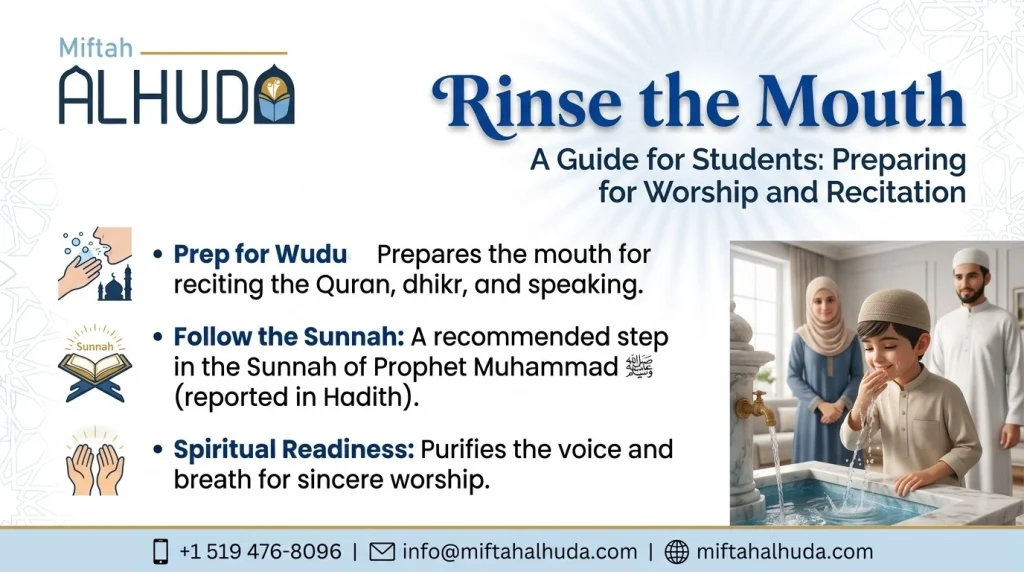
We rinse our mouth with water and spit it out. This step prepares the mouth for reciting the Quran, producing dhikr, and speaking during worship. It is part of the Sunnah way of wudu, as reported in hadith about the Prophet ﷺ performing the act.
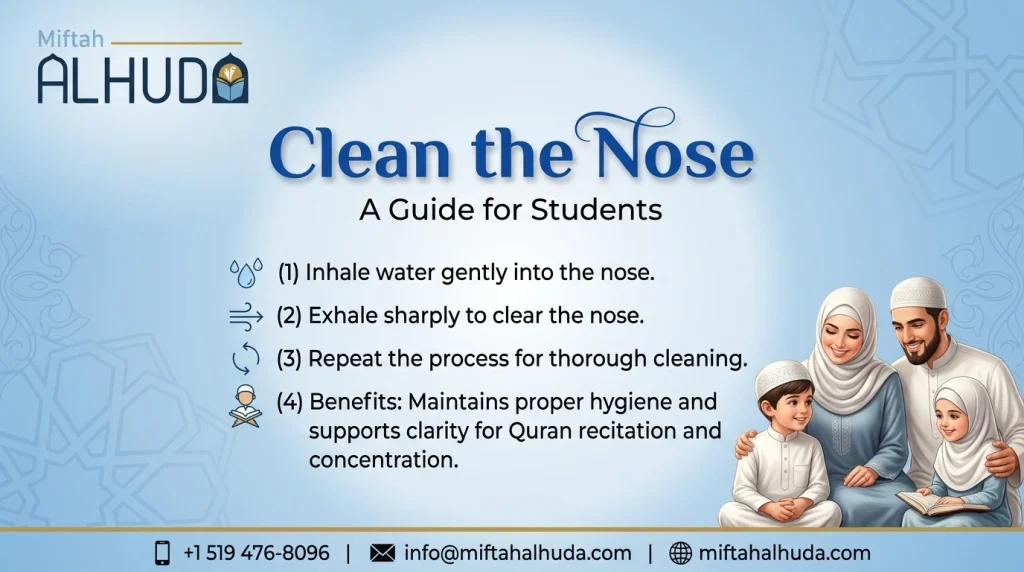
5. Clean the Nose
We gradually pull water into the nose and exhale it. Take care not to cause discomfort, especially for children or those who are sensitive to water.
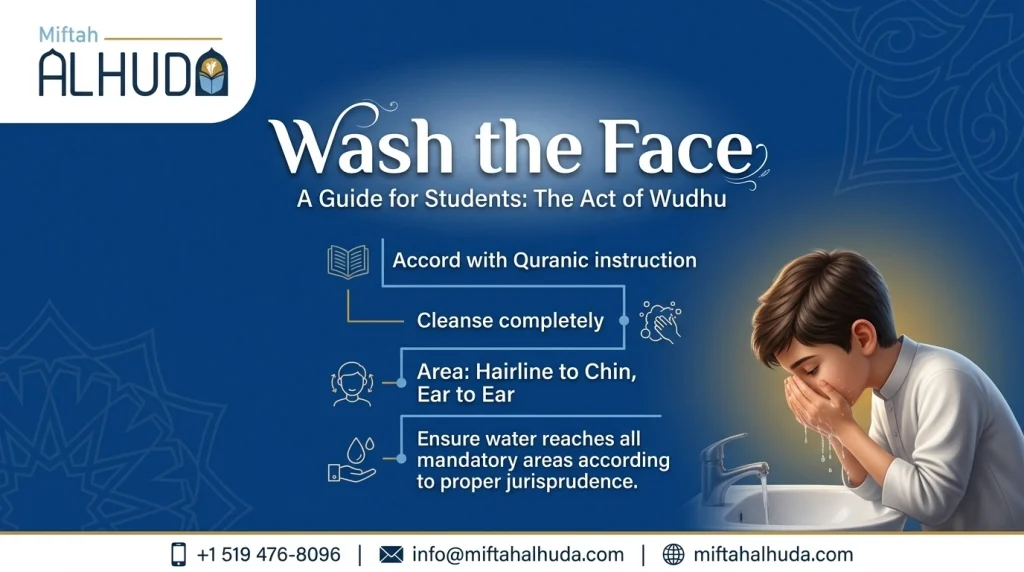
6. Wash the Face
The face is completely cleansed in direct accordance with the Quranic instruction to “wash your faces” . The area frequently extends from the hairline to the chin and from one side of the face to the other. Water should reach the areas that must be washed in accordance with the appropriate jurisprudence.
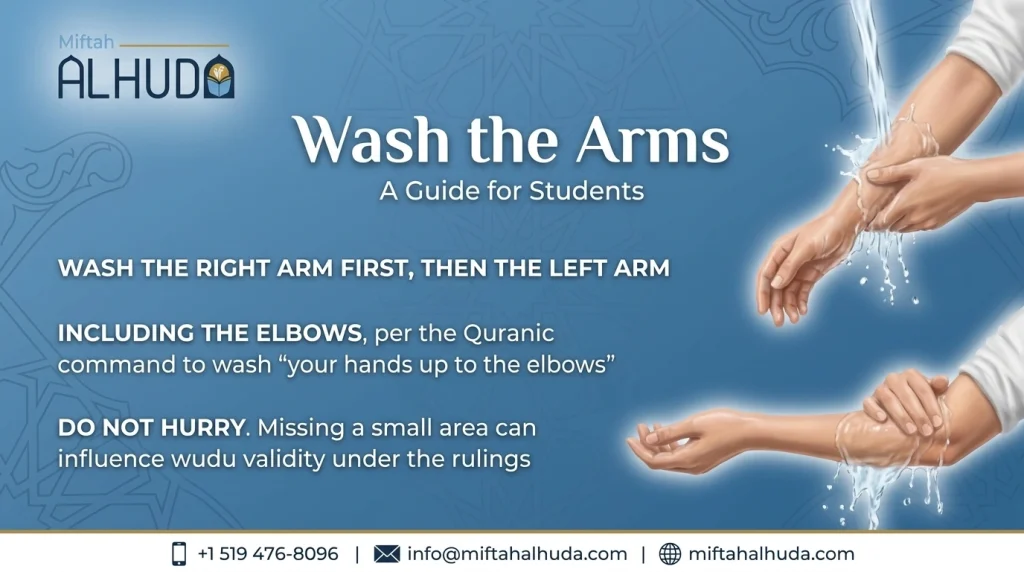
7. Wash the Arms
We wash the right arm first, then the left arm, including the elbows, in accordance with the Quranic command to wash “your hands up to the elbows”.
We should not hurry through this step since missing a little area can influence the validity of wudu under the relevant rulings.
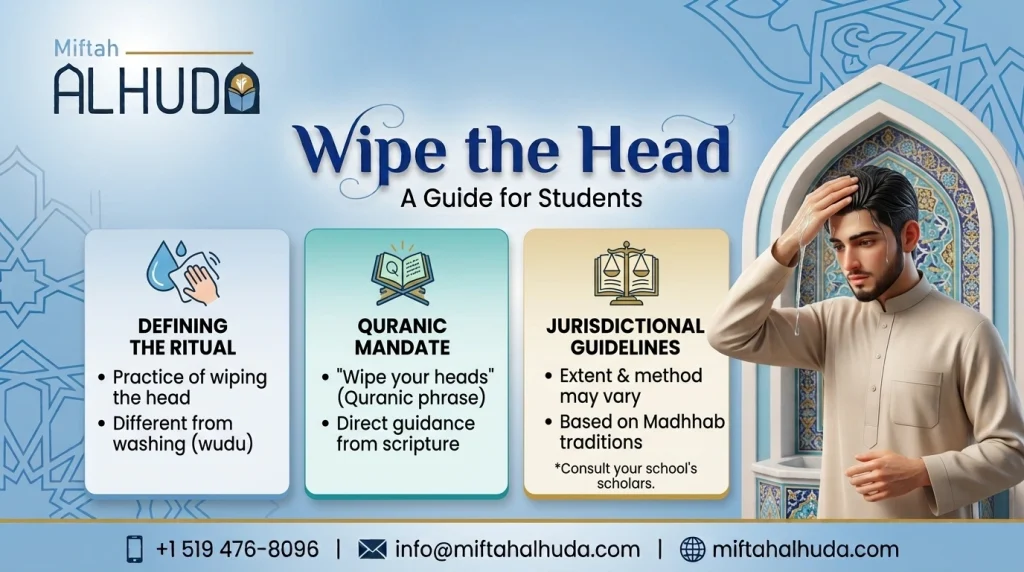
8. Wipe the Head
We then wipe the head with wet hands. This is called masah, and it differs from washing the head, as it matches the Quranic phrase “wipe your heads” rather than “wash.” The exact extent and method of wiping the head may differ between acknowledged schools of Islamic jurisprudence.
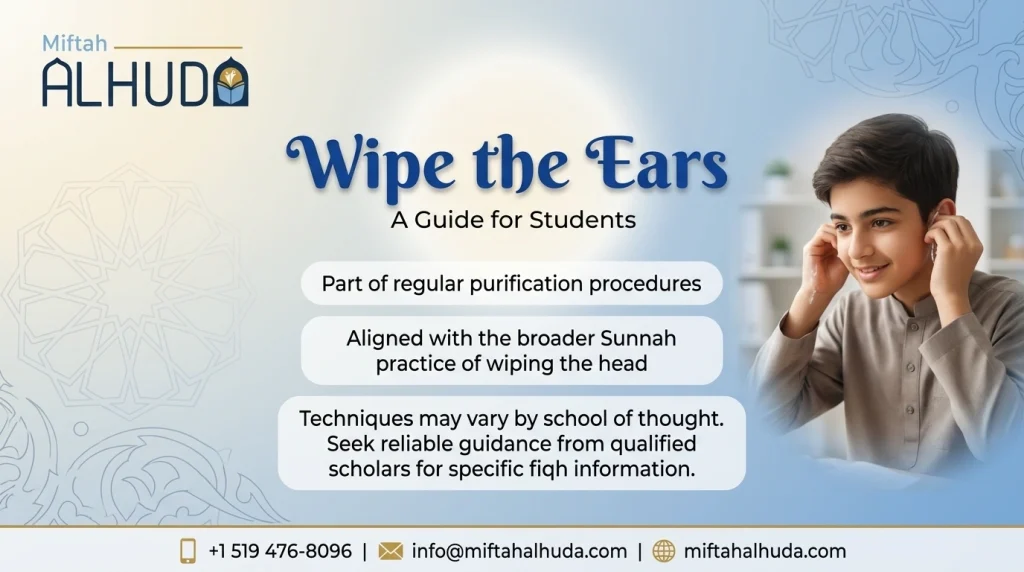
9. Wipe the Ears
The ears are regularly wiped as part of the purification procedure, in line with the more general Sunnah practice of wiping the head. The technique may differ depending on the school being followed, hence Muslims should seek reliable guidance from qualified scholars when they require particular fiqh information.
10. Wash the Feet
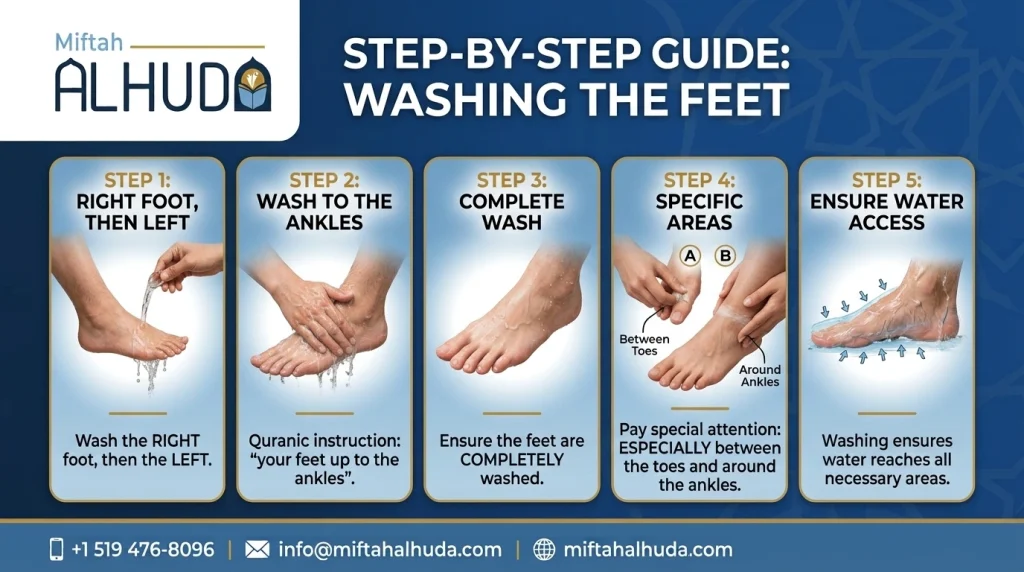
Finally, we wash the right foot, then the left, following the Quranic instruction to wash “your feet up to the ankles” . The feet should be completely washed, especially between the toes and around the ankles, because this ensures that the water reaches all necessary areas.
What Breaks Wudu?

Knowing what invalidates wudu is equally vital as knowing how to perform it. Here are some common examples:
- Urination or defecation.
- Passing wind.
- Loss of consciousness.
- Deep sleep in circumstances where awareness is lost.
- Certain other conditions discussed in Islamic jurisprudence.
The same verse that establishes wudu, Surah Al-Ma’idah 5:6, also references situations connected to the need for purification, mentioning “And if you are in a state of janabah, then purify yourselves. But if you are ill or on a journey or one of you comes from the place of relieving himself or you have contacted women and do not find water, then seek clean earth and wipe over your faces and hands with it. Allah does not intend to make difficulty for you, but He intends to purify you and complete His favor upon you that you may be grateful.” This links the discussion of what necessitates purification directly to the verse’s broader context.
Common Mistakes During Wudu Before Salah
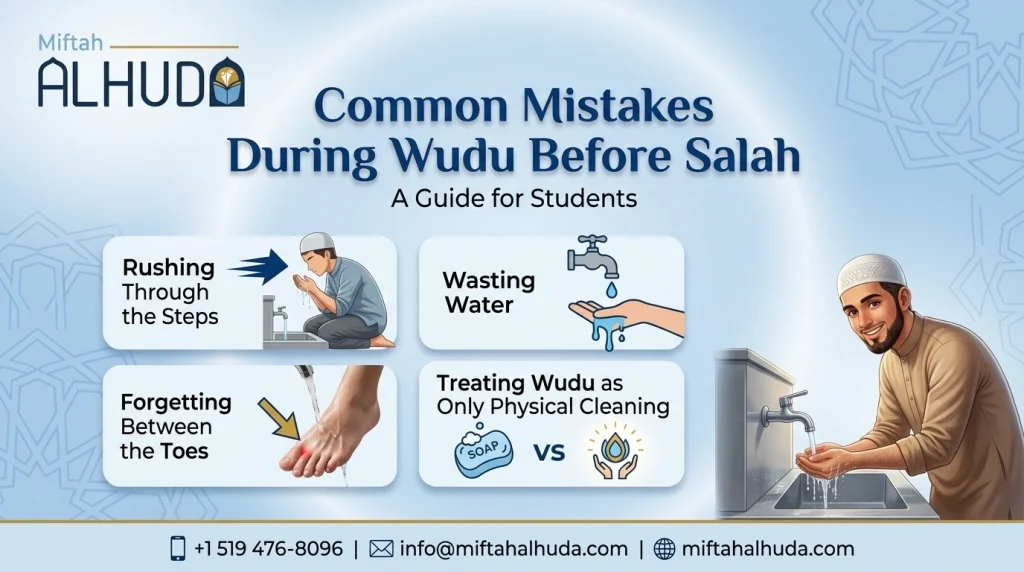
Even though wudu appears simple, beginners can make mistakes.
1. Rushing Through the Steps
Wudu should not be considered a race. Taking a few extra seconds to ensure that every necessary area is washed will help prevent mistakes.
2. Wasting Water
Islam encourages moderation. A hadith narrated by Anas ibn Malik (may Allah be pleased with him) describes how the Prophet ﷺ used to performed ablution with one Mudd and took bath with a Sa’ up to five Mudds. ( Sahih Muslim). This demonstrates that wudu does not necessitate large amounts of water; we should use enough to complete the purifying process without wasting any.
3. Forgetting Between the Toes
The feet deserve careful attention. Water should reach the areas that need to be washed, including between the toes. The Prophet ﷺ gave a serious warning about neglecting this: in a hadith reported by Abdullah ibn Amr and collected in and Sahih Muslim, The Messenger of Allah (ﷺ) lagged behind us on a journey. We travelled (back) and took him; and then came the time of the afternoon prayer, and as we were going to wipe our feet he (the Holy Prophet) called out: Woe to the heels because of Hell-fire.
4. Treating Wudu as Only Physical Cleaning
Wudu certainly involves physical cleanliness, but its purpose in preparing for worship is far more profound. When approached with understanding, those few minutes can help us in transitioning mentally and spiritually into Salah.
Can We Pray Without Wudu?
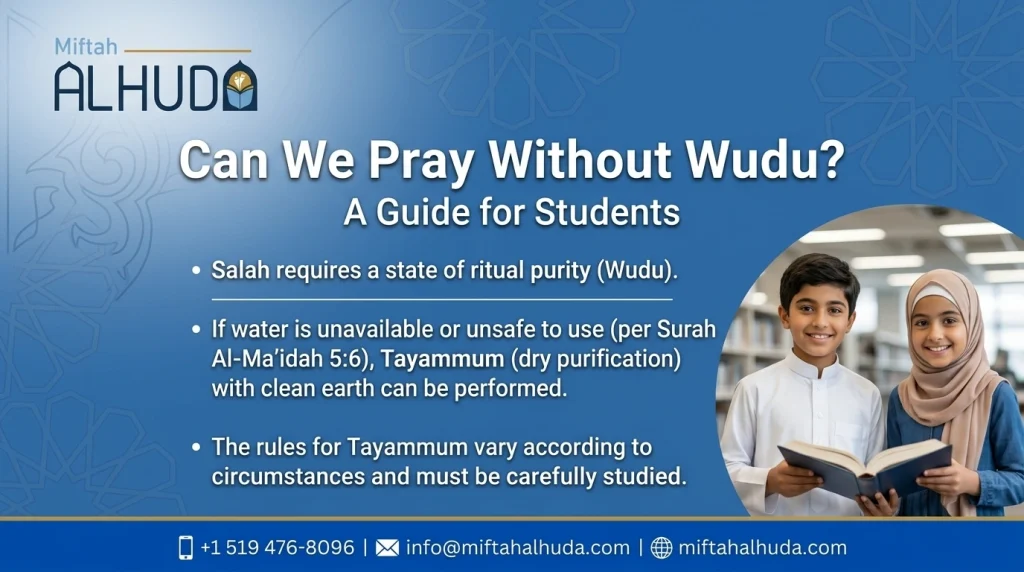
If a person has lost their wudu, they will usually need to recover ritual purity before performing Salah.
However, Islam accepts that water may not be available or may be unsafe to use. In such cases, Tayammum, or dry purification with clean earth or an appropriate natural surface, may apply under certain conditions, as stated in the continuation of Surah Al-Ma’idah 5:6: “…and do not find water, then seek clean earth and wipe over your faces and hands with it.”
Tayammum’s rules should be carefully studied because their applicability varies according to circumstances.
Wudu When Water Is Difficult to Use

Islamic purification was created with practicality in mind. If using water will cause serious harm, or if water is unavailable in a qualifying situation, Islamic law as stated explicitly in the preceding verse allows Tayammum as a substitute and concession.
This is one of the reasons why understanding the concepts of purification is crucial. We shouldn’t assume that a brief challenge makes worship impossible. Instead, we should study what Islamic law requires in the specific circumstances we face.
How Wudu Connects to Better Salah?

Proper preparation can improve the quality of our prayers. Imagine trying to start an important meeting with your thoughts still racing from the last task. It takes a while to calm down. Wudu can deliver that moment.
The hadith mentioned earlier that minor sins fall away with careful, complete wudu (Sahih Muslim) illustrates why the Prophet ﷺ treated this act as spiritually significant, not just a physical checklist.
As we wash, we can consciously direct our focus to Allah. By the time we finish, we are not only physically fit, but also mentally ready to stand for Salah. This is especially beneficial for those who struggle with distractions during prayer.
Teaching Children Wudu Before Salah

Children can learn Wudu with repetition and supportive guidance. Rather than overwhelming them with complex terms, we could teach the steps gradually:
- Begin with the fundamental sequence.
- Show each movement.
- Allow your child to practice.
- Please correct mistakes.
- Connect Wudu to the purpose of Salah.
A quiet learning environment is frequently more helpful than criticism. Children should understand that wudu is not a chore. It is part of being ready to communicate with Allah through worship.
How to Make Wudu a Consistent Habit?

When we integrate wudu into our everyday routine, we can achieve greater consistency. We can do:
- Keep essential supplies easily accessible.
- Learn the proper sequence.
- Avoid excessive repetition.
- Perform wudu gently.
- When we are unsure about something, we should review the rules.
- Children can learn the procedure through practical demonstrations.
Wudu before Salah can eventually become as natural as preparing for any other important part of the day.
Learning Wudu and Salah Correctly
Learning how to do wudu is one aspect of learning how to pray properly. Beginners can benefit from studying purification, prayer movements, recitations, and basic Islamic rules together.
Structured online Islamic education can help with this process, particularly for students who want to learn step by step from qualified instructors.
Miftah Al-Huda Academy offers structured online courses aimed to help students gain knowledge, confidence, and consistency in their Islamic and Quranic studies.
A guided learning environment can be very useful when we wish to grasp not just the procedures of worship, but also how to perform them correctly, with due reference to the Quran and authentic Sunnah.
Conclusion
Wudu before Salah is a beautiful preparation for standing before Allah, established explicitly in the Quran and elaborated by the Prophet’s Sunnah. It blends physical purification with spiritual preparation, allowing us to leave distractions behind and approach prayer more consciously.
We can make purification a confident and meaningful part of our everyday worship by learning the proper processes, comprehending what invalidates wudu, avoiding common mistakes, and adhering to solid Islamic instruction based on reliable sources.
Most essential, we need to remember that learning takes time. Whether we are new to Salah or merely want to improve our practice, every thoughtful step toward better comprehending our worship is helpful.
Ready to Learn Wudu and Salah the Right Way?
Take the next step in your Islamic learning journey with Miftah Al-Huda Academy. Learn wudu, Salah, and essential Islamic practices through clear, step-by-step guidance from qualified teachers.
Start your journey today with a FREE TRIAL and discover how structured Islamic learning can help you pray with greater knowledge, confidence, and peace of mind.
Contact Us
- WhatsApp: +1 519 476-8096
- E-Mail: in**@**********da.com
- Facebook: https://www.facebook.com/MiftahAlhudaOfficial
- Instagram: https://www.instagram.com/miftahalhudaa
- Youtube: https://www.youtube.com/@MiftahAl-huda
- Tiktok: https://www.tiktok.com/@miftahalhuda00
Frequently Asked Questions
1. What is the main purpose of wudu before Salah?
Wudu establishes the ritual purity essential for Salah, as stated in Surah Al-Ma’idah (5:6), and prepares us both physically and spiritually for worship.
2. Does passing gas break wudu?
Yes. Passing wind invalidates wudu, thus it must be renewed before Salah.
3. Can we pray if we forget whether our wudu is still valid?
Islamic jurisprudence contains ideas addressing certainty and doubt. The Prophet ﷺ addressed a similar case directly: Abu Huraira reported God’s messenger as saying, “If any of you has a pain in his abdomen, but is doubtful whether or not anything has issued from him, he should not leave the mosque unless he hears a sound or perceives a smell.” Muslim transmitted it. implying that certainty of wudu is not undone by simple doubt.
4. Is Tayammum a replacement for wudu?
Tayammum can be used as an alternate means of purification in some circumstances, such as when water is unavailable or unsafe to use, as stated in the second half of Surah Al-Ma’idah 5:6. Its specific conditions should be obtained from reliable Islamic sources.
5. Can children learn wudu before learning the complete Salah?
Absolutely. Teaching youngsters the basic processes of purification can be a great starting point for learning Salah.
6. Where can we learn wudu and Salah step by step?
We can study with a competent Islamic teacher or participate in an organized online Islamic education program like Miftah Al-Huda Academy, which uses guided learning to make the process easier to understand and apply.