
Masjid Al Haram in Mecca has a unique and central position in Islam. It is more than just a historic mosque or a renowned place of prayer. It is the sacred sanctuary surrounding the Kaaba, the direction Muslims face while praying, and the place associated with the important Hajj and Umrah rites.
For Muslims all across the world, Masjid Al Haram represents faith, worship, unity, sacrifice, and dedication to Allahand, as we will see, it is also one of the clearest symbols of unity in the Muslim Ummah.
Miftah Al-Huda Academy will explain why this mosque is so significant, allowing you to grasp not just its history but also the deeper spiritual significance behind the acts of devotion performed there.
The Meaning of Masjid Al Haram
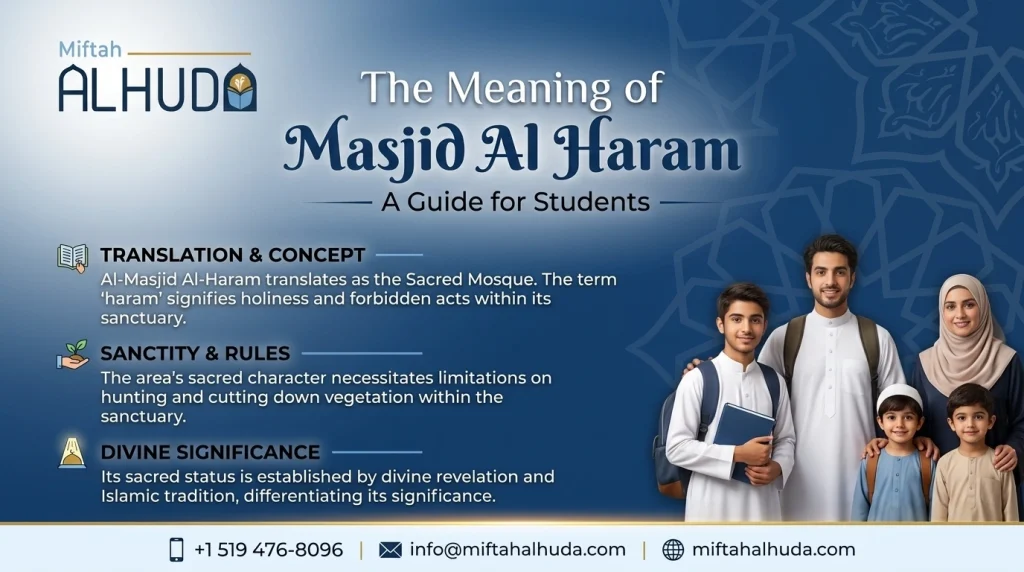
The Arabic term Al-Masjid Al-Haram translates as the Sacred Mosque. The word haram is related with holiness and forbidden activities within the sacred sanctuary.
The area’s sanctity necessitates specific rules and protections. Islamic sources emphasize Makkah’s sacred character, including limitations on activities such as hunting and cutting down vegetation within the sanctuary.
This sacred status differentiates Masjid Al Haram. It is a location whose significance was established by divine revelation and Islamic tradition.
The Kaaba at the Heart of Masjid Al Haram
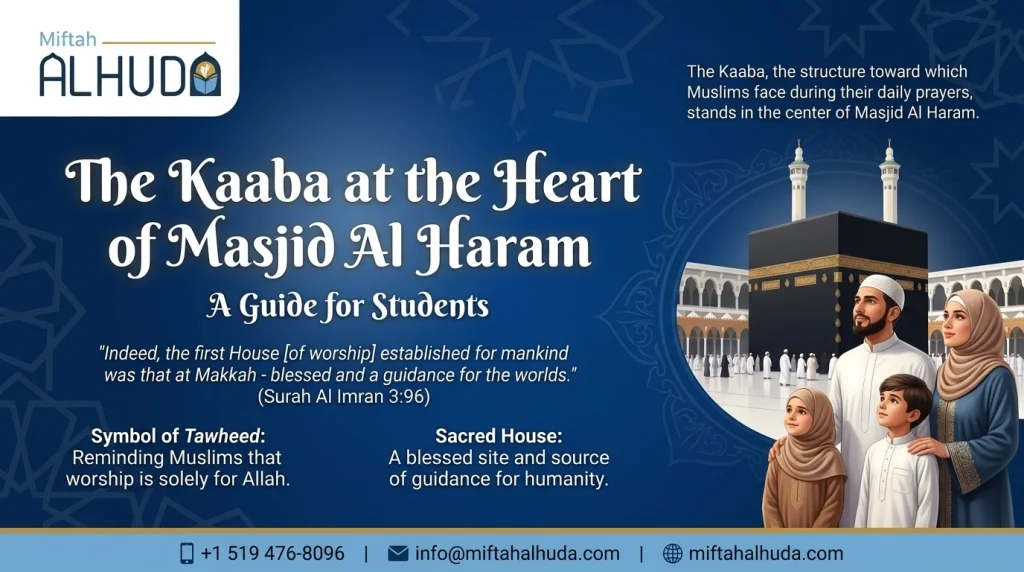
The Kaaba, the structure toward which Muslims face during their daily prayers, stands in the center of Masjid Al Haram.
According to the Quran, the Sacred House is a blessed site and a source of guidance for humanity:
“Indeed, the first House [of worship] established for mankind was that at Makkah – blessed and a guidance for the worlds.” (Surah Al Imran 3:96)
Thus, the Kaaba is much more than just a structure. It is a powerful symbol of Tawheed, reminding Muslims that their worship is solely for Allah.
The First House of Worship
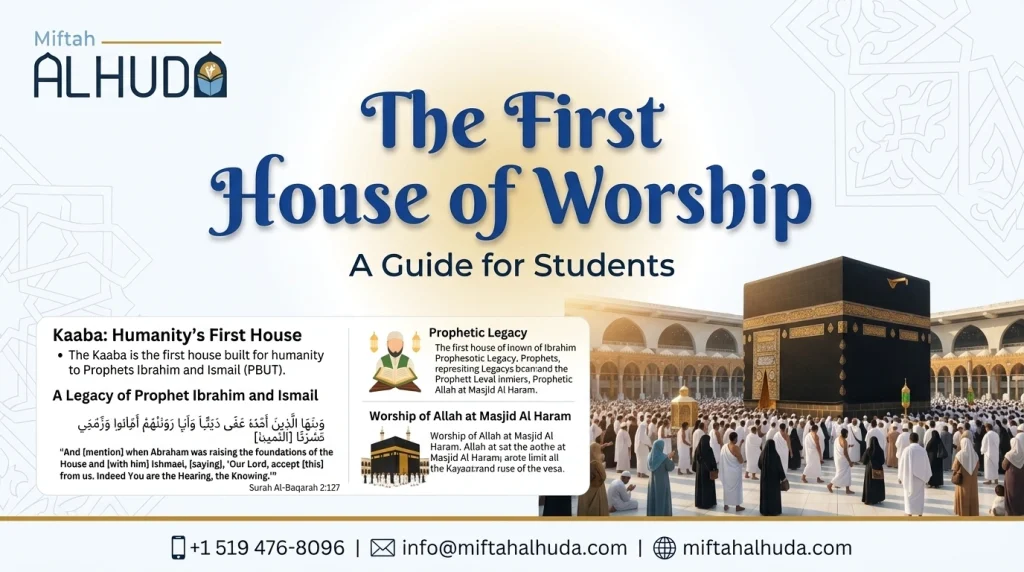
The Kaaba is described in the Quran as the first house built for humanity. Its spiritual significance goes back to the existence of Prophet Ibrahim and his son Prophet Ismail, may peace be upon them.
According to the Quran, Ibrahim and Ismail raised the foundations of the House while praying to Allah to accept their efforts:
“And [mention] when Abraham was raising the foundations of the House and [with him] Ishmael, [saying], “Our Lord, accept [this] from us. Indeed You are the Hearing, the Knowing..” (surah Al-Baqarah 2:127)
This history connects Masjid Al Haram to the prophetic legacy and the worship of Allah.
The Legacy of Prophet Ibrahim and Prophet Ismail
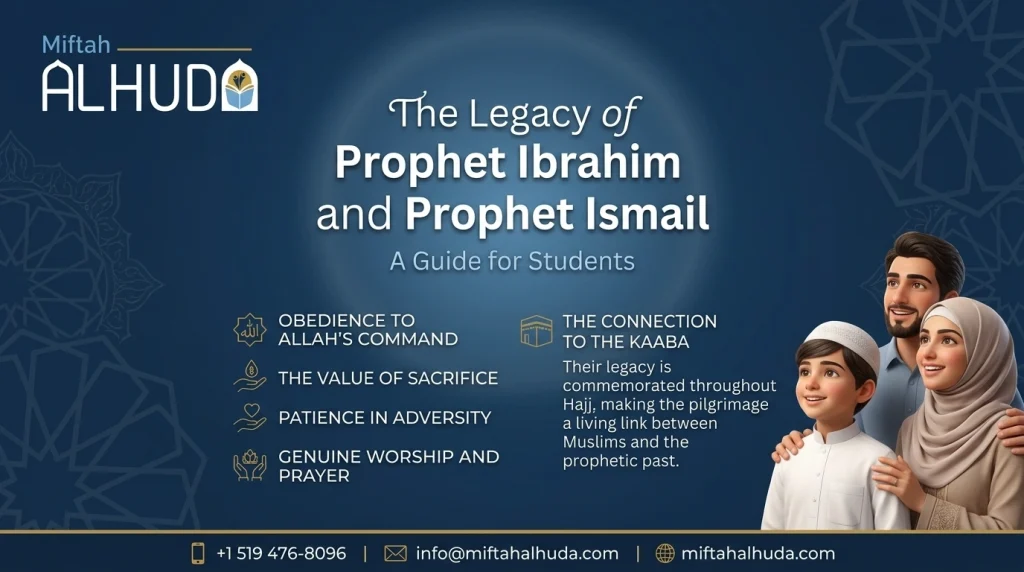
The story of Prophet Ibrahim and Prophet Ismail give Muslims valuable lessons in obedience, sacrifice, patience, and genuine worship.
Their connection to the Kaaba is commemorated throughout Hajj, making the pilgrimage a living link between Muslims now and the prophetic legacy of the past.
Masjid Al Haram as the Qiblah of Muslims
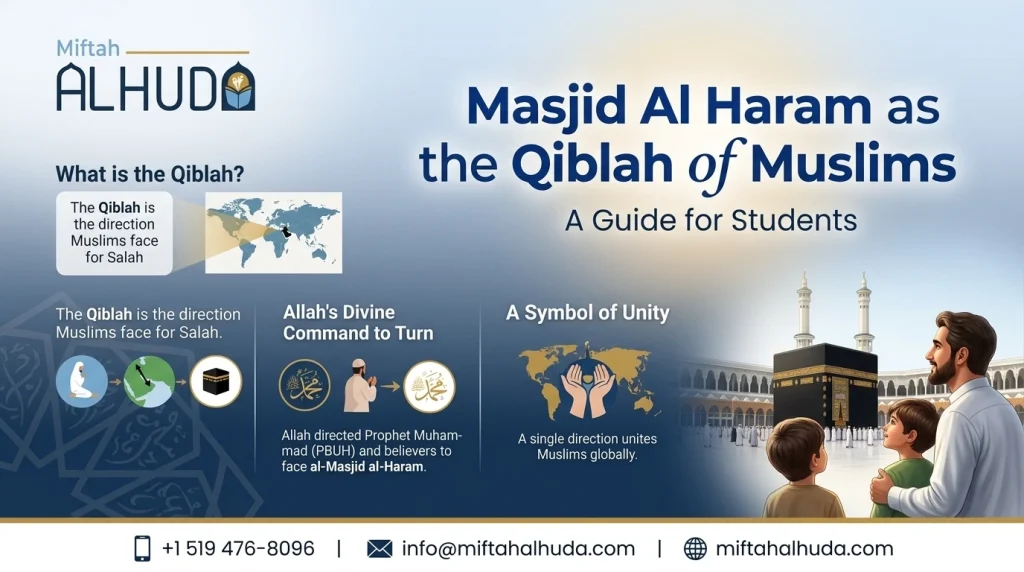
Masjid Al Haram in Mecca is notable because it includes the Muslim Qiblah.
The Qiblah is the direction Muslims face while performing Salah. Allah directed Prophet Muhammad ﷺ and believers to visit Al-Masjid Al-Haram:
“So from wherever you go out [for prayer, O Muhammad] turn your face toward al- Masjid al-Haram, and indeed, it is the truth from your Lord. And Allah is not unaware of what you do.” (surah Al-Baqarah 2:144)
This single, shared direction of prayer is one of the clearest expressions of what unites Muslims everywhere, a theme explored more fully later in this article.
The Change of the Qiblah
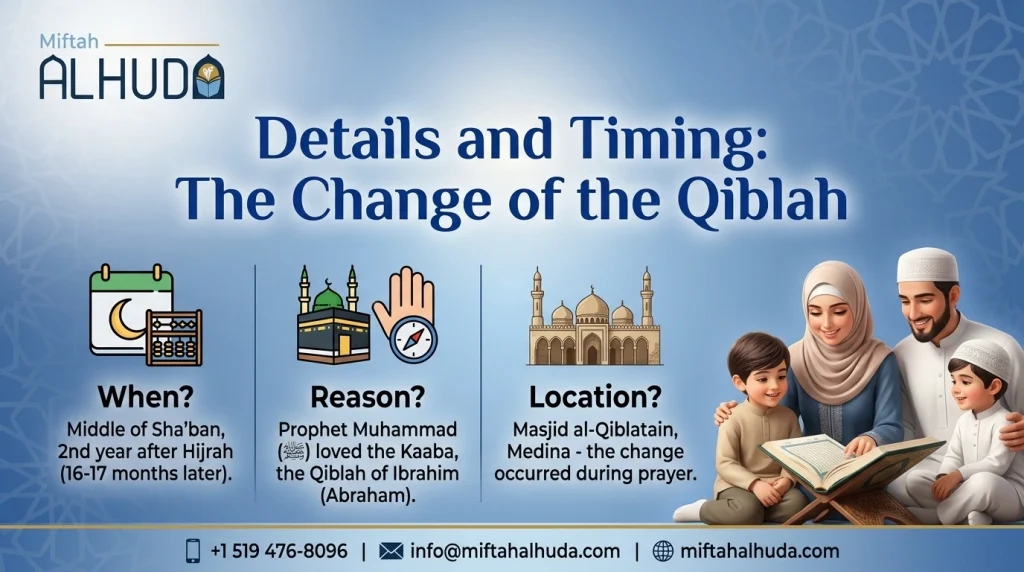
The Qibla Shift was a turning point in Islamic history when the direction of Muslim prayer switched from Jerusalem (Bayt al-Maqdis) to the Kaaba in Mecca.
Details and Timing
- When: It took place in the middle of Sha’ban, the second year following the Hijrah (16-17 months after the Prophet’s migration to Medina).
- Reason: Prophet Muhammad (ﷺ) enjoyed facing the Kaaba, which was the qibla of Prophet Ibrahim (Abraham), and would seek revelation from the sky.
- Location: The transformation occurred while the Prophet was leading Muslims in prayer at what is now known as Masjid al-Qiblatain (the Mosque of the Two Qiblas), in Medina.

Lessons Learned
- A Test of Faith and Obedience: The alteration tested Muslims’ certainty and obedience to God’s and His Messenger’s commandments, regardless of their own preferences.
- The Nation’s Independence: The event represented the Muslim community’s particular identity, distinguishing it from other nations.
Its Connection to Hajj and Umrah
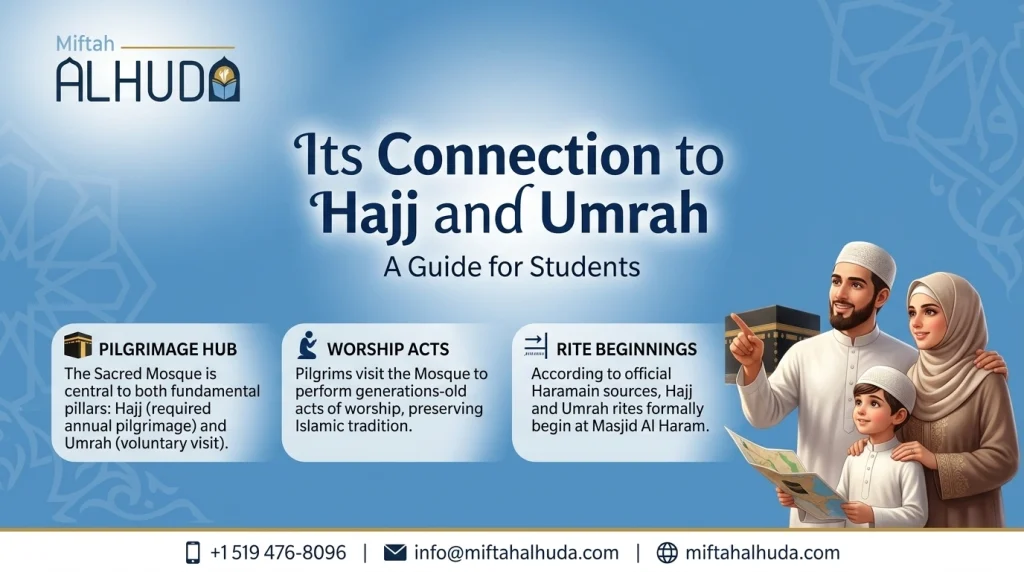
Masjid Al Haram plays an important role in the Hajj and Umrah, two fundamental types of Islamic pilgrimage.
Pilgrims visit the Sacred Mosque to perform acts of worship that have been practiced and preserved through generations of Muslims.
According to the official Haramain website, Masjid Al Haram is where the Hajj and Umrah rites begin.
Tawaf Around the Kaaba
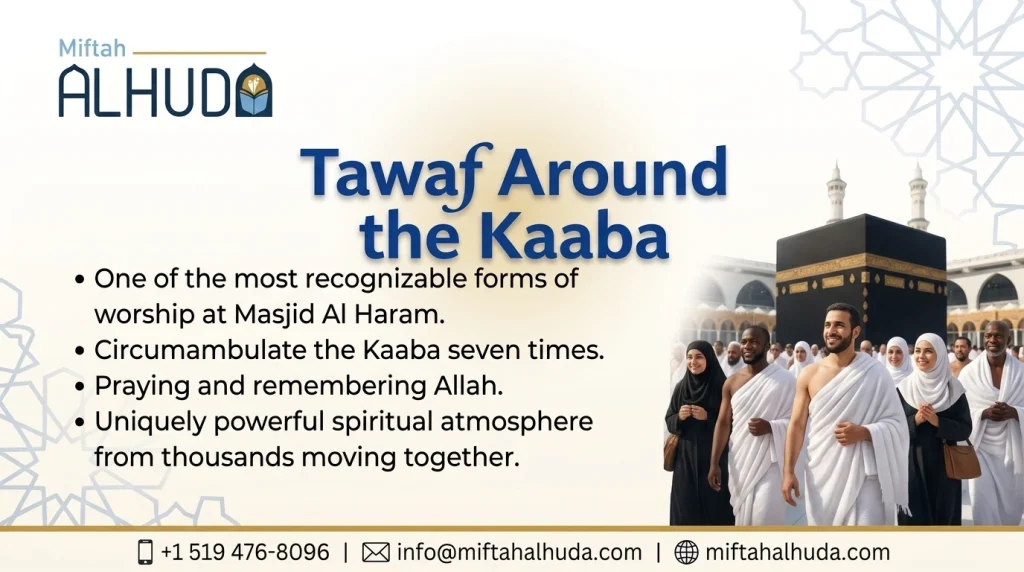
Tawaf is one of the most recognizable forms of worship at Masjid Al Haram.
Pilgrims circumambulate the Kaaba seven times while praying and remembering Allah. The movement of thousands of people around the Kaaba all performing the same act at the same time, gives Tawaf a uniquely powerful spiritual atmosphere.
Sa’i Between Safa and Marwah
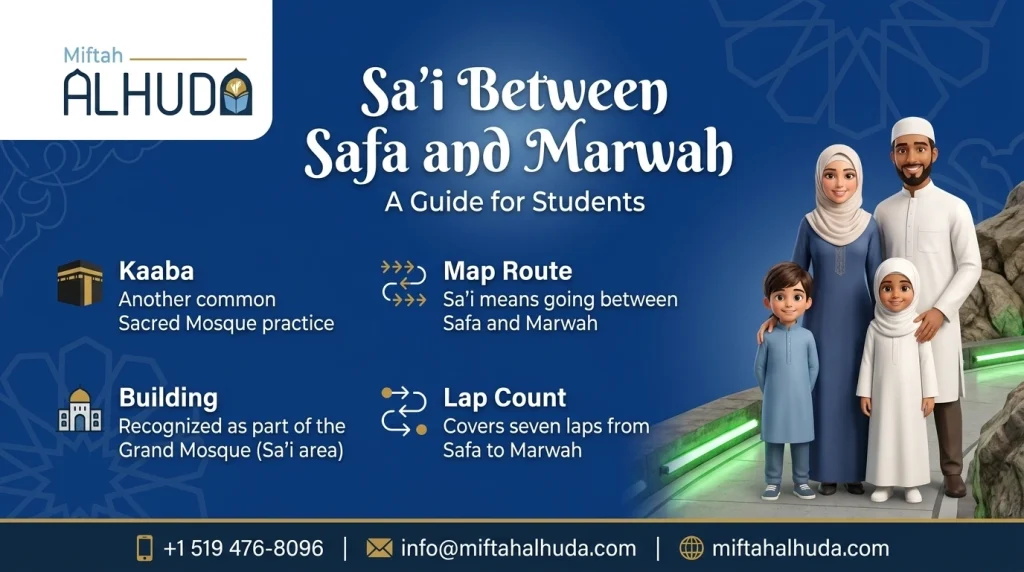
Another common Sacred Mosque practice is Sa’i, which means going between Safa and Marwah.
The official Haramain authority recognizes the Sa’i area as part of the Grand Mosque, stating that it covers seven laps from Safa to Marwah.
The Story Behind Safa and Marwah

Safa and Marwah are associated with the story of Hajar, Prophet Ibrahim’s wife, and her search for water for her son Ismail.
Her dedication and faith in Allah became part of the pilgrimage practice. This teaches Muslims that genuine effort, patience, and faith in Allah may be relevant across generations.
The Special Reward of Prayer in Masjid Al Haram
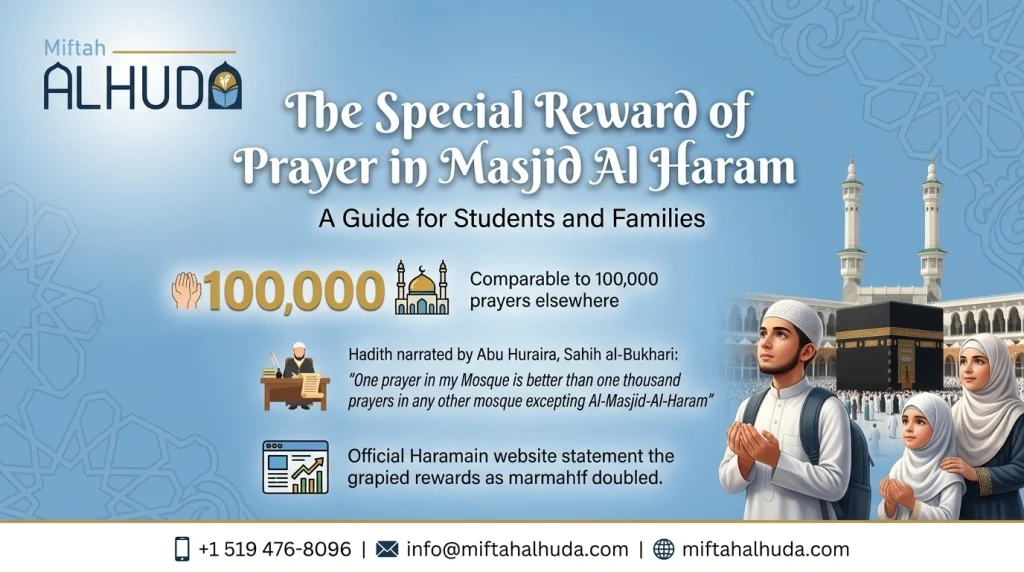
Prayer at Masjid Al Haram has a special significance in Islam. According to a well-known hadith about the benefits of prayer in Al-Masjid Al-Haram, praying in the Sacred Mosque results in a reward comparable to 100,000 prayers elsewhere.
Narrated Abu Huraira:
Allah’s Messenger (ﷺ) said, “One prayer in my Mosque is better than one thousand prayers in any other mosque excepting Al-Masjid-AI-Haram.”( Sahih al-Bukhari )
The official Haramain website also indicates that the reward for praying there is doubled one hundred thousand times.
This incredible virtue inspires Muslims to respect worship at the Sacred Mosque while remembering that the real purpose of devotion is sincerity and seeking Allah’s pleasure.
Why Masjid Al Haram Is a Sacred Sanctuary?
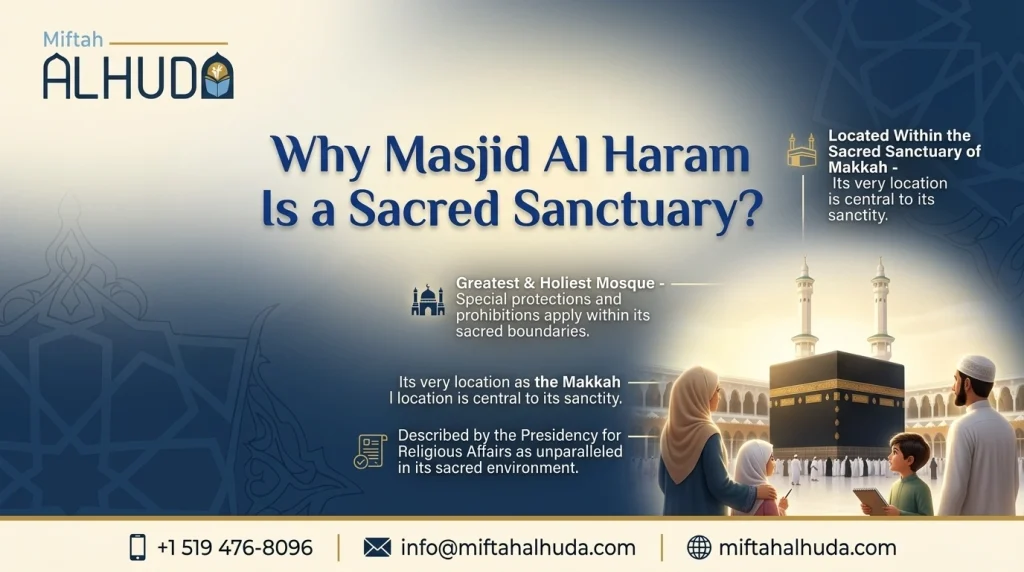
Masjid Al Haram is located within the sacred sanctuary of Makkah. The sanctity of the area is one of its defining characteristics.
The Presidency for Religious Affairs describes Al-Masjid Al-Haram as the greatest and holiest mosque in Islam and notes that special prohibitions apply within its sacred environment.
A Place of Peace and Protection

The sacred character of Makkah reflects the Islamic emphasis on security, reverence, and protection.
The sanctuary is intended to be treated with exceptional respect. Its sacredness encourages visitors to control their behavior, avoid harm, and approach worship with humility.
Important Sacred Landmarks Inside Masjid Al Haram
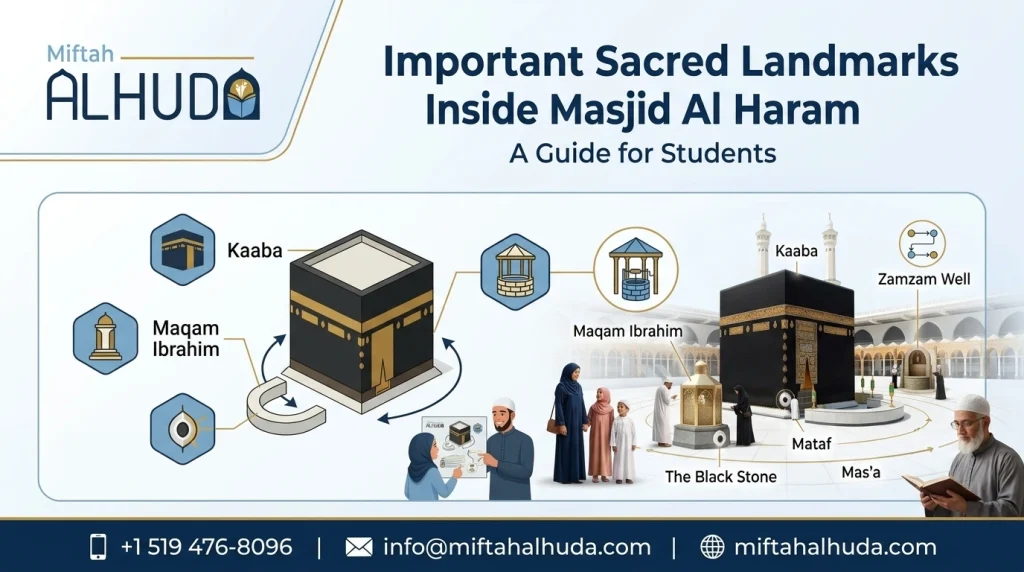
Masjid Al Haram contains many places associated with Islamic history and pilgrimage.
They include the Kaaba, Maqam Ibrahim, the Black Stone, Zamzam, Mataf, and Mas’a.
Maqam Ibrahim
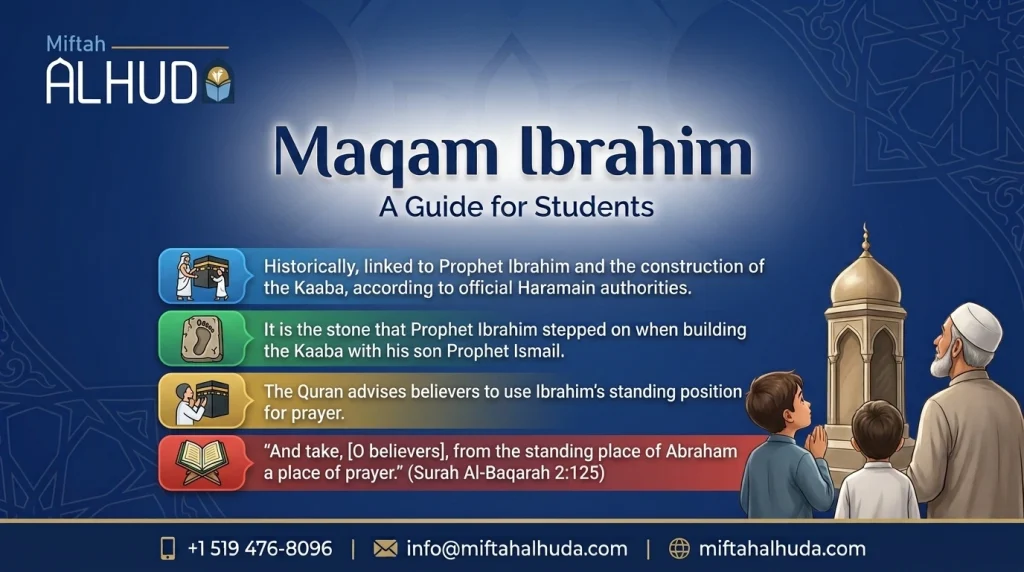
Maqam Ibrahim is linked to Prophet Ibrahim and the construction of the Kaaba. According to the official Haramain authorities, it is the stone that Ibrahim stepped on when building the Kaaba with his son Ismail.
The Quran also advises believers to use Ibrahim’s standing position for prayer:
“And [mention] when We made the House a place of return for the people and [a place of] security. And take, [O believers], from the standing place of Abraham a place of prayer. And We charged Abraham and Ishmael, [saying], “Purify My House for those who perform Tawaf and those who are staying [there] for worship and those who bow and prostrate [in prayer].” (surah Al-Baqarah 2:125)
The Black Stone
The Black Stone is located in one of the Kaaba’s corners. During Tawaf, pilgrims may kiss or touch the stone, as the Prophet Muhammad ﷺ did. However, this is not the same as worshiping the stone itself. Muslims worship Allah alone, yet also honor the Black Stone as part of the prophetic legacy.
Zamzam
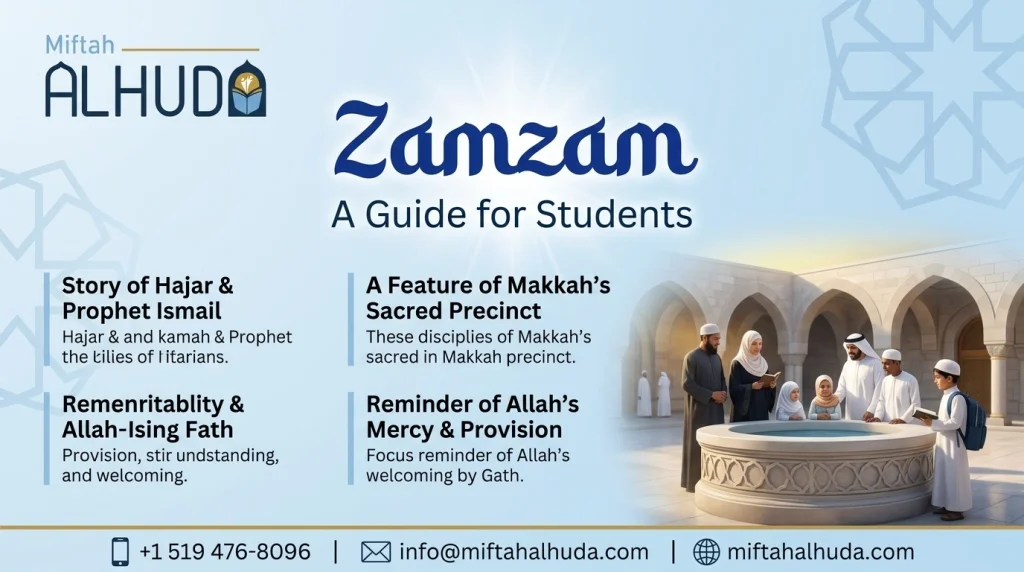
The Zamzam well is another well-known feature of Makkah’s sacred precinct.
Its story is strongly linked to Hajar and Prophet Ismail, and it has become a timeless reminder of Allah’s mercy and provision.
Masjid Al Haram and Muslim Unity
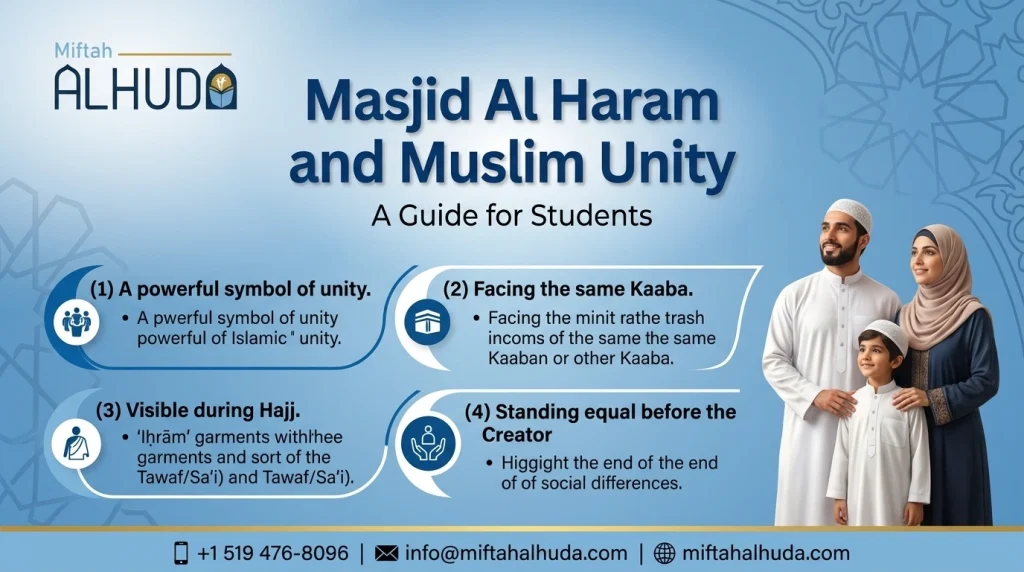
Few places on Earth express Islam’s global unity as powerfully as Masjid Al Haram. Every day, millions of Muslims wherever they live, whatever their nationality, language, or social status turn to face the same Kaaba in prayer.
During Hajj, this unity becomes visible: Muslims from every corner of the world gather wearing simple, unadorned garments and performing the very same rites, from Tawaf around the Kaaba to Sa’i between Safa and Marwah.
In these moments, wealth, occupation, and cultural background fall away. The official description of the Grand Mosque highlights that Muslims come from all around the world and stand equal before their Creator, a reminder that before Allah, no worshipper holds a higher rank than another except through piety.
Spiritual Lessons We Learn From Masjid Al Haram
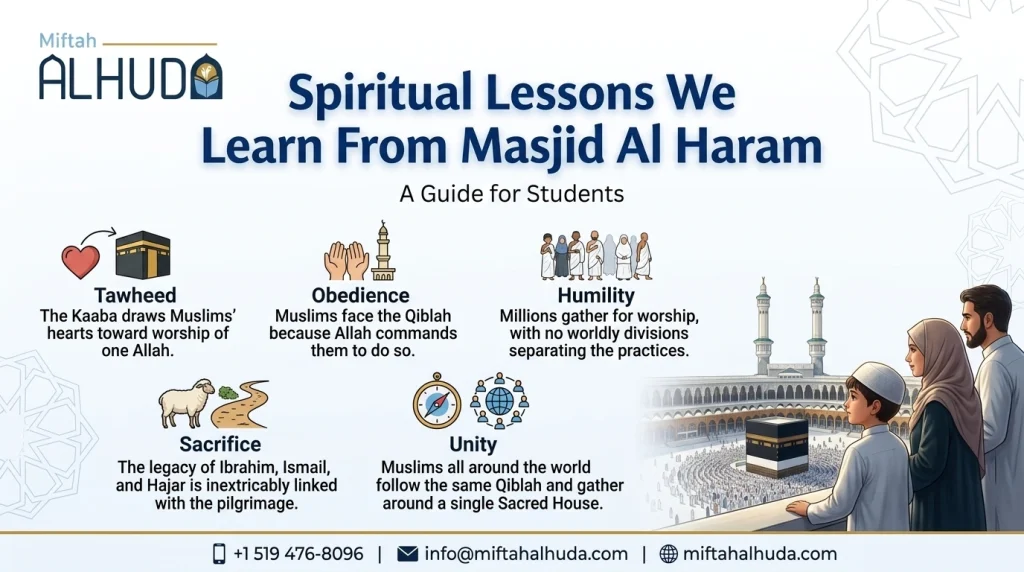
The significance of Masjid al Haram goes beyond its physical location. It teaches Muslims some timeless spiritual lessons.
- Tawheed: The Kaaba draws Muslims’ hearts toward the worship of one Allah.
- obedience: Muslims face the Qiblah because Allah commands them to do so.
- humility: Millions of people gather for worship, with no worldly divisions separating the practices.
- sacrifice: The legacy of Ibrahim, Ismail, and Hajar is inextricably linked with the pilgrimage.
- unity: Muslims all around the world follow the same Qiblah and gather around a single Sacred House.
Why Muslims Long to Visit Masjid Al Haram?
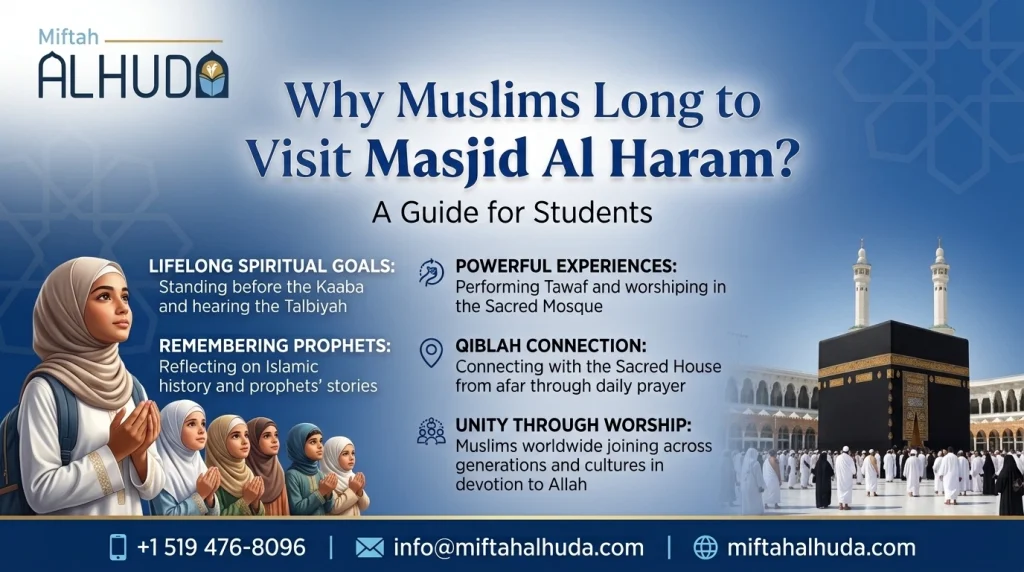
For many Muslims, visiting Masjid Al Haram is one of their lifelong spiritual goals.
Standing before the Kaaba, hearing the Talbiyah, doing Tawaf, worshiping in the Sacred Mosque, and remembering the prophets’ stories can all result in a powerful spiritual experience.
However, the significance of Masjid Al Haram is not dependent on physical presence within it. Every time Muslims face the Qiblah in prayer, they connect with the Sacred House.
That is what makes Masjid Al Haram so special: through worship of Allah, Muslims from all over the world come together across generations and cultures.
Conclusion
Masjid Al Haram in Mecca holds Islam’s holiest ground: home to the Kaaba, the Qiblah of every Muslim, and the heart of Hajj and Umrah. Beyond its history, it is the clearest emblem of the Muslim Ummah’s unity: one House, one direction, and one faith shared by the entire world.
Understanding these meanings can’t be completed through reading alone; it takes guidance from those who can unpack the fiqh and wisdom behind the text.
That’s the purpose behind Miftah Al-Huda Academy‘s courses: taking students from the story of the Kaaba and the change of the Qiblah through to the rulings of Hajj and Umrah, guided by qualified scholars who cover the details a single article can’t.
Ready to deepen your understanding of Islam?
Join Miftah Al-Huda Academy and learn directly from qualified scholars through our structured Islamic courses, designed to be clear, practical, and easy to follow.
Start your journey today with a FREE trial class!
Contact Us
- WhatsApp: +1 519 476-8096
- E-Mail: in**@**********da.com
- Facebook: https://www.facebook.com/MiftahAlhudaOfficial
- Instagram: https://www.instagram.com/miftahalhudaa
- Youtube: https://www.youtube.com/@MiftahAl-huda
- Tiktok: https://www.tiktok.com/@miftahalhuda00
Frequently Asked Questions
-
What is the history of Masjid Al Haram before Islam?
It dates back to the time of Prophet Ibrahim and Prophet Ismail, who laid the foundations for the Kaaba.
-
How has Masjid Al Haram changed throughout Islamic history?
It has undergone various extensions and renovations to accommodate an increasing number of worshipers.
-
Who built Masjid Al Haram and the Kaaba?
The Kaaba’s foundations were traditionally raised by Prophet Ibrahim and Prophet Ismail.
-
Why is the Kaaba considered the spiritual center of Islam?
Because it is the Qiblah of Muslims and the center of Hajj and Umrah.
-
What is the difference between the Kaaba and Masjid Al Haram?
The Kaaba is the sacred building in the middle, and Masjid Al Haram, the larger mosque surrounding it.
-
What should Muslims know before visiting Masjid Al Haram in Mecca?
They should understand the fundamentals of Ihram, Hajj, or Umrah practices, mosque etiquette, and suitable behavior.
-
What are the etiquette and manners Muslims should observe inside Masjid Al Haram?
They should preserve cleanliness, avoid causing harm to others, talk respectfully, and concentrate on worship and remembrance of Allah.