
Ramadan is the holiest month in Islam, when Muslims fast from dawn to sunset as an act of worship that strengthens faith, patience, gratitude, and devotion to Allah (SWT). Understanding the Ramadan fasting rules is crucial for ensuring that your fast is valid and conforms to Islamic teachings.
Miftah Al-Huda Academy‘s specialized courses explain Muslims the rules, obligations, and Sunnah practices of fasting, allowing them to worship with confidence and deeper understanding.
What the Quran Says About Fasting?
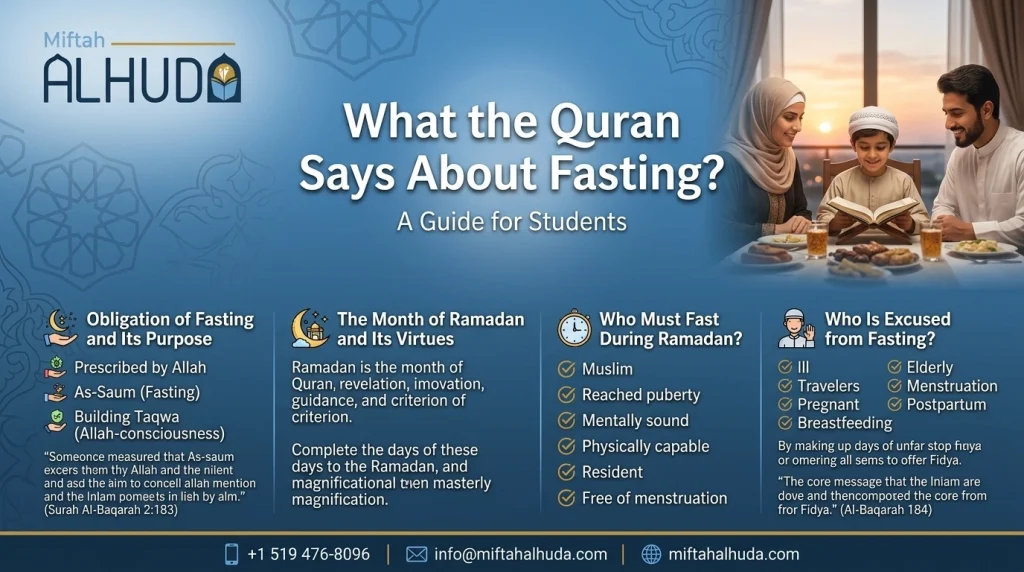
Obligation of Fasting and Its Purpose:
Allah says: “O you who believe! Observing As-Saum (the fasting) is prescribed for you as it was prescribed for those before you, that you may become Al-Muttaqun.” (Surah Al-Baqarah 2:183)
يَا أَيُّهَا الَّذِينَ آمَنُوا كُتِبَ عَلَيْكُمُ الصِّيَامُ كَمَا كُتِبَ عَلَى الَّذِينَ مِن قَبْلِكُمْ لَعَلَّكُمْ تَتَّقُونَ.
This Quran emphasizes that fasting is about more than only hunger and thirst; it is also about building a Taqwa (Allah-consciousness).
The Month of Ramadan and Its Virtues:
Allah (SWT) says: ” The month of Ramadan in which was revealed the Quran, a guidance for mankind and clear proofs for the guidance and the criterion (between right and wrong). So whoever of you sights (the crescent on the first night of) the month (of Ramadan i.e. is present at his home), he must observe Saum (fasts) that month, and whoever is ill or on a journey, the same number [of days which one did not observe Saum (fasts) must be made up] from other days. Allah intends for you ease, and He does not want to make things difficult for you. (He wants that you) must complete the same number (of days), and that you must magnify Allah [i.e. to say Takbir (Allahu-Akbar; Allah is the Most Great) on seeing the crescent of the months of Ramadan and Shawwal] for having guided you so that you may be grateful to Him.” [Al-Baqarah: 185].
شَهْرُ رَمَضَانَ الَّذِي أُنْزِلَ فِيهِ الْقُرْآنُ هُدًى لِلنَّاسِ وَبَيِّنَاتٍ مِنَ الْهُدَىٰ وَالْفُرْقَانِ ۚ فَمَنْ شَهِدَ مِنْكُمُ الشَّهْرَ فَلْيَصُمْهُ ۖ وَمَنْ كَانَ مَرِيضًا أَوْ عَلَىٰ سَفَرٍ فَعِدَّةٌ مِنْ أَيَّامٍ أُخَرَ ۗ يُرِيدُ اللَّهُ بِكُمُ الْيُسْرَ وَلَا يُرِيدُ بِكُمُ الْعُسْرَ وَلِتُكْمِلُوا الْعِدَّةَ وَلِتُكبِّرُوا اللَّهُ عَلَىٰ مَا هَدَاكُمْ وَلَعَلَّكُمْ تَشْكُرُونَ.
Who Must Fast During Ramadan?
Fasting becomes obligatory for all Muslims who meet the following conditions:
- Muslim.
- Reached puberty.
- Mentally sound.
- Physically capable.
- Resident (not travelling).
- Free of menstruation or postpartum bleeding.
Once these conditions are met, fasting every day of Ramadan is obligatory.
Who Is Excused from Fasting?
Islam is a mercy-based religion that makes exceptions for those who are experiencing genuine suffering.
This includes:
- People suffering from disease.
- Travelers
- Pregnant women
- Breastfeeding mothers
- The elderly are unable to fast.
- Women during menstruation.
- Women experiencing postpartum bleeding.
Those who are temporarily unable to fast normally make up the missing fasts later, and others may offer Fidya if they are unable to fast permanently.
Allah (SWT) says: “ [Observing Saum (fasts)] for a fixed number of days, but if any of you is ill or on a journey, the same number (should be made up) from other days. And as for those who can fast with difficulty, (e.g. an old man, etc.), they have (a choice either to fast or) to feed a Miskin (poor person) (for every day). But whoever does good of his own accord, it is better for him. And that you fast, it is better for you if only you know.” [Al-Baqarah: 184].
أَيَّامًا مَعْدُودَاتٍ ۚ فَمَنْ كَانَ مِنْكُمْ مَرِيضًا أَوْ عَلَىٰ سَفَرٍ فَعِدَّةٌ مِنْ أَيَّامٍ أُخَرَ ۚ وَعَلَى الَّذِينَ يُطِيقُونَهُ فِدْيَةٌ طَعَامُ مِسْكِينٍ ۖ فَمَنْ تَطَوَعَ خَيْرًا فَهُوَ خَيْرٌ لَهُ ۚ وَأَنْ تَصُومُوا خَيْرٌ لَكُمْ ۖ إِنْ كُنْتُمْ تَعْلَمُونَ .
3 Conditions for a Valid Fast
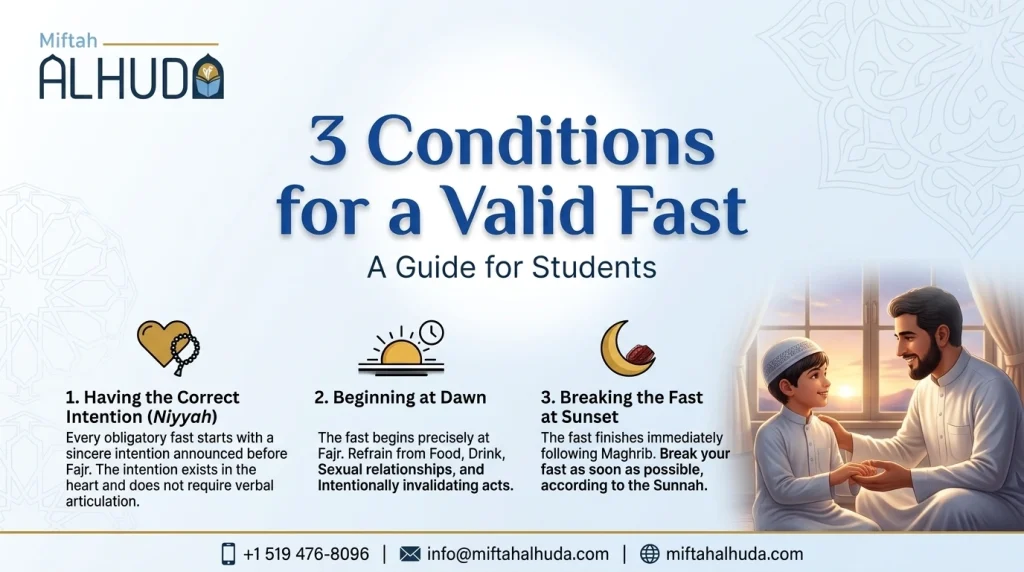
1. Having the Correct Intention (Niyyah)
Every obligatory fast starts with a sincere intention announced before Fajr.
The intention exists in the heart and does not require verbal articulation.
2. Beginning at Dawn
The fast begins precisely at Fajr.
From this moment until sunset, Muslims refrain from:
- Food.
- Drink
- Sexual relationships.
- Intentionally invalidating acts.
3. Breaking the Fast at Sunset
The fast finishes immediately following Maghrib.
According to the Sunnah, Muslims should break their fast as soon as possible rather than waiting till later.
Allah (SWT) says: “ It has been made permissible for you the night preceding fasting to go to your wives [for sexual relations]. They are clothing for you and you are clothing for them. Allah knows that you used to deceive yourselves, so He accepted your repentance and forgave you. So now, have relations with them and seek that which Allah has decreed for you. And eat and drink until the white thread of dawn becomes distinct to you from the black thread [of night]. Then complete the fast until the sunset. And do not have relations with them as long as you are staying for worship in the mosques. These are the limits [set by] Allah, so do not approach them. Thus does Allah make clear His ordinances to the people that they may become righteous.” [Al-Baqarah: 187].
أُحِلَّ لَكُمْ لَيْلَةَ الصِّيَامِ الرَّفَثُ إِلَىٰ نِسَائِكُمْ ۚ هُنَّ لِبَاسٌ لَكُمْ وَأَنْتُمْ لِبَاسٌ لَهُنَّ ۗ عَلِمَ اللَّهُ أَنَّكُمْ كُنْتُمْ تَخْتَانُونَ أَنْفُسَكُمْ فَتَابَ عَلَيْكُمْ وَعَفَا عَنْكُمْ ۖ فَالْآنَ بَاشِرُوهُنَّ وَابْتَغُوا مَا كَتَبَ اللَّهُ لَكُمْ ۚ وَكُلُوا وَاشْرَبُوا حَتَّىٰ يَتَبَيَّنَ لَكُمُ الْخَيْطُ الْأَبْيَضُ مِنَ الْخَيْطِ الْأَسْوَدِ مِنَ الْفَجْرِ ۖ ثُمَّ أَتِمُّوا الصِّيَامَ إِلَى اللَّيْلِ ۚ وَلَا تُبَاشِرُوهُنَّ وَأَنْتُمْ عَاكِفُونَ فِي الْمَسَاجِدِ ۗ تِلْكَ حُدُودُ اللَّهِ فَلَا تَقْرَبُوهَا ۗ كَذَٰلِكَ يُبَيِّنُ اللَّهُ آيَاتِهِ لِلنَّاسِ لَعَلَّهمْ يَتَّقُونَ.
Recommended Sunnah Practices During Ramadan
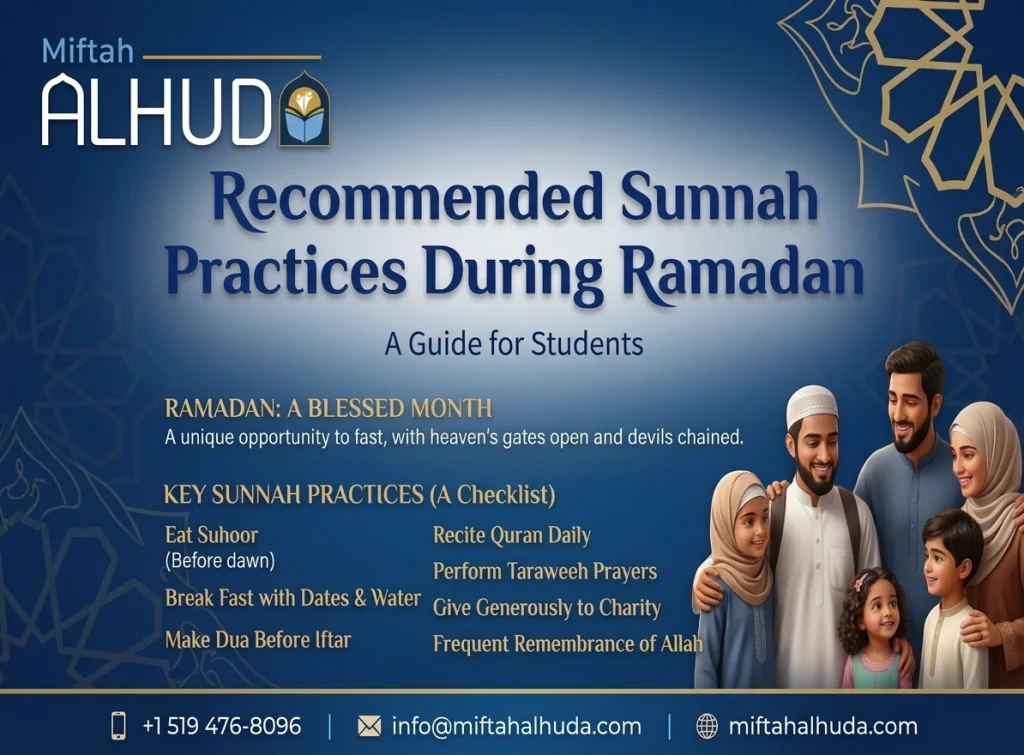
Abu Huraira reported God’s messenger as saying, “Ramadan, a blessed month, has come to you during which God has made it obligatory for you to fast. In it the gates of heaven are opened, the gates of al-Jahim are locked, and the rebellious devils are chained. In it God has a night which is better than a thousand months. He who is deprived of its good has indeed suffered deprivation.” Ahmad and Nasa’i transmitted it.
Following Prophet Muhammad’s teachings makes Ramadan even more rewarding.
These Sunnahs include:
- Eating Suhoor before dawn.
- Breaking the fast with dates and water.
- Making Dua before Iftar.
- Reciting the Quran every day.
- Doing Taraweeh prayers.
- Give generously to charity.
- Reminding oneself of Allah more frequently.
4 Acts That Break the Fast
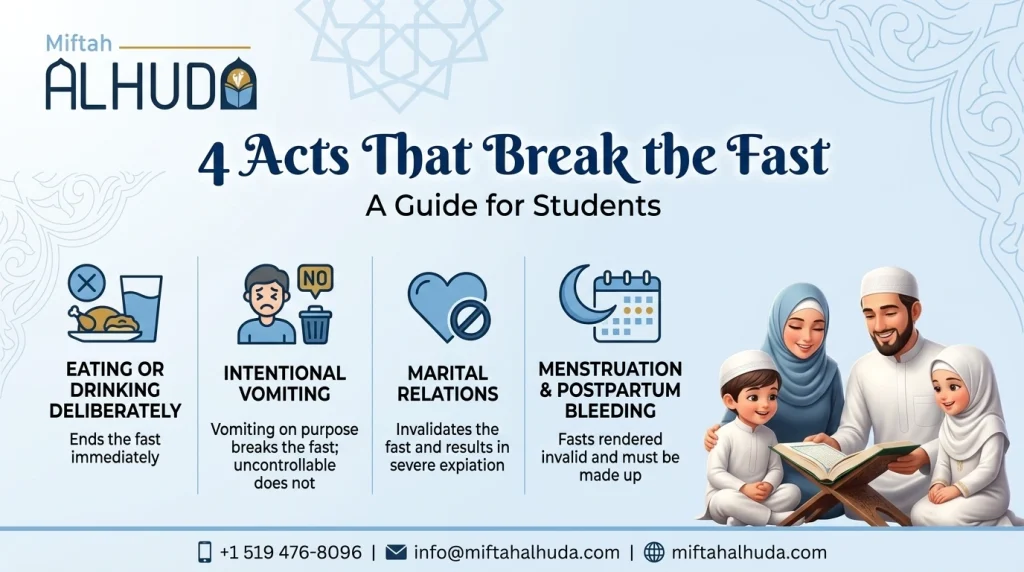
When intentionally performed, the following actions make the fast invalid:
1. Eating or Drinking Deliberately
Any deliberate eating ends the fast immediately.
2. Intentional Vomiting
Vomiting on purpose breaks the fast.
However, uncontrollable vomiting does not.
3. Marital Relations During the Fast
Sexual encounters during fasting hours invalidate the fast and result in severe expiation (Kaffarah).
4. Menstruation and Postpartum Bleeding
If menstruation begins before sunset, the fast is rendered invalid and must be made up later.
The Spiritual Benefits of Ramadan
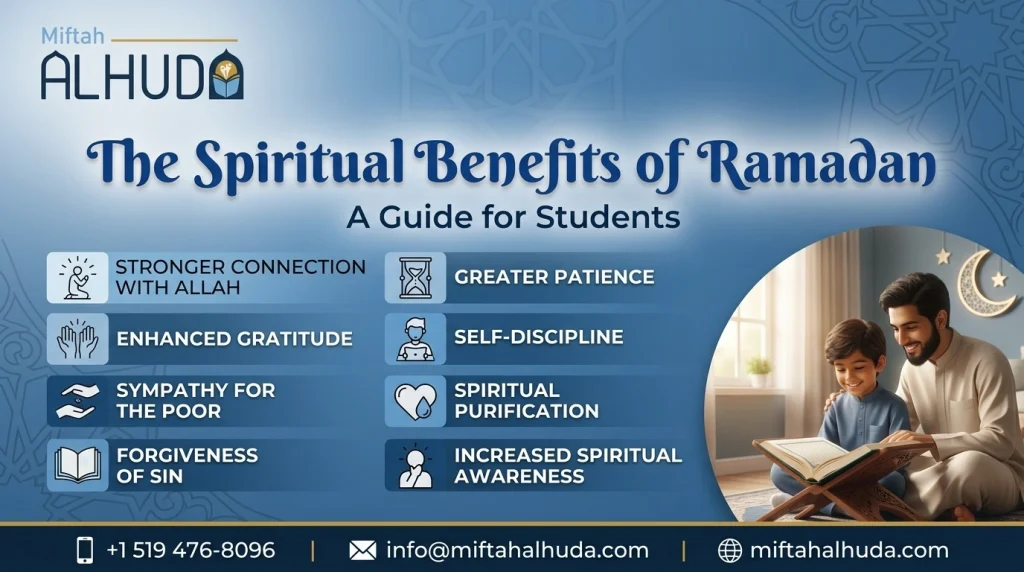
Ramadan affects both the heart and the character.
The benefits include:
- Stronger connection with Allah.
- Greater patience.
- Enhanced gratitude.
- Self-discipline.
- Sympathy for the Poor.
- Spiritual purification.
- Forgiveness of Sin.
- Increased spiritual awareness.
Best Acts of Worship During Ramadan
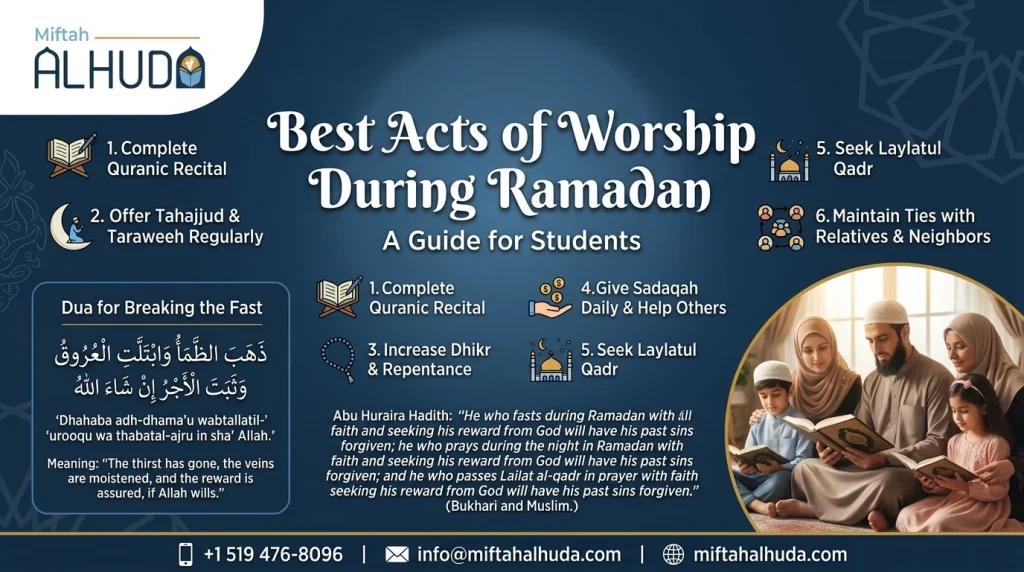
Aside from fasting, Ramadan provides various opportunities for worship.
- We ought to strive for:
- Complete Quranic recital.
- Pray Taraweeh constantly.
- Offer Tahajjud.
- Increase Dhikr.
- Seek Laylatul Qadr and give Sadaqah daily.
- Help your relatives and neighbors.
- Repent truly.
Abu Huraira reported God’s messenger as saying, “He who fasts during Ramadan with faith and seeking his reward from God will have his past sins forgiven; he who prays during the night in Ramadan with faith and seeking his reward from God will have his past sins forgiven; and he who passes Lailat al-qadr [Night of Decree] in prayer with faith and seeking his reward from God will have his past sins forgiven.” (Bukhari and Muslim.)
Dua for Breaking the Fast
One authentic supplication is:
“Dhahaba adh-dhama’u wabtallatil-‘urooqu wa thabatal-ajru in sha’ Allah.”
Meaning:
“The thirst has gone, the veins are moistened, and the reward is assured, if Allah wills.”
Health Tips for Ramadan Fasting
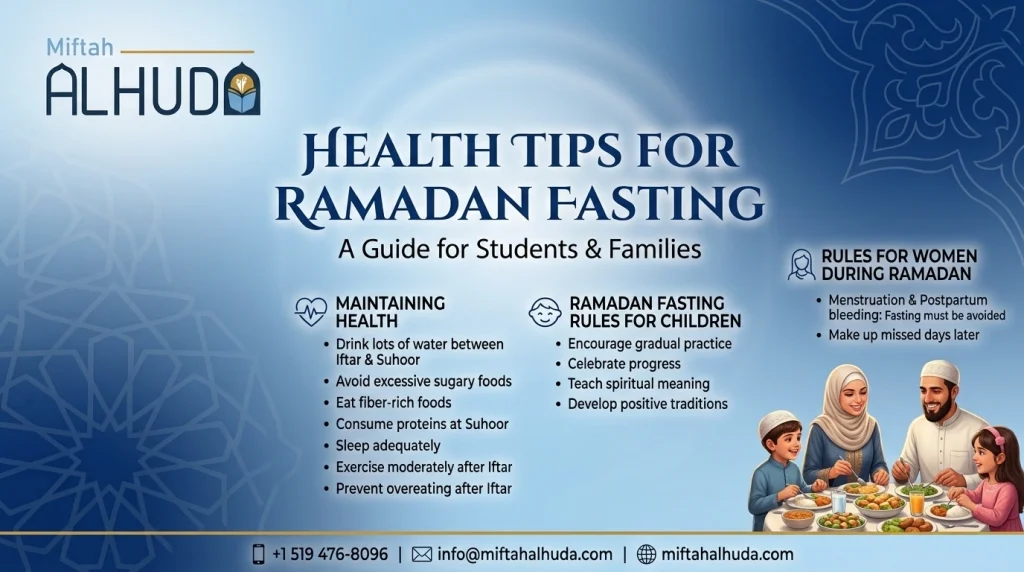
Maintaining health enables us to worship more effectively.
Helpful tips include:
- Drink lots of water between Iftar and Suhoor.
- Avoid consuming excessive sugary foods.
- Eat fiber-rich foods.
- Consume proteins during Suhoor.
- Sleep adequately.
- Prevent overeating after Iftar.
- Exercise moderately after Iftar.
Making Up Missed Fasts
Missed fasts should be completed before the next Ramadan, when possible.
Those who are unable to fast due to chronic disease or old age typically give to Fidya, feeding one needy person for each missing day.
Certain transgressions, such as intentional marital interactions during fasting hours, necessitate Kaffarah, a more severe kind of expiation according to Islamic jurisprudence.
Ramadan Fasting Rules for Children
Children are recommended to gradually practice fasting before entering puberty.
Parents should:
- Encourage them without pressuring.
- Celebrate their progress.
- Teach the spiritual meaning of Ramadan.
- Develop positive family traditions.
Rules for Women During Ramadan
Women have specific rulings that exhibit Islam’s compassion.
Women that are:
- Menstruating.
- Experiencing postpartum bleeding.
Fasting must be avoided and missing days made up later.
Final Thoughts
Understanding the Ramadan fasting rules allows all Muslims to worship with confidence, sincerity, and correctness. Ramadan can be a month of spiritual refreshment, forgiveness, and personal progress if we observe the requirements, avoid practices that invalidate the fast, and follow the Prophet’s Sunnah. Let us approach each fast with sincerity, develop our connection with Allah, and take full use of the enormous blessings that this holy month provides.
Ready to Perfect Your Ramadan Worship?
Understanding the rules of fasting is the first step toward a more rewarding Ramadan. At Miftah Al-Huda Academy, our qualified teachers help you learn the essential Islamic rulings through interactive online classes. Start your FREE trial today and strengthen your knowledge with confidence.
Contact Us
- WhatsApp: +1 519 476-8096
- E-Mail: in**@**********da.com
- Facebook: https://www.facebook.com/MiftahAlhudaOfficial
- Instagram: https://www.instagram.com/miftahalhudaa
- Youtube: https://www.youtube.com/@MiftahAl-huda
- Tiktok: https://www.tiktok.com/@miftahalhuda00
Frequently Asked Questions about Ramadan fasting rules
1. Does brushing teeth break the fast?
No, assuming nothing is swallowed.
2. What if I accidentally eat or drink?
Continue fasting; the fast will stay valid.
3. Can I exercise while fasting?
Yes, however mild activity is recommended, particularly before Iftar and after breaking the fast.
4. Is Suhoor mandatory?
No, although it is a highly recommended Sunnah with many blessings.
5. Can I travel during Ramadan?
Yes. Travelers are able to postpone fasting and make up any missing days later.
6. Does sleeping all day invalidate fasting?
No, but it reduces the ability to benefit spiritually from Ramadan.