
It is usually week three. The Noorani Qaida book is open to the same page it was three days ago, and the child, or you, are still saying the same letter with the same small hesitation. Nobody warned you how long the basics can take. The confident recitation you imagined doesn’t match the halting sounds still coming out.
So you open a new tab and type the same search half the internet has already typed, best Noorani Qaida online teachers, hoping one result will tell you something the last five academies didn’t. Every site says qualified. Every site says patient. Almost none of them explain what to actually check before you hand over your card details, or your child’s attention, for the next six months.
This isn’t another list copied from a course page. It’s what genuinely separates a teacher who can carry a beginner through Noorani Qaida from one who is simply reading off a script, and where that difference shows up in a real classroom like the one at Miftah Alhuda.
What Noorani Qaida Actually Trains You to Do?
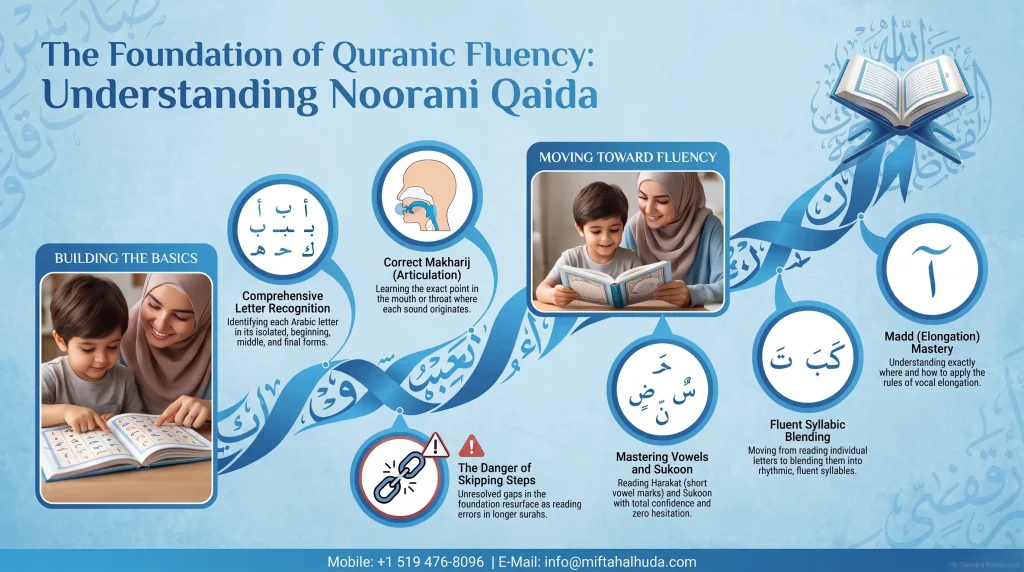
Noorani Qaida is the small booklet that comes before everything else. Long before Tajweed rules and Quran memorization, it teaches the reader how to recognize Arabic letters, sound them out correctly, and connect them into words.
A good teacher moves through this booklet slowly enough that nothing gets skipped. The foundation it builds includes:
- Recognizing each Arabic letter in its isolated, beginning, middle, and final form
- Producing correct Makharij, meaning the exact point in the mouth or throat where each sound originates
- Reading Harakat (the short vowel marks) and Sukoon without hesitation
- Understanding Madd, or elongation, and where it applies
- Blending letters into fluent syllables instead of reading them one at a time
Skip any of these and the gaps resurface later, usually in the middle of a longer surah where there’s no teacher pausing to fix it in real time.
What To Check For Before Enrolling?
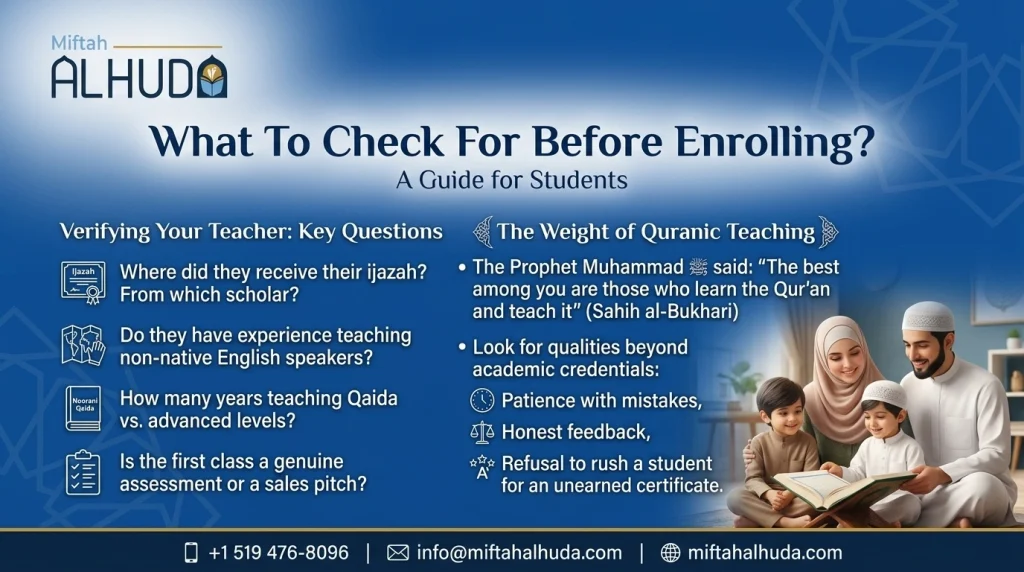
Anyone can print “certified teacher” on a website. Verifying it takes a few direct questions before you commit to a schedule.
Ask a prospective academy or tutor:
- Where did the teacher receive their own ijazah, and from which scholar or institution
- Whether they have taught non-native English speakers before, not only native Arabic-speaking children
- How many years they’ve specifically taught Noorani Qaida, as opposed to advanced Tajweed or Hifz
- Whether the first class is a real assessment of your level, or a scripted sales pitch
Teaching the Quran carries a weight that goes beyond tutoring any other subject. The Prophet Muhammad ﷺ said that “the best among you are those who learn the Qur’an and teach it” (Sahih al-Bukhari 5027, narrated by Uthman ibn Affan, may Allah be pleased with him). A teacher who takes that seriously tends to show it in small ways, patience with mistakes, honest feedback, and a refusal to rush a student toward a certificate they haven’t actually earned.
Why Sanad and Ijazah Matter More Than a Diploma?
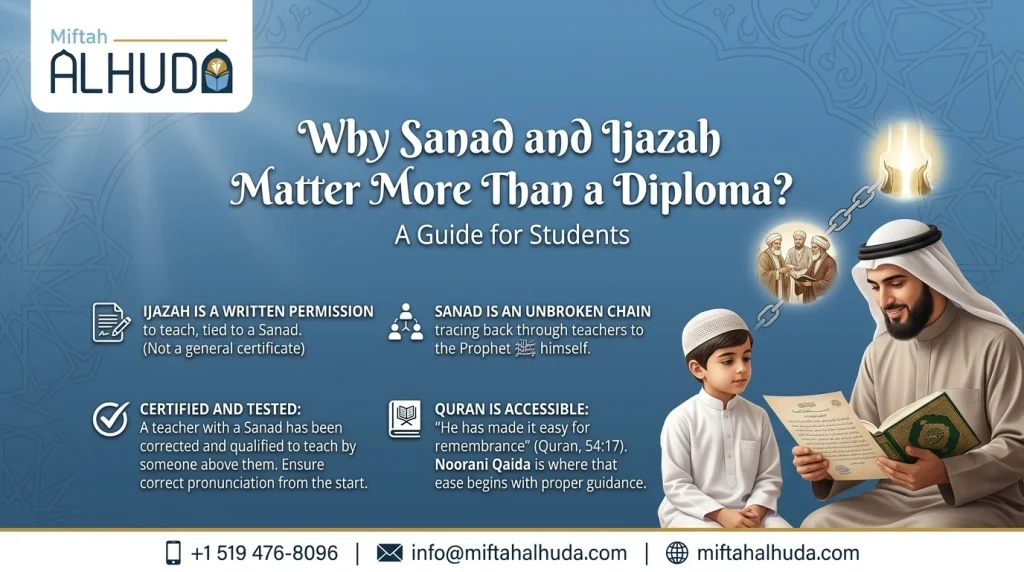
An Ijazah in Noorani Qaida is not the same as a teaching certificate from a general education platform. It’s a written permission to teach, tied to a Sanad, an unbroken chain of transmission that traces back through teacher after teacher to the Prophet ﷺ himself.
This matters practically, not only spiritually. A teacher holding an authentic Sanad has, by definition, been corrected and tested by someone qualified to correct them. Their pronunciation has already passed inspection before it ever reaches you.
Allah describes the Quran itself as accessible to anyone willing to approach it properly, saying that He has made it easy for remembrance and asking whether anyone will take heed (Surah Al-Qamar, 54:17, Saheeh International). Noorani Qaida is where that ease begins, provided the person guiding you actually knows the rules they’re teaching.
Kids, Adults, and the Different Teacher Each One Needs
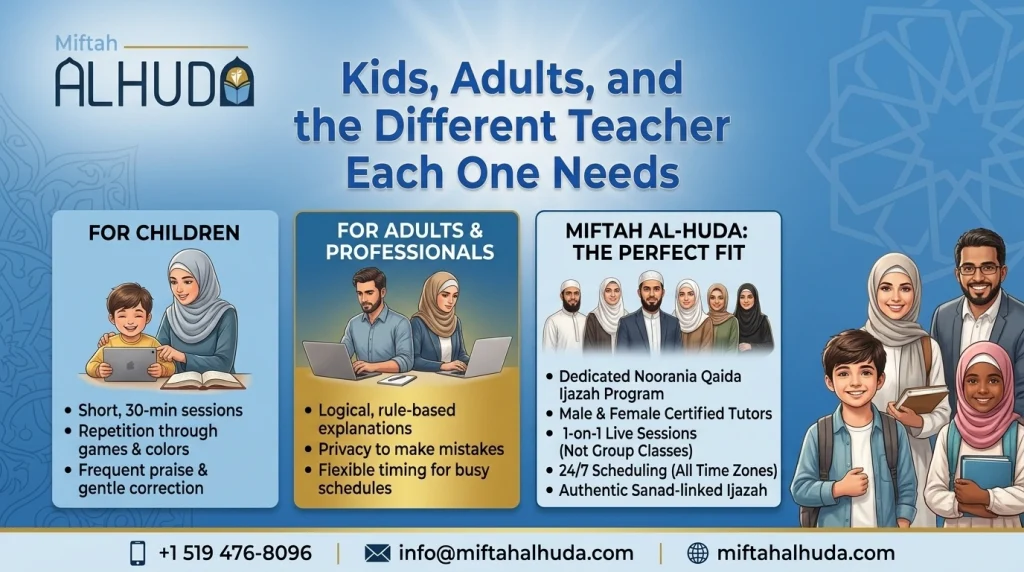
A six-year-old and a thirty-five-year-old professional need almost opposite approaches to the same booklet.
For children, the best teachers use:
- Short sessions, usually thirty minutes, before attention drops
- Repetition through games, colors, or simple rewards rather than lectures
- Frequent praise paired with immediate, gentle correction
- For adults, especially converts or busy professionals learning as beginners, the better fit usually looks like:
- Logical, rule-based explanations rather than playful repetition
- Privacy to make mistakes without an audience of classmates
- Flexible timing that doesn’t compete with work or family schedules
A teacher who insists on one method for everyone, regardless of who’s sitting in front of them, usually hasn’t taught long enough to notice the difference.
Red Flags That Separate a Real Teacher From a Reseller
Some platforms advertise “one-on-one classes” while actually running rotating group sessions with a different instructor each week. A few signs are worth watching for before you sign up:
- No option to meet the teacher in a free trial before paying
- Vague or unverifiable claims about Ijazah, with no scholar or institution named
- Pressure to purchase a long package immediately, before a single class has happened
- Generic, copy-pasted answers to specific questions about the curriculum
None of these automatically mean a scam. But together, they usually mean the platform is optimized for enrollment numbers rather than actual recitation quality.
Where Miftah Alhuda Fits Into This Search?
Miftah Alhuda runs a dedicated Noorania Qaida Ijazah program built specifically for non-native speakers who want to master Tilawah from the very first letter.
The program includes:
- Male and female certified tutors, native Arabic speakers who are also fluent in English
- One-on-one live sessions rather than shared group classes
- Classes available around the clock, so scheduling doesn’t depend on time zones
- An authentic Sanad-linked Ijazah upon completion, not a printed certificate alone
- A 100% money-back guarantee if the course doesn’t meet what was promised
The course walks a student from the first Arabic letter through advanced Tajweed application, with particular attention to sounds that don’t exist in Western languages, such as Ain (ع), Ha (ح), and Ghain. For someone specifically searching for the best Noorani Qaida online teachers with real accountability behind the claim, that structure is the actual point of comparison, not the marketing copy around it.
Book your free trial class today and meet a certified Noorani Qaida teacher before committing to anything.
Explore the Noorania Qaida Ijazah program at Miftah Alhuda to find the right first step in learning Quran.
Contact Us
WhatsApp: +1 519 476-8096
E-Mail: in**@**********da.com
Facebook: https://www.facebook.com/MiftahAlhudaOfficial
Instagram: https://www.instagram.com/miftahalhudaa
Youtube: https://www.youtube.com/@MiftahAl-huda
Tiktok: https://www.tiktok.com/@miftahalhuda00“.
Frequently Asked Questions
What exactly is Noorani Qaida, and why start there?
It’s the foundational booklet for Arabic letters, vowel signs, and basic pronunciation. Every later Tajweed rule builds on what it teaches.
Can adults really learn Noorani Qaida online, or is it only for kids?
Adults learn it just as effectively, often faster, since one-on-one classes remove the embarrassment of mistakes in front of others.
Do online Noorani Qaida teachers also cover Tajweed? M
ost structured programs, including Miftah Alhuda’s, move naturally from Qaida basics into full Tajweed application once the letters are solid.
How do I know if a teacher’s Ijazah is genuine?
Ask for the name of the scholar or institution that issued it, and confirm the Sanad traces back through a known chain.
Is one free trial class enough to judge a teacher?
It’s usually enough to see teaching style, patience, and whether the class is a real assessment rather than a sales call.
How long does it typically take to finish Noorani Qaida?
Most students complete it in a few months with consistent one-on-one sessions, though pace depends on age and prior exposure to Arabic sounds.
The Page You Close Isn’t the Decision
Most people reading this will still close the tab, compare a few more academies, and open another five review pages tomorrow. That’s not wasted time. Recognizing an authentic Sanad, a real one-on-one class, and a teacher who adjusts to who’s actually sitting in front of them is worth the extra hour of searching.
What changes the outcome isn’t which academy has the loudest homepage. It’s whether the person on the other side of the screen has actually earned the right to correct your recitation, and whether they treat that responsibility like the Amanah it is.
Start with a free trial class at Miftah Alhuda and see the difference a certified teacher makes.