
You’re standing in the departure lounge with your ticket and realize that you don’t know how to ask for the gate number upon arrival. It is this moment that the majority of people feel when they are thinking about travelling to an Arabic speaking country.
Can say a few greetings but the majority of the language is fuzzy until use.
It’s the space a superb list of Arabic travel sentences ought to fill in. Learners get generally too much grammar in phrasebooks or apps – too much as they are in an airport queue or a taxi.
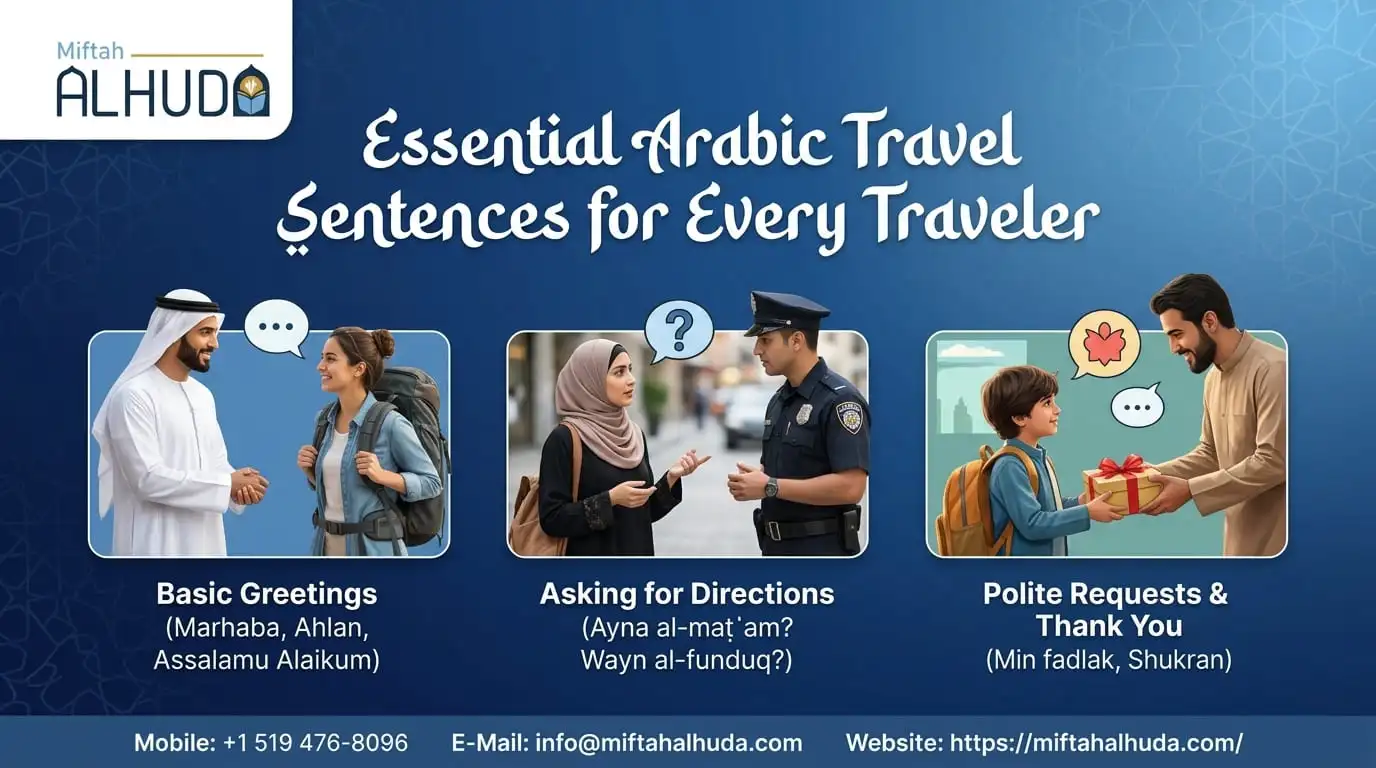
What a traveler needs is a short, handy set of Arabic travelers’ sentences grouped around the situations he will actually encounter: hotel check-in, ordering food, asking for the price, asking for help in an emergency etc.
This is what this guide will create. It leads you through Arabic travel phrases for all aspects of travel, from the moment you arrive until you are ready to find your way back to your hotel, and provides pronunciation guidance and a brief cultural note when appropriate.
By the end, the learner will have over 100 Arabic travel phrases that they’ll not only be able to recognize, but use.
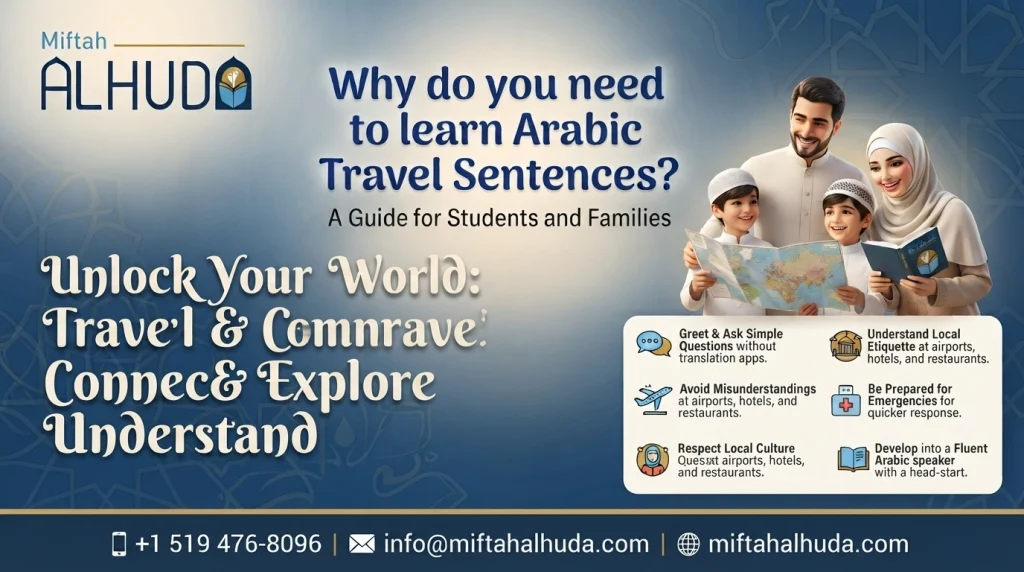
Why do you need to learn Arabic Travel Sentences?
The Quran is written in Arabic and for many Muslim travellers a visit to an Arabic speaking country is also a spiritual experience. A few Arabic travel phrases before traveling do more than assist with the logistics. It can offer a way to engage with the individuals you will encounter in your journey.
This is a beautiful example in the life of the Sahabah. The Prophet ﷺ once asked for Zayd ibn Thabit to learn a foreign language so that he could read and reply to letters for him, and Zayd learned it in a few weeks.
The Messenger of Allah ﷺ commanded him to learn the letters of another people and he learned them quickly and was able to read and write for the Prophet himself, as reported in Sunan Abi Dawud 3645. The study of a foreign language for practical use has always been part of the Muslim tradition.
Allah also reminds people of the language itself as a sign for them to ponder. In Surah Ar-Rum, Allah says:
“And of His signs is the creation of the heavens and the earth and the diversity of your languages and your colors. Indeed in that are signs for those of knowledge.” (Quran 30:22)
Having a few Arabic travel phrases before you go on vacation means:
- Means to greet and ask simple questions without translation apps.
- You will not incur the most common type of misunderstandings at airports, hotels, and restaurants.
- You are respectful to the local culture and language
- Being prepared for emergencies means you can move through them quicker in case of an emergency
- Later you can develop into a fluent Arabic speaker with a head-start.
Basic Arabic Travel Sentences for Beginners
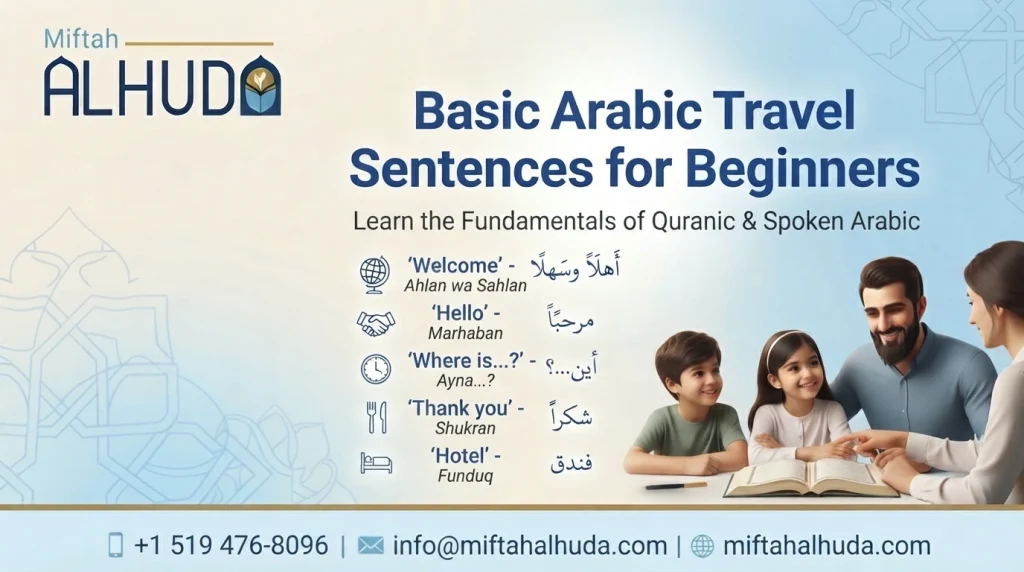
These are the Arabic travel sentences YOU MUST memorize first. They cover the situations that come up dozens of times a day.
| English | Arabic | Pronunciation |
| Hello | مرحبًا | Marhaban |
| Thank you | شكرًا | Shukran |
| Please | من فضلك | Min fadlik |
| Yes | نعم | Na’am |
| No | لا | La |
| Excuse me | عذرًا | Udhran |
| Goodbye | مع السلامة | Ma’a as-salamah |
Traveler’s Arabic Greetings
Hello: مرحبًا (Marhaban)
Good morning: صباح الخير (Sabah al-khayr)
Good evening: مساء الخير (Masa’ al-khayr)
Goodbye: مع السلامة (Ma’a as-salamah)
How are you?: كيف حالك؟ (Kayfa haluka?)
Nice to meet you: تشرفنا (Tasharrafna)
Peace be upon you: السلام عليكم (As-salamu alaykum)
And peace be upon you: وعليكم السلام (Wa alaykum as-salam)
As-salamu alaykum is greeted in all parts of the Muslim world and the reply Wa alaykum as-salam is a good manner.
Polite Arabic Expressions
Please: (Min fadlik)
Thank you: شكرا (Shukran)
with pleasure: عفوًا (Afwan)
Excuse me: عذرًا (Udhran)
Sorry: آسف (Asif)
No problem: لا مشكلة (La mushkila)
Can help me: هل يمكنك مساعدتي؟ (Hal yumkinuka musa’adati?)
Arabic Travel Sentences at the Airport
Airports are very busy, and there’s nothing like putting your travel Arabic sentences to the test in high pressure situations.
Checking In and Boarding
Where is the check-in counter?: أين مكتب تسجيل الوصول؟ (Ayna maktab tasjeel al-wusul?)
Where is the departure gate?: أين بوابة المغادرة؟ (Ayna bawwabat al-mughadara?)
Where is baggage claim?: أين استلام الأمتعة؟ (Ayna istilam al-amti’a?)
Where is security?: أين نقطة التفتيش؟ (Ayna nuqtat al-taftish?)
I have a ticket: لدي تذكرة (Ladayya tadhkira)
Where can I get my boarding pass?: أين يمكنني الحصول على بطاقة الصعود؟ (Ayna yumkinuni al-husul ala bitaqat al-su’ud?)
Luggage and Passport
Where is my luggage?: أين حقيبتي؟ (Ayna haqibati?)
My luggage is missing: حقيبتي مفقودة (Haqibati mafquda)
Where is passport control?: أين مراقبة الجوازات؟ (Ayna muraqabat al-jawazat?)
How much luggage can I take?: كم حقيبة يمكنني أخذها؟ (Kam haqiba yumkinuni akhdhuha?)
Where can I find my suitcase?: أين أجد حقيبتي؟ (Ayna ajidu haqibati?)
Arabic Travel Sentences for Transportation
The real meat of Arabic travel sentences is in getting from one spot to the other each day of travel.
Arabic Sentences for Taxis
I need a taxi: أحتاج إلى تاكسي (Ahtaju ila taxi)
Take me to this hotel: خذني إلى هذا الفندق (Khudhni ila hadha al-funduq)
How much does it cost?: كم تكلفة هذا؟ (Kam taklifat hadha?)
Please stop here: توقف هنا من فضلك (Tawaqqaf huna min fadlik)
How long will it take?: كم من الوقت سيستغرق؟ (Kam min al-waqt sayastaghriq?)
Is this taxi available?: هل هذا التاكسي متاح؟ (Hal hadha al-taxi mutah?)
Asking Directions in Arabic – Sentences.
Where is…?: أين…؟ (Ayna…?)
How do I get to…?: كيف أصل إلى…؟ (Kayfa asilu ila…?)
Is it far?: هل هو بعيد؟ (Hal huwa ba’id?)
Is it near?: هل هو قريب؟ (Hal huwa qarib?)
Turn right: انعطف يمينًا (In’atif yaminan)
Turn left: انعطف يسارًا (In’atif yasaran)
Go straight: امشِ مباشرة (Imshi mubasharatan)
I am lost: أنا تائه (Ana ta’ih)
Arabic Travel Sentences for Hotels
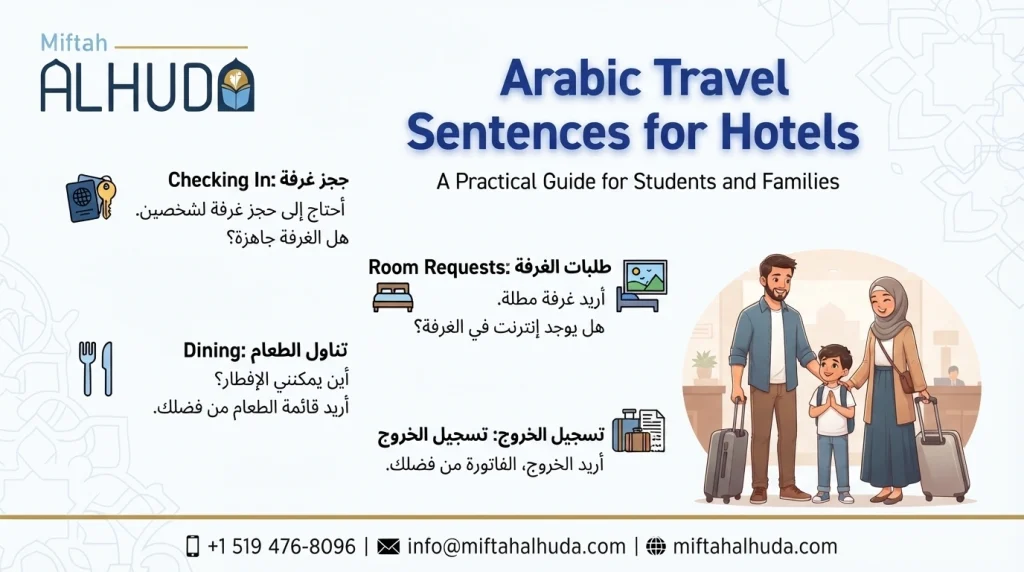
Hotels are one of the easiest places to practice new Arabic travel sentences since staff usually speak slowly and patiently with guests.
Checking Into a Hotel
I have a reservation: لدي حجز (Ladayya hajz)
I would like to check in: أريد تسجيل الوصول (Uridu tasjeel al-wusul)
I need a room: أحتاج إلى غرفة (Ahtaju ila ghurfa)
Do you have a room available?: هل لديكم غرفة متاحة؟ (Hal ladaykum ghurfa mutaha?)
Here is my passport: هذا جواز سفري (Hadha jawaz safari)
Asking About the Hotel
What time is breakfast?: متى يبدأ الإفطار؟ (Mata yabda al-iftar?)
Where is my room?: أين غرفتي؟ (Ayna ghurfati?)
Where is the elevator?: أين المصعد؟ (Ayna al-mis’ad?)
Is Wi-Fi available?: هل يوجد واي فاي؟ (Hal yujad wifi?)
What is the Wi-Fi password?: ما هي كلمة مرور الواي فاي؟ (Ma hiya kalimat murur al-wifi?)
I need a towel: أحتاج إلى منشفة (Ahtaju ila minshafa)
I need help with my room: أحتاج إلى مساعدة في غرفتي (Ahtaju ila musa’ada fi ghurfati)
Arabic Travel Sentences for Restaurants and Cafes
Food brings travelers and locals together, and this is where Arabic travel sentences become genuinely fun to use.
Ordering Food in Arabic
I would like…: أريد… (Uridu…)
I want water: أريد ماءً (Uridu ma’an)
Can I have the menu?: هل يمكنني رؤية قائمة الطعام؟ (Hal yumkinuni ru’yat qa’imat al-ta’am?)
What do you recommend?: بماذا تنصح؟ (Bimadha tansah?)
Is this spicy?: هل هذا حار؟ (Hal hadha har?)
I am vegetarian: أنا نباتي (Ana nabati)
This is delicious: هذا لذيذ (Hadha ladhidh)
Paying the Bill
The bill, please: الفاتورة من فضلك (Al-fatura min fadlik)
How much is it?: كم السعر؟ (Kam al-si’r?)
Can I pay by card?: هل يمكنني الدفع بالبطاقة؟ (Hal yumkinuni al-daf’ bil bitaqa?)
Do you accept credit cards?: هل تقبلون بطاقات الائتمان؟ (Hal taqbaluna bitaqat al-i’timan?)
Keep the change: احتفظ بالباقي (Ihtafiz bil baqi)
Arabic Travel Sentences for Shopping

Markets and souks are full of opportunities to practice Arabic travel sentences, and locals often appreciate the effort even if the grammar is not perfect.
Asking About Prices
How much is this?: كم سعر هذا؟ (Kam si’r hadha?)
How much does this cost?: كم تكلفة هذا؟ (Kam taklifat hadha?)
Is there a discount?: هل يوجد خصم؟ (Hal yujad khasm?)
That is expensive: هذا غالٍ (Hadha ghalin)
Do you have a cheaper one?: هل لديك واحد أرخص؟ (Hal ladayka wahid arkhas?)
I will take this: سآخذ هذا (Sa’akhudhu hadha)
Arabic Phrases for Bargaining
It is common practice in a lot of markets in Arab countries to bargain, but that must be done in a respectful and gentle manner rather than an aggressive one.
One good smile along with the statement “Is there any discount?” and a good counter offer will go further than forceful demands.
Arabic Travel Sentences for Emergencies
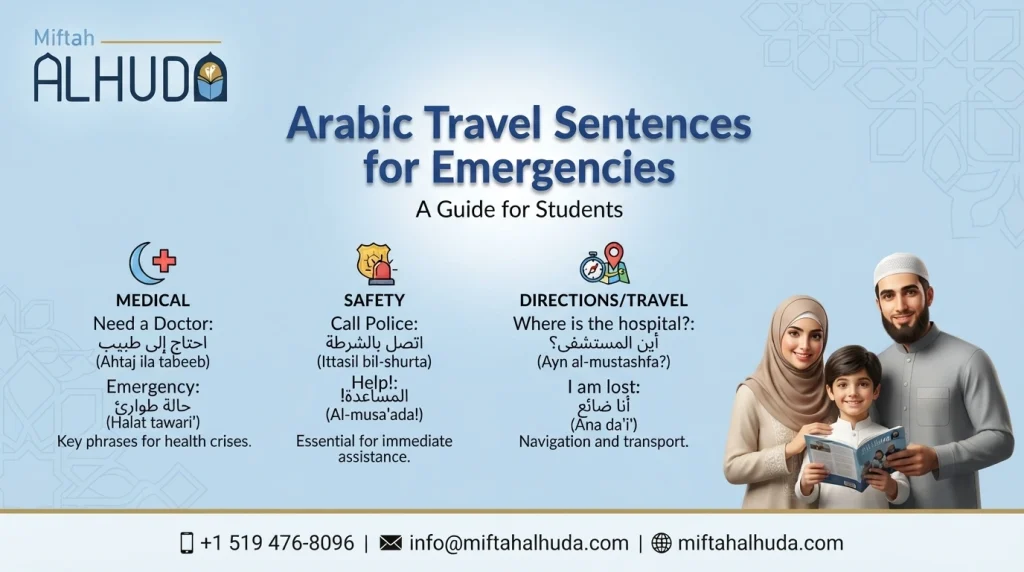
Emergency scenarios are difficult enough without there being a language problem. This therefore makes this set of Arabic travel sentences very vital.
Asking for Help
Help me, please: ساعدني من فضلك (Sa’idni min fadlik)
I need help: أحتاج إلى مساعدة (Ahtaju ila musa’ada)
Can you help me?: هل يمكنك مساعدتي؟ (Hal yumkinuka musa’adati?)
Call the police: اتصل بالشرطة (Ittasil bil shurta)
Call an ambulance: اتصل بالإسعاف (Ittasil bil is’af)
I need a doctor: أحتاج إلى طبيب (Ahtaju ila tabib)
Where is the hospital?: أين المستشفى؟ (Ayna al-mustashfa?)
Useful Arabic Sentences When You Don’t Understand
I don’t understand: لا أفهم (La afham)
Do you speak English?: هل تتحدث الإنجليزية؟ (Hal tatahaddath al-injliziyya?)
Please speak slowly: تحدث ببطء من فضلك (Tahaddath bibut’ min fadlik)
Please repeat: أعد من فضلك (A’id min fadlik)
Can you write it down?: هل يمكنك كتابتها؟ (Hal yumkinuka kitabatuha?)
What does this mean?: ماذا يعني هذا؟ (Madha ya’ni hadha?)
Useful Arabic Travel Sentences for Everyday Situations
Beyond the obvious categories, a few small Arabic travel sentences come up almost every day of a trip.
Asking for the Bathroom
Where is the bathroom?: أين الحمام؟ (Ayna al-hammam?)
Is there a bathroom here?: هل يوجد حمام هنا؟ (Hal yujad hammam huna?)
Asking for Wi-Fi
What is the Wi-Fi password?: ما هي كلمة مرور الواي فاي؟ (Ma hiya kalimat murur al-wifi?)
Is there free Wi-Fi?: هل يوجد واي فاي مجاني؟ (Hal yujad wifi majjani?)
Asking Someone to Take a Photo
Can you take a photo of me?: هل يمكنك أخذ صورة لي؟ (Hal yumkinuka akhdh sura li?)
Could you take our picture?: هل يمكنك أخذ صورتنا؟ (Hal yumkinuka akhdh suratina?)
Communicating With Locals
What is your name?: ما اسمك؟ (Ma ismuka?)
My name is…: اسمي… (Ismi…)
Where are you from?: من أين أنت؟ (Min ayna anta?)
I am from…: أنا من… (Ana min…)
I speak a little Arabic: أتحدث القليل من العربية (Atahaddath al-qalil min al-arabiyya)
Arabic Travel Vocabulary You Should Know
A short vocabulary list supports every one of the Arabic travel sentences above and helps you build new sentences on the spot.
| English | Arabic | Pronunciation |
| Airport | مطار | Matar |
| Hotel | فندق | Funduq |
| Taxi | تاكسي | Taxi |
| Train | قطار | Qitar |
| Bus | حافلة | Hafila |
| Ticket | تذكرة | Tadhkira |
| Passport | جواز السفر | Jawaz al-safar |
| Restaurant | مطعم | Mat’am |
| Bathroom | حمام | Hammam |
| Hospital | مستشفى | Mustashfa |
Modern Standard Arabic vs. Arabic Dialects for Travel
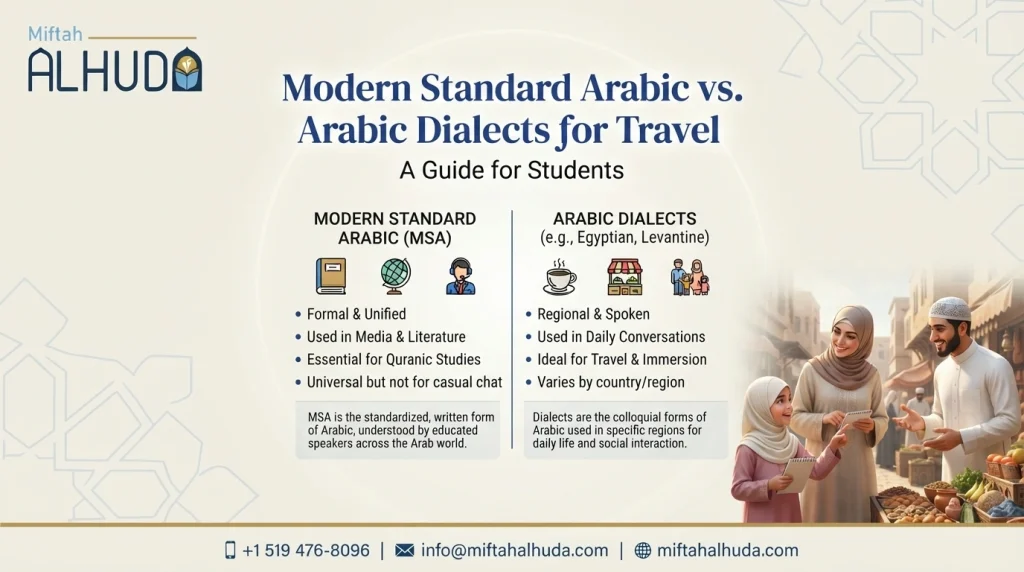
Once you hit the ground it will save you a lot of confusion if you know the difference.
Can you still travel in the modern standard Arabic?
Almost all people in the Arab world understand modern standard Arabic which is the form that most books and applications are written in. It is the language of the news, the language of education and formal writing, and it is also the language of the Quran. Allah says in Surah Yusuf:
“Indeed, We have sent it down as an Arabic Quran that you might understand.” (Quran 12:2)
In this guide, the majority of the Arabic travel sentences are in Modern Standard Arabic as this will be understood by hotel personnel, airport employees and shopkeepers throughout almost all areas.
However, in the everyday street talk, people commonly change to a local vernacular, which is often very different.
What Arabic Dialect Should One Learn if traveling?
Although you don’t need to learn a dialect before you go, it helps you to know that spoken Arabic is different in different regions:
- Egyptian Arabic is widely understood, as a result of Egyptian media.
- Levantine Arabic is the variety of Arabic spoken in Jordan, Syria, Lebanon and Palestine.
- Gulf Arabic is the language of the Gulf countries including Saudi Arabia, UAE, Kuwait and other countries.
- Moroccan Arabic is the language of the people in Morocco and in parts of North Africa.
- If someone in your area replies with a word that doesn’t match your memorized word, they may be using a local version of the word.
Arabic Travel Phrases With Pronunciation Tips
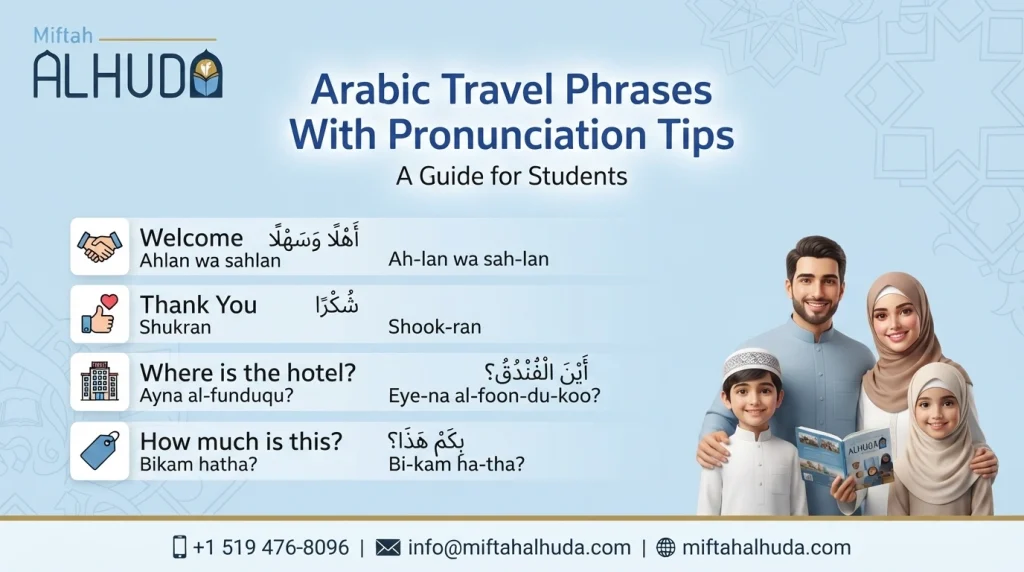
There are some sounds in Arabic that don’t exist in English and once you are familiar with them your Arabic travel sentences are going to be much easier to understand to the Arabic speaker.
ع (ʾayn): sound formed deep in the throat; has no English equivalent.
ح (ḥāʾ): a breathy H sound, more forceful than the English “h”.
Oxytone letter: خ (khāʾ) is similar to the sound in the Scottish word “loch”
qāf (qāf): a deep K sound made deeper in the throat.
غ (ghayn): it is close to the French “r” and is made with the back of the throat.
Imperfect pronunciation doesn’t matter as long as you are understood. Try to say things slowly and clearly, not quickly!
Before you travel, learn how to practice Arabic travel sentences.
If you have a few weeks to get ready for a trip, then a little structure goes a long way.
Master the 20 phrases you need to know most.
Read the Arabic script and transliteration in unison, not separately
Practice speaking the words out loud even if no one is listening
Practice phrases in realistic scenarios (e.g., as if going to a hotel)
Early knowledge of numbers and basic directions, as they merge with nearly all other concepts
Store your phrase list in your cell phone memory for use when traveling without cell phone reception.
Listen as well as speak (as the response will be in real Arabic back)
Fast Arabic travel cheat sheet.
Save this list on your phone for when you need the answer quick.
Hello: مرحبًا (Marhaban)
Thank you: شكرًا (Shukran)
Please: من فضلك (Min fadlik)
Yes / No: نعم / لا (Na’am / La)
Disculpe (Udhran): excuse me
Where is…?: أين…؟ (Ayna…?)
What is the price of this? (Kam si’r hadha?
Help me (Ahtaju ila musa’ada)
I don’t understand: لا أفهم (La afham)
Do you understand English?: هل تفهم الإنجليزية؟ (Hal tatafahum al-injliziyya?)
What is the answer to the question “Where is the bathroom?”: Ayna al-hammam? (أين الحمام؟)
Call Ambulance: اتصل بالإسعاف (Ittasil bil is’af)
Don’t worry, as long as you can get these 12 Arabic travel sentences into your head, you’ll get through most of the time at least until the rest of the vocabulary sticks.
If you are looking to learn how to speak Arabic beyond memorized phrases, you should take an Arabic course from Miftah Alhuda.
Before traveling, schedule a free trial class with an experienced Arabic teacher at to check out the program.
Contact Us
WhatsApp: +1 519 476-8096
E-Mail: in**@**********da.com
Facebook: https://www.facebook.com/MiftahAlhudaOfficial
Instagram: https://www.instagram.com/miftahalhudaa
Youtube: https://www.youtube.com/@MiftahAl-huda
Tiktok: https://www.tiktok.com/@miftahalhuda00“.
Common Questions on Travel Sentences in Arabic
What are some of the most helpful Arabic words for travellers?
Most of the common situations in travel are covered by greetings and please and thanks, where is, how much is this, I need help.
In Arabic what is the word for “Where is…?
“Where is…?” is أين…؟ (Ayna…?). Place you need immediately after.
In Arabic, how do you say “How much is this?
One of the most useful Arabic travel phrases is it’s كم سعر هذا؟ (Kam si’r hadha?), which means, “how much is this for” in both markets and taxis.
What’s the Arabic word for Thank you?
Thank you = Shukran. You can respond to it with عفوًا (Afwan) which translates to “you’re welcome.
Is Arabic hard to learn for traveling?
While fluency can only be achieved over time, a knowledge of basic Arabic travel phrases for everyday use can be acquired within a couple of weeks of regular practice.
Should I learn MSA or a dialect to travel?
Almost everyone understands Modern Standard Arabic and it is the most safe way to start learning, a regional dialect will help more in casual conversation.