
You are outside a restaurant in Amman, Cairo or Riyadh and the menu is only in Arabic writing. Everyone around you is talking too fast, the waiter is on his way to your table and you only know a word you picked up from a phrase book a number of years ago.
It’s when most travelers realize they would have saved themselves a great deal of stress if they knew some Arabic restaurant vocabulary.
This Guide gives detailed instructions in Arabic for the entire restaurant visit, from booking a table to paying for your meal and tipping.
All the Arabic restaurant sentences are followed by the Arabic script, a simple transliteration and the English translation, so you can read it, say it and use it the next time you sit down to eat at an Arabic restaurant.
Essential Arabic Restaurant Expressions for Beginners
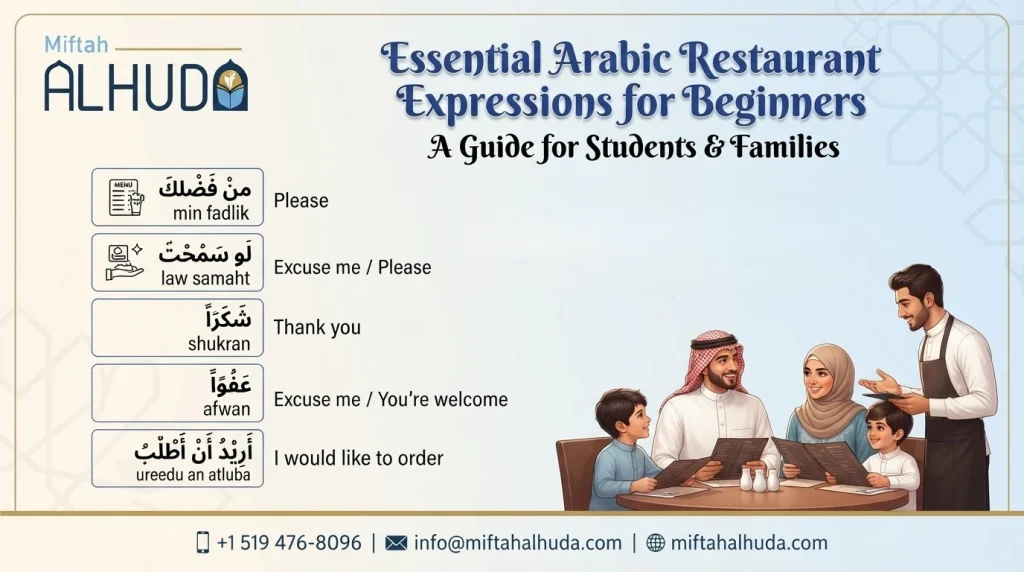
Before you start ordering your food, a few small words make up most of the dialogue within Arabic communication. Memorize these first, and the rest will follow.
من فضلك (min fadlik) – Please
لو سمحت (law samaht) – Excuse me / Please
شكراً (shukran) – Thank you
عفواً (afwan) – Excuse me / You’re welcome
أريد أن أطلب (ureedu an atluba) – I would like to order
The following five phrases are all used for politeness, attention and initiating an order. All things that follow are based on them.
Arabic Sentences for Going to a restaurant
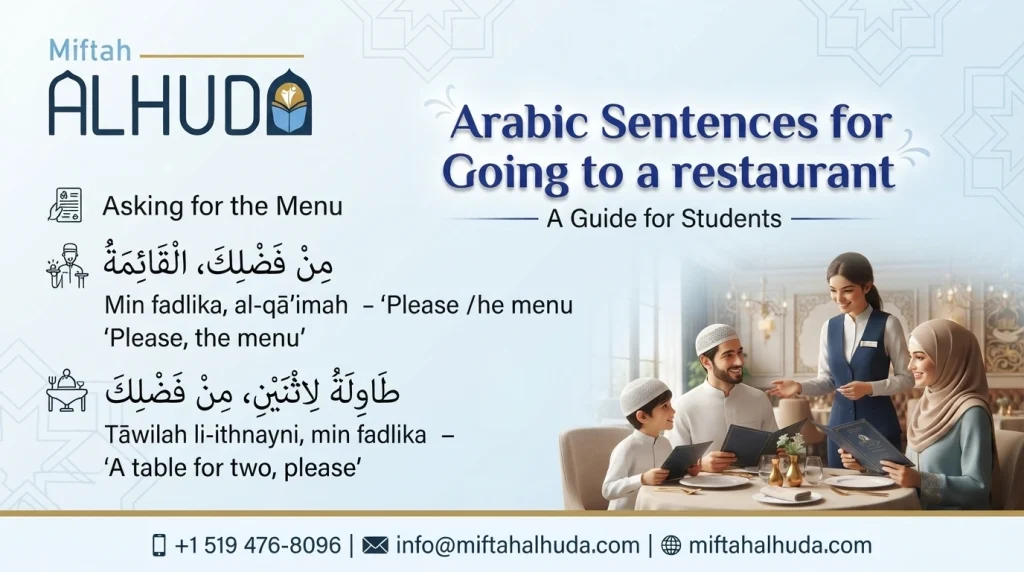
The first real challenge of your learning Arabic is when you go into a restaurant, which will begin with a simple question about how many people are in your party.
Asking for a Table
هل لديكم طاولة لشخصين؟ (hal ladaykum tawila li-shakhsayn?) – Do you have a table for two?
أحتاج طاولة لشخص واحد (ahtaju tawila li-shakhsin wahid) – I need a table for one.
لدينا حجز (ladayna hajz) – We have a reservation.
هل هذه الطاولة متاحة؟ (hal hadhihi al-tawila mutaha?) – Is this table available?
هل يمكننا الجلوس في الخارج؟ (hal yumkinuna al-julus fi al-kharij?) – Can we sit outside?
Making a Reservation
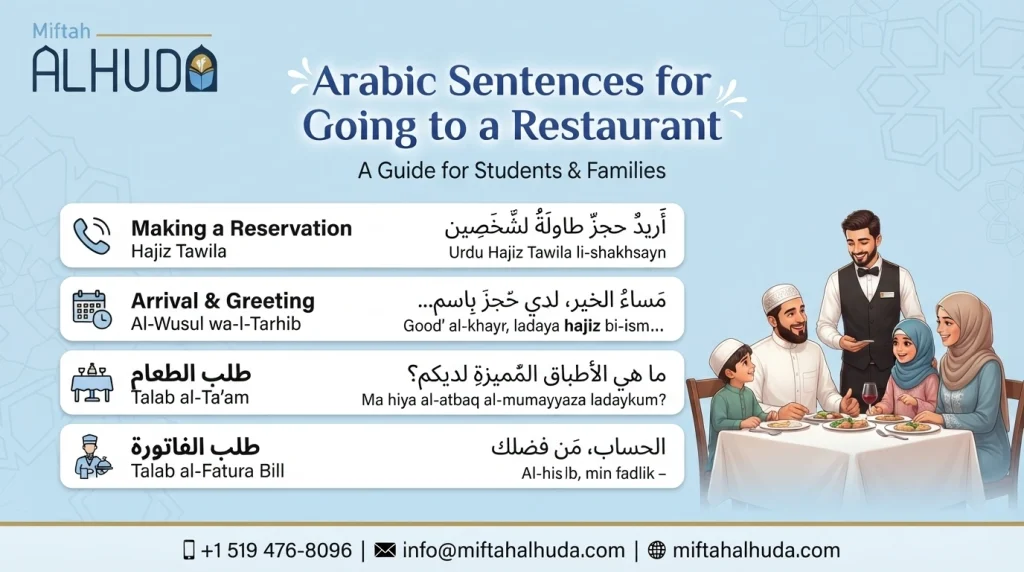
لدي حجز (ladayya hajz) – I have a reservation.
أود حجز طاولة (awaddu hajza tawila) – I would like to reserve a table.
طاولة لأربعة أشخاص من فضلك (tawila li-arba’ati ashkhas, min fadlik) – A table for four, please.
After sitting down, the next thing that you might need after that is the menu, and if you can’t see the dishes on the wall or on the board outside, then it will be helpful.
Asking for the Menu
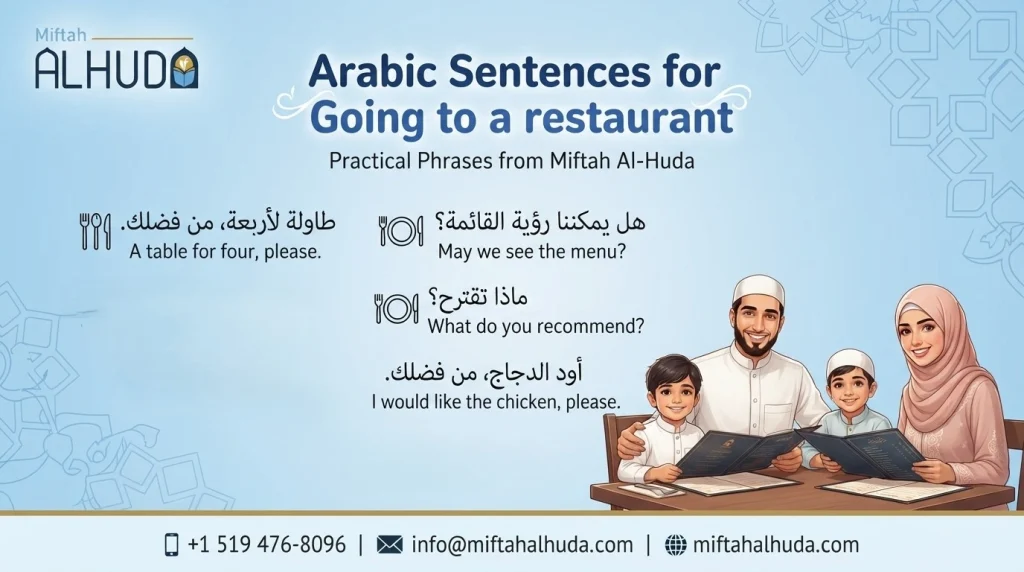
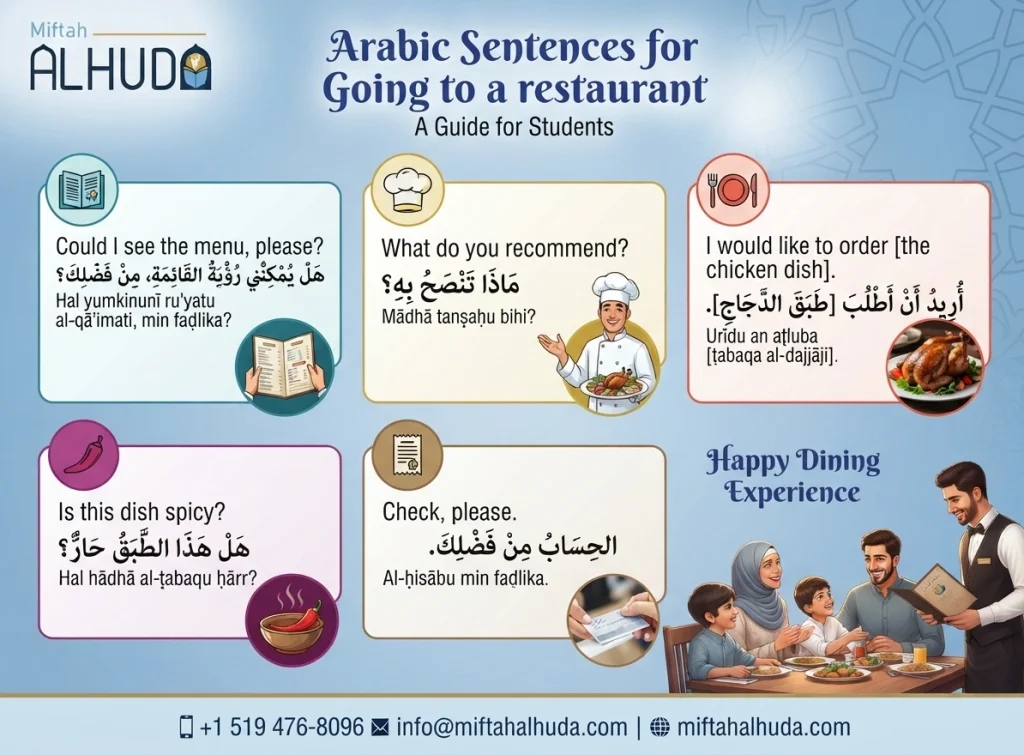
هل يمكنني رؤية قائمة الطعام من فضلك؟ (hal yumkinuni ru’yat qa’imat al-ta’am, min fadlik?) – Can I see the menu, please?
هل لديكم قائمة بالإنجليزية؟ (hal ladaykum qa’ima bil-injiliziyya?) – Do you have an English menu?
ماذا لديكم؟ (madha ladaykum?) – What do you have?
ما هو طبق اليوم؟ (ma huwa tabaq al-yawm?) – What is today’s special?
بماذا تنصحني؟ (bimadha tansahuni?) – What do you recommend?
One of the most handy Arabic Restaurant phrases to learn is “what do you recommend”. It can be used when you can’t read a word on the menu in front of you.
Arabic Sentences on How to Order Food.
This is the essence of any visit to a restaurant, and there are some simple sentence patterns in Arabic that you can use for most of the meals at a restaurant.
One of the most common phrases in Arabic is “I would like…”, which translates to:
أريد… (ureedu…) – I want / I would like…
أود أن أطلب… (awaddu an atluba…) – I would like to order…
ممكن أطلب…؟ (mumkin atlubu…?) – Can I order…?
Any food can be substituted at this point within the sentence, and the rest of the sentence does not change.
Ordering Specific Foods
أريد الدجاج من فضلك (ureedu al-dajaj, min fadlik) – I would like chicken, please.
هل لديكم لحم؟ (hal ladaykum lahm?) – Do you have meat?
أريد سمكاً مشوياً (ureedu samakan mashwiyyan) – I would like grilled fish.
أريد أرزاً مع الدجاج (ureedu aruzzan ma’a al-dajaj) – I would like rice with chicken.
سلطة من فضلك (salata min fadlik) – A salad, please.
أريد شوربة (ureedu shurba) – I would like soup.
خبز إضافي من فضلك (khubz idafi, min fadlik) – Extra bread, please.
أريد شاورما (ureedu shawarma) – I would like shawarma.
أريد كباب (ureedu kabab) – I would like kabab.
Drinks Ordering sentences in Arabic.
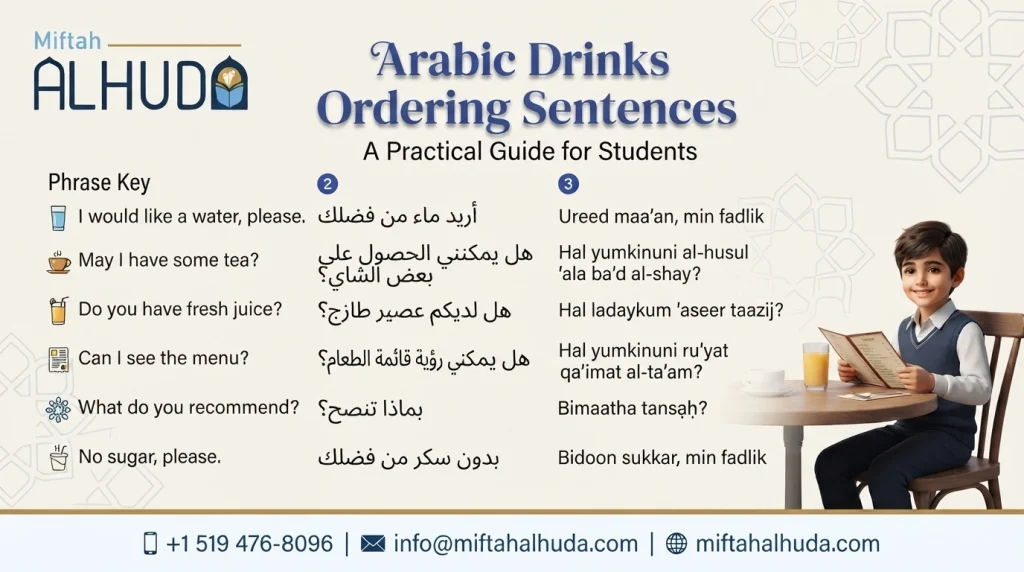
Often times drinks are ordered first, so it’s a good idea to understand the Arabic restaurant sentences on their own.
Asking for Water
كأس ماء من فضلك (ka’s ma’ min fadlik) – A glass of water, please.
زجاجة ماء من فضلك (zujajat ma’ min fadlik) – A bottle of water, please.
هل الماء بارد؟ (hal al-ma’ barid?) – Is the water cold?
A cup of coffee, a cup of tea and a glass of juice.
قهوة من فضلك (qahwa min fadlik) – Coffee, please.
شاي من فضلك (shay min fadlik) – Tea, please.
عصير من فضلك (aseer min fadlik) – Juice, please.
مشروب غازي من فضلك (mashrub ghazi min fadlik) – A soft drink, please.
Arabic Sentences for Asking About Food
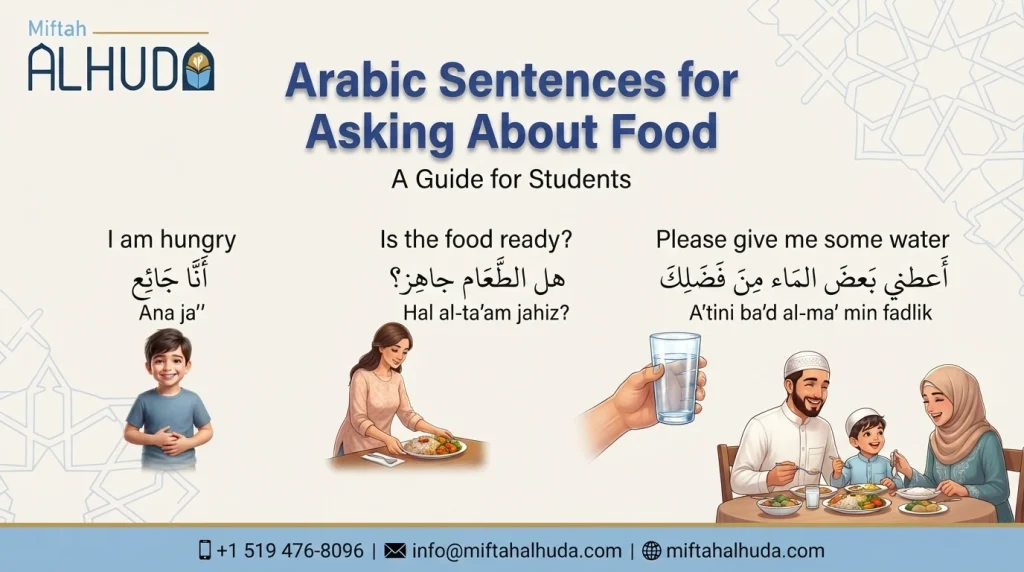
This section should be memorized before the ordering section because anyone with a food allergy or a dietary preference will want to know it!
Asking About Ingredients
ما هي مكونات هذا الطبق؟ (ma hiya mukawwanat hadha al-tabaq?) – What are the ingredients in this dish?
Is there any meat in it? (hal yahtawi ‘ala lahm?)
Is there any nuts in it? (hal yahtawi ‘ala mukassarat?)
هل هذا النباتي؟ (hal hadha nabati?) – Is this vegetarian?
هل عندكم خيارات النباتية (hal ladaykum khiyarat nabatiyya?)-Have vegetarians options?
When serving Indian dishes, ask if the food is spicy.
هل هذا الطبق حار؟ (hal hadha al-tabaq har?) – Does this dish taste spicy?
Don’t want spicy food (la ureedu ta’aman haran).
هل يمكن أن يكون أقل حرارة؟ (hal yumkin an yakuna aqalla hararatan?) – Can you make it less spicy?
Changing your Order.
بدون بصل من فضلك (bidun basal, min fadlik) – Without onions, please.
بدون لحم من فضلك (bidun lahm, min fadlik) – Without meat please
بدون صلصة حارة من فضلك (bidun salsa harra, min fadlik) – No spicy sauce please!
صلصة إضافية من فضلك (salsa idafiyya, min fadlik) – Extra sauce, please.
هل يمكن تقديم الصلصة على جانب؟ (hal yumkin taqdim al-salsa ‘ala janib?) – Is it possible to serve the sauce on a side plate?
Here are some Arabic sentences that you can use during a meal.
The meal introduces its own little demands, typically brief and informal, as compared to the above ordering sentences.
المزيد من الخبز من فضلك (al-mazid min al-khubz, min fadlik) – More bread, please.
هل يمكنني الحصول على ماء؟ (hal yumkinuni al-husul ala ma’?) – Can I have some water?
هل يمكنني الحصول على قهوة أخرى؟ (hal yumkinuni al-husul ala qahwa ukhra?) – Can I have another coffee?
هل يمكنني الحصول على ملعقة؟ (hal yumkinuni al-husul ala mil’aqa?) – Can I have a spoon?
هل يمكنني الحصول على منديل؟ (hal yumkinuni al-husul ala mindil?) – Can I have a napkin?
Speaking about food.
هذا لذيذ (hadha ladhidh) – This is delicious.
الطعام جيد جداً (al-ta’am jayyid jiddan) – The food is very good.
هذا حار جداً (hadha harr jiddan) – This is too spicy.
الطعام بارد (al-ta’am barid) – The food is cold.
أنا شبعان (ana shab’an) – I’m full.
There are Arabic sentences to use when speaking with the waiter.
The polite approach to obtaining the attention of a waiter is more important in an Arabic restaurant culture than many travelers are aware.
How to get the waiter’s attention.
How to “Catch the Waiter’s Eye”.
لو سمحت (law samaht) – Excuse me / Please
عفواً (afwan) – Excuse me
This is a normal and polite gesture in almost every Arabic speaking country, and is performed with a light hand raise alongside either of the above phrases.
Asking for Help
هل يمكنك مساعدتي؟ (hal yumkinuka musa’adati?) – Can you help me?
هل يمكنك أن تشرح لي هذا الطبق؟ (hal yumkinuka an tashraha li hadha al-tabaq?) – Could you explain this dish?
بماذا تنصحني؟ (bimadha tansahuni?) – What do you recommend?
هل هذا متوفر؟ (hal hadha mutawaffir?) – Is this available?
Arabic Sentences For Trouble with Your Order
In any restaurant, mistakes do occur and it’s important to know how to correct a mistake without getting upset.
Wrong or Missing Order
أنا لم أطلب هذا (ana lam atlub hadha) – I didn’t order this.
هذا ليس طلبي (hadha laysa talabi) – This isn’t my order.
طلبي ناقص شيء (talabi naqis shay’) – My order is missing something.
طلبت شيئاً آخر (talabtu shay’an akhar) – I ordered something else.
هل يمكن استبدال هذا؟ (hal yumkin istibdal hadha?) – Can you replace this?
Arabic Sentences to Make a Request for the Bill
There are a few other Arabic restaurant sentences for every traveller that should have in their final course.
Asking for the Check
الحساب، من فضلك (al-hisab, min fadlik) – The bill, please.
هل يمكنني الحصول على الحساب؟ (hal yumkinuni al-husul ala al-hisab?) – Can I have the bill?
كم المبلغ؟ (kam al-mablagh?) – How much do I owe?
هل الخدمة مشمولة؟ (hal al-khidma mashmula?) – Is service included?
Paying at a Restaurant
هل يمكنني الدفع بالبطاقة؟ (hal yumkinuni al-daf’ bil-bitaqa?) – Can I pay by card?
هل تقبلون بطاقات الائتمان؟ (hal taqbaluna bitaqat al-i’timan?) – Do you accept credit cards?
هل يمكننا الدفع كل على حدة؟ (hal yumkinuna al-daf’ kullun ala hida?) – Can we pay separately?
احتفظ بالباقي (ihtafiz bil-baqi) – Keep the change.
Some of the common words used in Arabic restaurants.
The sentences above will be assisted by a short vocabulary list which will help you recognize key words on a menu or a receipt.
| English | Arabic | Transliteration |
| Restaurant | مطعم | Mat’am |
| Menu | قائمة الطعام | Qa’imat al-ta’am |
| Waiter | نادل | Nadil |
| Table | طاولة | Tawila |
| Food | طعام | Ta’am |
| Order | طلب | Talab |
| Bill | الحساب | Al-hisab |
| Water | ماء | Ma’ |
| Chicken | دجاج | Dajaj |
| Meat | لحم | Lahm |
| Fish | سمك | Samak |
| Rice | أرز | Aruzz |
| Bread | خبز | Khubz |
| Dessert | حلوى | Halwa |
Arabic Restaurant Conversation Example
While it is important to be able to read single sentences, a conversation will demonstrate how they connect. The following are three short dialogues, using only the sentences from the Arabic restaurant above.
Ordering a Meal
Waiter: أهلاً، ماذا تريد أن تطلب؟ Transliteration: Ahlan, madha turidu an tatluba? English: Hello, what would you like to order?
Customer: أريد الدجاج مع الأرز من فضلك. Transliteration: Ureedu al-dajaj ma’a al-aruzz, min fadlik. English: I would like chicken with rice, please.
Asking for the Bill
Customer: الحساب، من فضلك. Transliteration: Al-hisab, min fadlik. English: The bill, please.
Waiter: لحظة من فضلك. Transliteration: Lahza min fadlik. English: One moment, please.
Making a Special Food Request
Customer: أريد سلطة بدون بصل من فضلك. Transliteration: Ureedu salata bidun basal, min fadlik. English: I would like a salad without onions, please.
Waiter: بالتأكيد، هل هناك شيء آخر؟ Transliteration: Bit-ta’kid, hal hunaka shay’ akhar? English: Of course, is there anything else?
Arabic phrases for travelers at an Arabic restaurant.
These Arabic restaurant sentences are the most important if you only have time to memorize a few before you travel.
أين أقرب مطعم؟ (ayna aqrab mat’am?) – Where is the nearest restaurant?
هل لديكم طاولة؟ (hal ladaykum tawila?) – Do you have a table?
هل يمكنني رؤية القائمة؟ (hal yumkinuni ru’yat al-qa’ima?) – Can I see the menu?
بماذا تنصحني؟ (bimadha tansahuni?) – What do you recommend?
أريد… (ureedu…) – I would like…
هل هذا حار؟ (hal hadha har?) – Is this spicy?
بدون… (bidun…) – Without…
الحساب، من فضلك (al-hisab, min fadlik) – The bill, please.
هل يمكنني الدفع بالبطاقة؟ (hal yumkinuni al-daf’ bil-bitaqa?) – Can I pay by card?
MSA vs. Spoken Arabic Restaurant Sentences
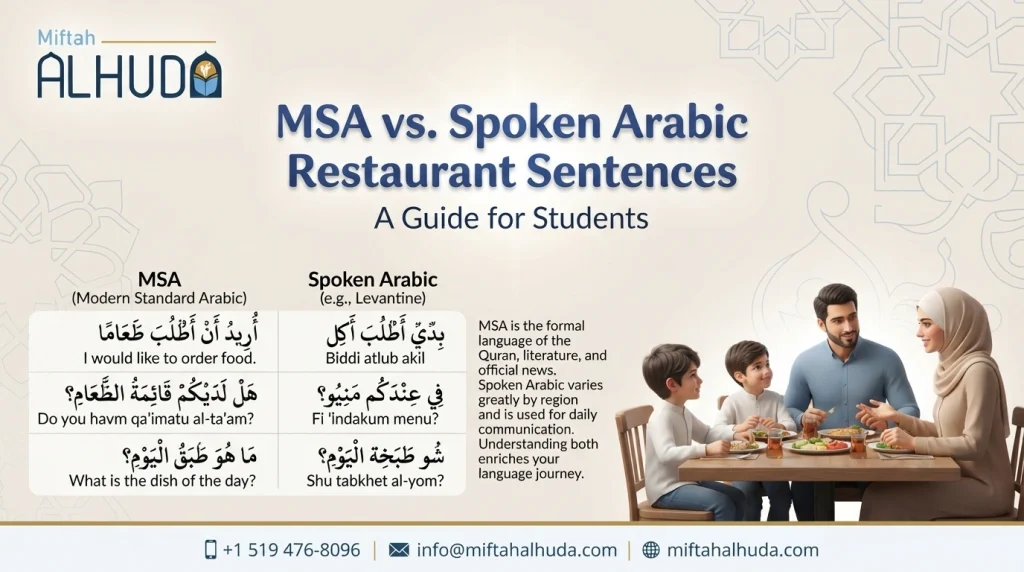
Modern Standard Arabic is understood almost everywhere, from Morocco to the Gulf. Restaurant staff will follow you if you use it, and menus are usually printed in it.
Everyday conversation, though, tends to shift into the local dialect, and it helps to recognize the difference rather than be surprised by it.
Formal Arabic vs. Everyday Arabic
MSA: أريد هذا (ureedu hadha) – I want this. Egyptian: عايز ده / عايزة دي (ayez da / ayza di) – I want this (male / female speaker). Saudi: أبي هذا / أبغى هذا (abi hadha / abgha hadha) – I want this.
The exact colloquial version depends on the country, but MSA will always be understood as a safe fallback.
Egyptian Arabic Restaurant Phrases
عايز/عايزة (ayez / ayza) – I want (male / female).
الحساب لو سمحت (el-hesab law samaht) – The bill, please.
إيه اللي تنصحني بيه؟ (eh elli tinsahni beeh?) – What do you recommend?
Saudi Arabic Restaurant Phrases
أبي (abi) – I want (casual).
أبغى (abgha) – I want (casual).
كم الحساب؟ (kam al-hisab?) – How much is the bill?
These colloquial phrases are labeled here as regional Arabic, not universal Arabic, since they will sound out of place outside their own dialect region.
20 Arabic Restaurant Sentences to Memorize
If you only remember one section of this guide, make it this one.
- من فضلك (min fadlik) – Please.
- لو سمحت (law samaht) – Excuse me.
- هل يمكنني رؤية القائمة؟ (hal yumkinuni ru’yat al-qa’ima?) – Can I see the menu?
- بماذا تنصحني؟ (bimadha tansahuni?) – What do you recommend?
- أود أن أطلب (awaddu an atluba) – I would like to order.
- أريد… (ureedu…) – I would like…
- هل لديكم…؟ (hal ladaykum…?) – Do you have…?
- هل هذا حار؟ (hal hadha har?) – Is this spicy?
- بدون بصل من فضلك (bidun basal, min fadlik) – Without onions, please.
- أنا نباتي (ana nabati) – I’m vegetarian.
- لدي حساسية من الطعام (ladayya hasasiyya min al-ta’am) – I have a food allergy.
- المزيد من الماء من فضلك (al-mazid min al-ma’, min fadlik) – More water, please.
- هذا لذيذ (hadha ladhidh) – This is delicious.
- أنا لم أطلب هذا (ana lam atlub hadha) – I didn’t order this.
- هل يمكنك مساعدتي؟ (hal yumkinuka musa’adati?) – Can you help me?
- الحساب، من فضلك (al-hisab, min fadlik) – The bill, please.
- كم المبلغ؟ (kam al-mablagh?) – How much is it?
- هل يمكنني الدفع بالبطاقة؟ (hal yumkinuni al-daf’ bil-bitaqa?) – Can I pay by card?
- هل يمكننا الدفع كل على حدة؟ (hal yumkinuna al-daf’ kullun ala hida?) – Can we pay separately?
- شكراً (shukran) – Thank you.
Print this list, save it on your phone, or copy it into a notes app before your next trip. These twenty lines cover almost everything a restaurant visit in Arabic will ask of you.
Learning individual restaurant phrases is a good start, but real fluency comes from structured practice with a teacher who can correct your pronunciation and build on what you already know.
Miftah Alhuda‘s Arabic courses are built for exactly this kind of steady, guided progress, from your first sentence to full conversations.
If you are not sure where to start, a free trial session is the easiest way to find out. You will speak with a real teacher, get a sense of your current level, and leave with a clear next step.
Contact Us
WhatsApp: +1 519 476-8096
E-Mail: in**@**********da.com
Facebook: https://www.facebook.com/MiftahAlhudaOfficial
Instagram: https://www.instagram.com/miftahalhudaa
Youtube: https://www.youtube.com/@MiftahAl-huda
Tiktok: https://www.tiktok.com/@miftahalhuda00“.
Frequently Asked Questions About Arabic Restaurant Sentences
How do you say “I would like to order” in Arabic?
The standard phrase is أود أن أطلب (awaddu an atluba). A simpler option is أريد (ureedu), meaning “I want,” followed by the name of the dish.
How do you ask for the menu in Arabic?
Say هل يمكنني رؤية قائمة الطعام من فضلك؟ (hal yumkinuni ru’yat qa’imat al-ta’am, min fadlik?), which means “Can I see the menu, please?”
How do you say “the bill, please” in Arabic?
Use الحساب، من فضلك (al-hisab, min fadlik). It works in formal and casual settings across almost every Arabic speaking country.
How do you ask for food without an ingredient in Arabic?
Start with بدون (bidun), meaning “without,” then add the ingredient. For example, بدون بصل (bidun basal) means “without onions.”
What is the difference between MSA and dialect at a restaurant?
Modern Standard Arabic is understood everywhere and appears on most menus, while everyday spoken conversation shifts into a local dialect such as Egyptian or Saudi Arabic.
What Arabic phrases should I learn before visiting a restaurant?
Focus on greetings, ordering with أريد (ureedu), asking for the menu, describing dietary needs, and requesting the bill. The 20-sentence list above covers all of these.