
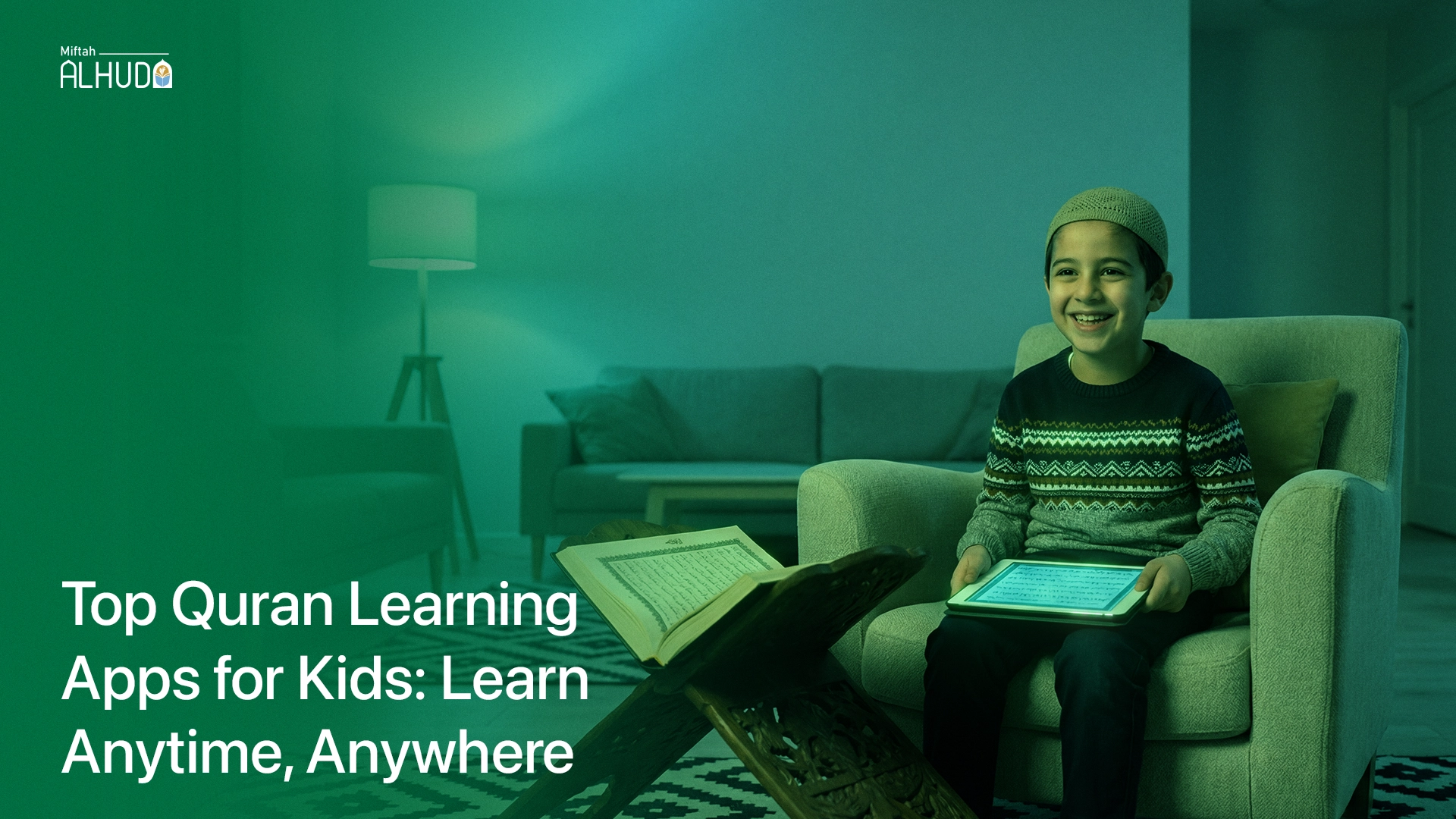
Every Muslim parent has had this moment. Your child is glued to a tablet, and you wonder whether that screen time could become Quran time instead. The good news is that it can. The Top Quran Learning Apps for Kids turn a phone or tablet into a colorful, patient, always-available practice partner.
In this guide, you will find the best apps sorted by goal: Arabic letters, Tajweed, memorization (Hifz), and Quran stories. You will also learn how to choose safely, how to build a daily routine, and where apps stop and live teachers begin. By the end, you will know exactly which Quran learning apps for kids fit your child’s age, level, and personality.
Quick answer: For ages 3 to 7, start with a Noorani Qaida app. For ages 6 to 12 who need pronunciation help, try a Tajweed app. For ages 7 and up who are ready to memorize, use Tarteel, Quran Companion, or Ayat. Then add a live teacher for correction.
Why Quran Apps Work for Kids Today?
For centuries, children learned the Quran in the Kuttab or Madrasa, sitting in a circle with a teacher. That tradition is beautiful, and it remains the gold standard. Today, though, children also live in a digital world. Smart parents meet them there instead of fighting it.
Quran learning apps for kids do not replace the teacher. They extend the classroom into the car, the airport lounge, and the quiet half hour after school. Here is why they work so well.
1. Gamification Keeps Children Engaged
Children love rewards. Stars, badges, streaks, and mini-games turn repetition into play. Because repetition is the heart of learning the Quran, this matters a great deal. A child who happily repeats a short Surah twenty times has built a skill without feeling the effort.
2. Flexibility for Busy Families
Parents juggle school, work, and family. Apps fit into small gaps. Ten minutes in a waiting room or during a road trip adds up to hours over a month. Consistency, not marathon sessions, builds a strong connection with the Quran.
وَلَقَدْ يَسَّرْنَا الْقُرْآنَ لِلذِّكْرِ فَهَلْ مِن مُّدَّكِرٍ
“And We have certainly made the Quran easy for remembrance, so is there any who will remember?” (Surah Al-Qamar, 54:17)
Allah has made the Quran easy to remember. Good tools simply help children use that ease. When the format is friendly, the heart opens faster.
3. Instant Audio from Excellent Reciters
Not every home has a fluent Arabic reader. Apps give children clear, repeatable audio from respected reciters. Hearing correct recitation again and again trains the ear long before the tongue can copy it.
4. Healthier Screen Time
Most parents cannot remove screens entirely. However, they can redirect screen time toward something valuable. Swapping 15 minutes of random videos for 15 minutes of Quran practice is a small change with a lasting reward.
يَا أَيُّهَا الَّذِينَ آمَنُوا قُوا أَنفُسَكُمْ وَأَهْلِيكُمْ نَارًا
“O you who have believed, protect yourselves and your families from a Fire…” (Surah At-Tahrim, 66:6)
Scholars often cite this verse as a reminder that parents are responsible for guiding their families toward faith and good character. Choosing quality Quran tools for your child is one practical way to act on that responsibility.
What to Look for in a Kid-Friendly Quran App
Not all Quran learning apps for kids are equal. Some are polished and carefully reviewed. Others are cluttered with ads or contain mistakes in the text. Before you download anything, check these four areas.
Age-Appropriate Design
A good app has a clean layout, large buttons, and simple navigation. A five-year-old should be able to tap through it without help. Bright colors are fine, but too many flashing animations can distract from the Quran itself. Look for calm, focused design.
Authenticity and Script Accuracy
This is the most important check. The app should use a verified Uthmani script and recognized reciters. Even a small error in the text is unacceptable. Read the store description, look for the publisher’s background, and see whether scholars or qualified teachers reviewed the content.
Engagement Without Overload
Rewards, quizzes, and progress badges help children return daily. However, the best apps use them to support learning, not to replace it. If your child is chasing points and ignoring the recitation, the design is working against you.
Parental Controls and Privacy
Many parents skip this step, and they should not. Ideally, the app is ad-free for children, avoids unnecessary data collection, and offers a progress dashboard for parents. On Android, look for compliance with Google Play’s Families policies. On iPhone, check the privacy details listed on the App Store page, and consider using the child’s profile or Screen Time settings.
Parent checklist: (1) Correct Uthmani text. (2) Trusted reciters. (3) No intrusive ads. (4) Clear privacy policy. (5) Offline mode. (6) Progress tracking. (7) Age-appropriate difficulty.
وَقُل رَّبِّ زِدْنِي عِلْمًا
“And say, ‘My Lord, increase me in knowledge.'” (Surah Taha, 20:114)
Teach your child this short dua before every study session. It turns a screen activity into worship, and it reminds both of you why you are learning.
Best Apps for Beginners: Arabic Alphabet and Reading Basics
Target age: 3 to 7 years. At this stage, the goal is not to read the Quran fluently. The goal is to recognize letters, hear their sounds, and enjoy the process. This is where the top Quran learning apps for kids shine, because young children respond strongly to sound, color, and touch.
1. Noorani Qaida Apps (Iqra Series)
Focus: Arabic alphabet recognition, basic phonics, short vowels (Harakat), and joining letters.
The Noorani Qaida is the classic starting point for Quran reading, used in homes and schools around the world. Several apps now offer it in digital form, often under names like “Noorani Qaida” or “Iqra.” Typically, they let a child tap a letter to hear its sound and then move step by step through lessons.
- Key features: click-and-listen pronunciation, step-by-step reading modules, and letter-joining practice.
- Why parents like it: it mirrors the same path a traditional teacher would follow.
- Watch out for: quality varies between publishers. Compare two or three options, and make sure the pronunciation audio is clear and correct.
2. Quran for Kids and the Muslim Kids Series
Focus: early letter-sound association and short Surah recitation.
These apps introduce the Quran as something joyful. Bright animations, child-friendly audio, and simple quizzes help little ones connect letters with sounds. They also help children recognize the shape of the short Surahs they hear in Salah.
- Key features: animated lessons, child-friendly reciters, and basic interactive quizzes.
- Best for: toddlers and preschoolers who are still learning to sit through a lesson.
Parent tip: sit beside your child for the first few sessions. Repeat the sounds together. Young children learn best when a loving adult shares the screen.
Best Apps for Recitation, Pronunciation, and Tajweed
Target age: 6 to 12 years. Once children know their letters, the next step is reading with proper rules. Tajweed means giving every letter its due right. It is not an extra for advanced students. It is the way the Quran was revealed.
وَرَتِّلِ الْقُرْآنَ تَرْتِيلًا
“…and recite the Quran with measured recitation.” (Surah Al-Muzzammil, 73:4)
Scholars explain that tartil means slow, clear, and careful recitation, with attention to each letter and rule. Starting this habit early saves children from having to unlearn mistakes later. Here are the app types that help.
1. Learn Quran Tajwid
Focus: color-coded Tajweed rules such as Madd (elongation), Ghunnah (nasalization), and Qalqalah (echoing sound).
Color coding is a powerful visual aid. A child sees a color, connects it to a rule, and starts to predict how the letters should sound. Apps in this category usually add audio examples and short exercises, so the child can listen, repeat, and test their understanding.
- Key features: audio practice, visual articulation guides, and levels that measure progress.
- Best for: children who can already read Arabic letters and are ready to improve accuracy.
2. Interactive Recitation Apps (Ayah-by-Ayah Practice)
Focus: listening to a verse, repeating it, and getting feedback.
Some interactive recitation apps, including titles such as Thurayya, are built around the “listen, repeat, compare” cycle. Many cover Juz Amma first, because children are most familiar with those Surahs. Some use voice-matching features to compare what the child says with the model recitation.
- Key features: verse-by-verse audio, repeat-after-me mode, and recitation comparison tools.
- Important: voice technology can notice differences, but it cannot teach the subtle rules of Tajweed the way a qualified teacher can. Treat its feedback as a helpful hint, not a final ruling.
الْمَاهِرُ بِالْقُرْآنِ مَعَ السَّفَرَةِ الْكِرَامِ الْبَرَرَةِ، وَالَّذِي يَقْرَأُ الْقُرْآنَ وَيَتَتَعْتَعُ فِيهِ وَهُوَ عَلَيْهِ شَاقٌّ لَهُ أَجْرَانِ
The Prophet ﷺ said: “The one who is skilled in the Quran will be with the noble and obedient angels, and the one who recites it with difficulty, struggling through it, will have a double reward.” (Sahih al-Bukhari 4937; Sahih Muslim 798)
This hadith is wonderful encouragement for children who struggle. A child who stumbles and keeps trying is not failing. That child is earning a double reward. Share this with your little learner whenever they feel discouraged.
Best Apps for Quran Memorization (Hifz and Revision)
Target age: 7 and up. Memorization works best when a child can already read with reasonable accuracy. Apps cannot replace a teacher here, but they excel at the two jobs that take the most time: repetition and revision.
1. Tarteel (AI-Powered Recitation)
Focus: real-time recitation tracking and mistake detection.
Tarteel listens as you recite and follows along in the Mushaf, highlighting where you are and flagging possible mistakes. For a child memorizing at home, that instant feedback can be motivating.
- Key features: verse-hiding mode to test memory, voice search, and habit tracking.
- Parent note: because it listens to a microphone, review the privacy settings and supervise younger children. Some features require a paid plan, so check the current details in the store.
2. Quran Companion and Easy Quran Memorizer
Focus: structured Hifz goals and audio loop drilling.
Quran Companion is popular for building a steady memorization routine. You set a goal, listen to a verse on repeat, and track progress over time. Similar tools, such as Easy Quran Memorizer, focus on loops and repetition.
- Key features: adjustable Ayah repetition counts, variable playback speed, and gamified challenge modes.
- Best for: children aged 7 to 12 who respond well to goals and streaks.
3. Ayat – Quran Memorization
Focus: self-testing and verse-by-verse repetition for older kids and pre-teens.
Ayat suits children who can already read from the Mushaf and want a clean, focused tool. It supports several well-known reciters and lets the child test themselves on what they have learned.
- Key features: multiple renowned Qaris, translation integration, and offline access.
- Best for: pre-teens who prefer independence.
Verify before you download: App features, prices, and age ratings change often. Always read the current store listing and privacy details before installing, and test the app yourself first.
Five Memorization Tips That Actually Work
- Start small. Memorize two or three lines at a time, not a whole page.
- Listen first. Play the Ayah five to ten times before the child attempts it.
- Revise daily. Revision matters more than new memorization. Without it, verses fade quickly.
- Pick a consistent time. After Fajr or after Maghrib works well for many families.
- Celebrate finishing. Finishing a Surah deserves a small family celebration.
أَحَبُّ الأَعْمَالِ إِلَى اللَّهِ أَدْوَمُهَا وَإِنْ قَلَّ
The Prophet ﷺ said: “The most beloved of deeds to Allah are the most consistent of them, even if they are small.” (Sahih al-Bukhari 6464; Sahih Muslim 783)
This is the perfect guide for app-based learning. Ten steady minutes a day is better than two hours once a week. Choose consistency over intensity, and your child’s Hifz will grow strong.
Quran Stories and Islamic Knowledge Apps
Target age: 4 to 10 years. Memorizing words is important, but children also need to feel the meaning. Story-based apps help them understand why the Quran matters and how it shapes daily life.
1. Muslim Kids TV
Focus: holistic Islamic education through Quranic stories, moral lessons, and videos.
Muslim Kids TV combines entertainment with values. Children see stories of the Prophets, learn manners such as honesty and kindness, and pick up Islamic vocabulary in a natural way. It is a gentle companion to formal Quran lessons.
2. Quran Stories for Kids
Focus: illustrated, interactive stories that explain the context and lessons behind key Quranic Ayahs.
When a child hears the story of Prophet Yusuf, Ibrahim, or Musa (peace be upon them), the verses behind it feel alive. Illustrated storytelling builds emotional attachment, and attachment is what keeps a child learning for years.
Parent tip: after a story, ask one simple question: “What did Allah teach us through this story?” Two minutes of conversation turns a video into a lesson.
Comparison Table: Top Quran Learning Apps for Kids at a Glance
| App / Category | Primary Focus | Best For (Age) | Core Highlight | Offline Access* |
| Noorani Qaida / Iqra Apps | Arabic letters and reading basics | 3–7 | Tap-and-listen letter sounds | Varies by app |
| Quran for Kids / Muslim Kids Series | Letter sounds and short Surahs | 3–7 | Animations and simple quizzes | Varies by app |
| Learn Quran Tajwid | Tajweed rules | 6–12 | Color-coded rules with audio practice | Check store listing |
| Interactive Recitation Apps (e.g., Thurayya) | Ayah-by-ayah recitation | 6–12 | Listen, repeat, and compare | Check store listing |
| Tarteel | Recitation tracking and Hifz | 7+ | AI mistake detection and verse hiding | Limited; check plan |
| Quran Companion / Easy Quran Memorizer | Structured Hifz and revision | 7–12 | Repetition loops and goals | Check store listing |
| Ayat – Quran Memorization | Self-testing and repetition | 8–13 | Multiple Qaris and translations | Yes (per outline) |
| Muslim Kids TV | Stories, values, and videos | 4–10 | Holistic Islamic education | Check plan |
| Quran Stories for Kids | Illustrated Quranic stories | 4–10 | Context behind key Ayahs | Varies by app |
*Offline availability and pricing change over time. Confirm on the official store page before downloading.
How to Choose the Right App by Age and Goal
With so many options, the easiest way to decide is to match the app to your child’s current stage. Use this simple guide.
If Your Child Is 3 to 5 Years Old
Choose a very simple letters app or a short-Surah listening app. Keep sessions to five to ten minutes. Sit together and make it a bonding activity.
If Your Child Is 6 to 8 Years Old
Move to a Noorani Qaida app with structured lessons, then add a Tajweed app as reading improves. This is also an excellent age to begin short Surah memorization.
If Your Child Is 9 to 12 Years Old
Children at this age can handle goal-based memorization and Tajweed refinement. Apps like Tarteel, Quran Companion, or Ayat can support independent practice, with a parent checking in weekly.
If Your Child Is a Teen
Teens often prefer tools that respect their independence. Offer a clean memorization app and let them set their own goals. Pair this with a teacher who can gently keep them accountable.
If Your Child Does Not Speak Arabic
This is very common in Western homes. Look for apps with transliteration, English translation, and slow, clear audio. Do not rely on transliteration for long, though. It can lock in mistakes, because English letters cannot capture many Arabic sounds. A live teacher is especially valuable for these learners.
How Parents Can Maximize App-Based Learning?
The best app in the world will not help if it sits unused. These habits turn good Quran learning apps for kids into real progress.
1. Build a Daily Routine
Choose a fixed time and keep it. Ten to fifteen minutes each day beats a long session once a week. Link the habit to something that already exists, such as right after Maghrib or just before bedtime.
2. Keep Screens Purposeful
Set a timer, open only the Quran app, and close it when the session ends. Disable notifications from other apps during this time. This teaches children that the device is a tool, not a toy.
3. Stay Involved
Review the progress screen together once a week. Ask your child to recite one verse to you. Praise effort specifically: “I loved how clearly you pronounced that letter.” Children who feel seen keep going.
4. Make Dua Part of the Routine
Begin with “Bismillah” and end with a short dua for beneficial knowledge. This keeps the intention fresh and protects the learning from becoming a mere habit.
5. Reward Milestones
Finishing Juz Amma, mastering a Tajweed rule, or completing a month of daily practice are all worth celebrating. A special meal, a small gift, or simply a proud family dua can mean the world to a child.
مَنْ قَرَأَ حَرْفًا مِنْ كِتَابِ اللَّهِ فَلَهُ بِهِ حَسَنَةٌ وَالْحَسَنَةُ بِعَشْرِ أَمْثَالِهَا
The Prophet ﷺ said: “Whoever recites a letter from the Book of Allah will receive a good deed, and every good deed is multiplied by ten.” (Jami’ at-Tirmidhi 2910)
Remind your child that every single letter earns reward. When children understand this, even a slow practice session feels valuable.
Common Mistakes Parents Make with Quran Learning Apps
Even the best Quran learning apps for kids can disappoint when they are used the wrong way. Fortunately, most problems are easy to fix once you recognize them.
Mistake 1: Downloading Too Many Apps at Once
It is tempting to install five apps on the first day. However, a child who jumps between several tools rarely finishes any of them. Pick one main app and one backup. Stay with the main app for at least a month before judging it.
Mistake 2: Treating the App as a Babysitter
Handing over the tablet and walking away may buy you a quiet half hour, but it removes the most powerful ingredient: your attention. Children recite with more care when someone is listening. Even five minutes of shared attention makes a visible difference.
Mistake 3: Skipping Revision
Many families celebrate new Surahs and forget the old ones. Memorized verses fade without regular review. Schedule a short revision block every day, and let the new lesson come second.
Mistake 4: Relying on Transliteration Too Long
English letters cannot represent sounds such as ع, ح, or ق accurately. Use transliteration for a few weeks at most, then move to the Arabic script with a teacher’s help.
Mistake 5: Comparing Children
Every child learns at a different speed. One may read fluently at six, while another needs until nine. Comparison brings stress, and stress weakens love for the Quran. Measure progress against the child’s own past performance instead.
A Simple Weekly Plan Using Apps and a Live Teacher
Many parents ask for a ready-made schedule. The plan below is a realistic starting point for a child aged 7 to 10. Adjust the timing to fit your family.
- Monday to Thursday (10–15 minutes): Open the main app. Spend the first five minutes revising old verses, then learn a few new lines.
- Friday (10 minutes): Use a story app or listen to a Surah together as a family. Talk about its meaning.
- Weekend (15 minutes): Ask your child to recite everything learned that week to you. Praise specific improvements.
- Live class (1–3 times per week): A qualified teacher corrects Tajweed, checks memorization, and sets the next goals.
Notice how the plan treats the app as a daily practice partner and the teacher as the guide. This balance protects your child from repeating mistakes and keeps lessons enjoyable.
Signs Your Child Is Ready for the Next Step
Parents often wonder when to move from one stage to the next. Look for these signals.
Ready to Move from Letters to Reading
Your child recognizes most Arabic letters in different positions, can join simple letters, and reads short words with vowel marks. At this point, introduce a structured reading program and, ideally, a live teacher.
Ready to Begin Tajweed
Your child reads fluently with only occasional mistakes. They can sit for ten to fifteen minutes and accept correction calmly. This is a good time to add a Tajweed app and a weekly class.
Ready to Begin Memorization
Your child reads comfortably from the Mushaf, enjoys repeating verses, and shows steady attention. Start with Juz Amma, which includes the short Surahs your child already hears in prayer.
Signs of Burnout
If your child resists every session, cries, or hides the tablet, slow down. Shorten lessons, switch to a story-based app for a week, and bring back the joy. Remember, the aim is a lifelong relationship with the Quran, not a race.
Creating a Quran-Friendly Home Environment
Apps work best when the whole home supports the effort. A few small habits make Quran time feel special.
- Set a calm corner. A clean, quiet spot with a rehal (Quran stand) signals that this time is different from play time.
- Let children hear you recite. Children copy what they see. When they hear you reciting, even a little, they understand that the Quran is part of family life.
- Use the Quran in daily moments. Recite a short Surah in the car, before meals, or at bedtime so that the verses become familiar friends.
- Make dua for your child. Ask Allah to open your child’s heart to His Book. Your sincere dua is the most powerful tool of all.
Safety, Privacy, and Screen Time
Because children use these apps, safety deserves its own section. A few simple steps protect your family.
- Create a child profile or use device-level controls. Both iPhone and Android allow you to limit app downloads, purchases, and screen time.
- Turn off in-app purchases or require a password, so children cannot buy upgrades by accident.
- Read the privacy policy. Check what data the app collects, especially if it uses a microphone or requires an account.
- Prefer ad-free or low-ad apps. Ads can interrupt the lesson and show content that does not fit your values.
- Keep devices in shared spaces. Let your child practice in the living room, not behind a closed door.
- Follow reasonable screen limits. Pediatric guidelines generally recommend balance: sleep, physical play, family time, and screens together. Apps should fit into that balance, not break it.
A final note on respect: the Quran is the word of Allah. Teach children to treat the device respectfully during recitation, to be in a clean and calm state, and to avoid eating or playing games while the Quran is playing. Good adab at a young age shapes lifelong respect.
Quran Learning Apps vs. Live Quran Classes for Kids
Apps are wonderful, but they have limits, and honest parents should know them. The table below shows where each approach is strongest.
| Feature | Quran Apps | Live Classes with a Qualified Teacher |
| Tajweed correction | Limited, mostly automated | Immediate, personal, and detailed |
| Pronunciation of Arabic letters | Model audio only | Teacher hears the child and fixes the mouth position |
| Motivation | Streaks and badges | A caring mentor and a set schedule |
| Understanding and Tafsir | Usually minimal | Age-appropriate explanation |
| Personal pace | Same path for everyone | Tailored to the child’s level |
| Adab and character | Rarely emphasized | Modeled and taught directly |
| Best use | Practice and revision | Core learning and correction |
The Tajweed point deserves emphasis. Sounds like the letters ع, غ, ص, and ق are produced from specific places in the mouth and throat. A recording can show the target, but only a trained teacher can listen to your child, notice the small errors, and guide the correction. That human feedback is what turns practice into mastery.
خَيْرُكُمْ مَنْ تَعَلَّمَ الْقُرْآنَ وَعَلَّمَهُ
The Prophet ﷺ said: “The best among you are those who learn the Quran and teach it.” (Sahih al-Bukhari 5027)
Notice the two parts of this hadith: learning and teaching. A strong teacher keeps this tradition alive, and your child benefits from a living chain of instruction that apps cannot offer.
The Best Approach: Combine Both
You do not need to choose. The most effective plan for most families looks like this:
- Apps for daily practice and revision. Short, regular sessions at home.
- Live classes for correction and growth. One or more weekly sessions with a qualified teacher.
- Parents as encouragers. Praise, patience, and consistency.
Give Your Child More Than an App: Start a Free Trial Class
At Miftah Alhuda, qualified, caring teachers guide children one-on-one through Arabic letters, Tajweed, and memorization, live online, from the comfort of your home. Our teachers correct mistakes in real time, build confidence, and make every lesson joyful.
Explore Quran Classes for Kids | Book Your Free Trial Today | Chat on WhatsApp
Which Miftah Alhuda Course Fits Your Child?
- Quran Classes for Kids: a complete, friendly program for young learners.
- Tajweed for Kids: perfect your child’s pronunciation and recitation.
- Noorania Qaida Ijazah Program: a strong foundation for beginners.
- Quran Memorization Course: structured Hifz with daily revision.
- Arabic for Kids Course: understand the language of the Quran.
Want to understand the benefits of private lessons? Read our guide to one-on-one Quran classes for kids. Just starting with letters? See how to learn Arabic letters for Quran reading. You can also view our flexible pricing plans.
Conclusion: Technology Is a Wasilah, Not the Destination
The Top Quran Learning Apps for Kids make learning fun, flexible, and accessible. They help children recognize Arabic letters, practice Tajweed, memorize Surahs, and fall in love with Quranic stories, all anytime and anywhere. Used wisely, they turn idle screen time into worship and growth.
Yet an app is only a means (a wasilah) to build Iman and understanding. The real goal is a child who recites beautifully, understands the message, and lives by it. That journey is strongest when technology works hand in hand with a loving parent and a qualified teacher.
Here is your simple action plan for this week:
- Pick one or two apps that match your child’s age and goal.
- Test them yourself first, checking the text, audio, privacy, and ads.
- Set a daily 10 to 15 minute routine.
- Book a trial class with a live teacher for correction and guidance.
Ready to Build a Lifelong Love of the Quran?
Don’t leave your child’s recitation to chance. Join Miftah Alhuda today and let our experienced teachers help your child read, understand, and memorize the Quran with confidence, InshaAllah.
Claim Your Free Trial Class Now | Browse All Courses | WhatsApp: +1 519 476-8096
Frequently Asked Questions (FAQ)
1. What are the best Quran learning apps for kids?
The best choice depends on your child’s age and goal. For beginners, Noorani Qaida apps teach letters and sounds. For Tajweed, Learn Quran Tajwid and similar apps use color-coded rules. For memorization, Tarteel, Quran Companion, and Ayat are popular.
For stories and values, Muslim Kids TV and Quran Stories for Kids are good options. Always check the current store listing before downloading.
2. At what age can my child start using a Quran app?
Many children can begin around ages 3 to 4 with simple letter and short-Surah apps, ideally with a parent beside them. Tajweed and memorization apps usually suit ages 6 to 8 and up, once the child can recognize Arabic letters.
3. Can my child learn to read the Quran fully from an app?
Apps are excellent for practice, listening, and revision. However, they cannot fully replace a qualified teacher, because correct Tajweed requires a human ear to catch and correct small mistakes. The best results come from combining apps with live lessons.
4. Are free Quran apps for children good enough?
Many free apps are useful, but they may include ads or limit features. Before choosing, test the app, check the text and audio quality, and read the privacy policy. A paid plan is not automatically better, but ad-free, well-reviewed apps are often worth the cost.
5. Which app is best for Quran memorization for kids?
Tarteel, Quran Companion, and Ayat are widely used for memorization. Tarteel offers recitation tracking, Quran Companion supports goals and repetition, and Ayat suits older kids who want to self-test. Pair any of them with a teacher to confirm correct pronunciation.
6. Are Quran apps safe for children?
Many are, but safety depends on the app and on your settings. Choose apps with a clear privacy policy, minimal ads, and parental controls. Turn off in-app purchases, supervise microphone use, and keep devices in shared family spaces.
7. How much time should my child spend on a Quran app each day?
For most children, 10 to 15 minutes a day is a healthy starting point. Younger children may do better with 5 to 10 minutes. Short, consistent sessions work better than long, irregular ones.
8. My child does not speak Arabic. Can apps still help?
Yes. Look for apps with slow audio, transliteration, and English translation. Use transliteration only as a temporary bridge, and arrange live lessons early so a teacher can correct pronunciation before mistakes become habits.
9. How do I know if my child is making mistakes in Tajweed?
Apps can sometimes flag differences, but they can miss subtle errors. The most reliable way is to have a qualified Tajweed teacher listen regularly. Miftah Alhuda offers live Tajweed for Kids classes for exactly this purpose.
10. How can I try a live Quran class for my child?
You can book a free trial class with Miftah Alhuda through our contact page or on WhatsApp at +1 519 476-8096. Our team will help you choose the right course and schedule for your child’s level.
11. What should I do if my child loses interest in the Quran app?
First, shorten the sessions and add variety. Try a story app, a different reciter, or a small reward system. Then check whether the content is too hard or too easy. Many children regain interest when a live teacher adds encouragement and personal attention.
12. Is it better to start with an app or a live teacher?
Ideally, begin with both. A teacher builds correct pronunciation from day one, while an app provides daily practice between lessons. If you must start with only one, choose the live teacher, because early mistakes are the hardest to correct later.