

As the new year begins, Muslims are encouraged to turn to Allah with sincere supplication, seeking forgiveness, guidance, and blessings for the coming months.
At Miftah Al-Huda Academy, we think that developing one’s connection with Allah through true Islamic learning and consistent dua is the greatest way to begin a new chapter. An islamic dua for New Year can help Muslims refresh their faith and seek Allah’s mercy, protection, and success all year.
The Concept of a New Year in Islam
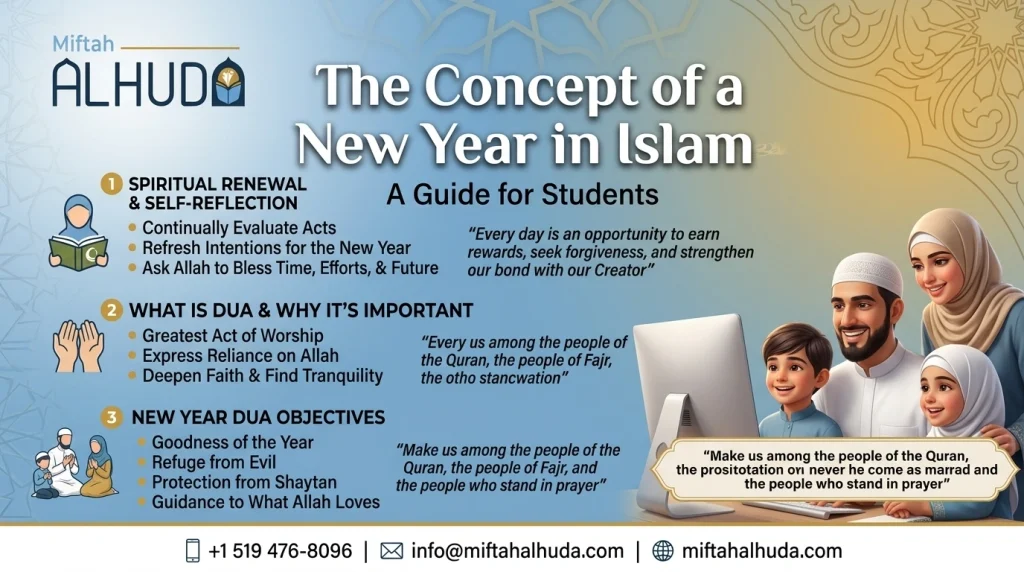
Islam instructs believers to continually evaluate how they act. Whether the transition is to a new Islamic year or a new calendar year, Muslims can use this time for self-reflection and spiritual renewal. Rather of focusing entirely on worldly goals, believers should refresh their intentions and beg Allah to bless their time, efforts, and future endeavors.
The passing of a year reminds us that every day is an opportunity to earn rewards, seek forgiveness, and strengthen our bond with our Creator.
What Is Dua and Why Is It Important?
Dua is one of Islam’s greatest acts of worship. It expresses a servant’s reliance on Allah and recognizes that all success, protection, and blessings come from Him alone.
When we say an Islamic dua for the New Year, we thank Allah for the blessings we received the previous year and ask Him to guide us toward righteousness in the new year. Dua helps Muslims deepen their faith in Allah and find tranquility in times of uncertainty.
Heartfelt Islamic Dua for New Year
As we enter a new year, we turn to Allah with hope, gratitude, and sincere supplication: O Allah, we ask You for the goodness of this year and seek refuge in You from its evil. Make it a year of beautiful compensation after long patience, a year filled with blessings, glad tidings, mercy, and success. O Allah, grant us protection from Shaytan, strengthen our faith, and guide us to what You love and are pleased with. Accept our repentance, forgive our past sins and shortcomings, and never deprive us of Your mercy. O Allah, keep our hearts firm upon guidance, grant us righteousness, ease our difficulties, and bless us with safety, peace, and prosperity throughout this year. Preserve for us our religion, which is the foundation of our affairs, and bless our worldly life in a way that brings us closer to You. Illuminate our hearts, our graves, our paths, our sight, and our insight. Make us among the people of the Quran, the people of Fajr, and the people who stand in prayer during the night. O Allah, make this year a year of forgiveness, relief, and joy, free from sorrow and hardship. Help us repay our debts, enrich us with Your bounty, fulfill our righteous needs in this world and the Hereafter, and allow us to follow the Sunnah of Prophet Muhammad ﷺ. Indeed, You are the Most Forgiving, the Most Merciful, and the Most Generous.
Quranic Supplications for a Blessed New Year
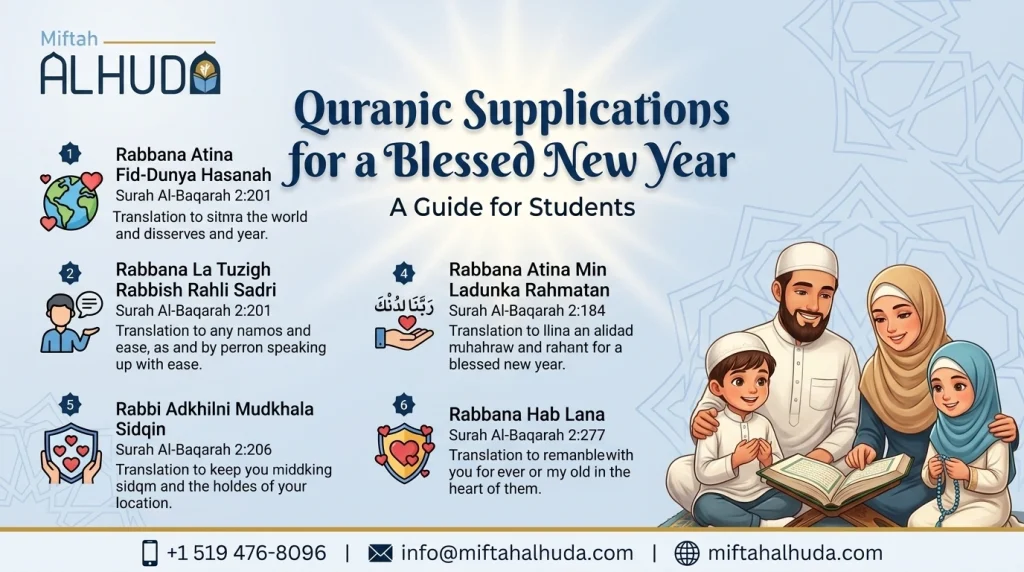
1. Rabbana Atina Fid-Dunya Hasanah (Surah Al-Baqarah 2:201)
“Our Lord, grant us good in this world and good in the Hereafter, and protect us from the punishment of the Fire.”
A comprehensive supplication seeking goodness in both worlds.
2. Rabbish Rahli Sadri (Surah Taha 20:25–28)
“My Lord, expand for me my chest, ease my task for me, untie the knot from my tongue, so that they may understand my speech.”
A beautiful prayer asking Allah for ease, wisdom, and clarity.
3. Rabbana La Tuzigh Quloobana (Surah Aal-Imran 3:8)
“Our Lord, do not let our hearts deviate after You have guided us. Grant us mercy from Yourself. Indeed, You are the Bestower.”
A powerful dua asking Allah to keep hearts firm upon guidance.
4. Rabbana Atina Min Ladunka Rahmatan (Surah Al-Kahf 18:10)
“Our Lord, grant us mercy from Yourself and prepare for us guidance in our affairs.”
A strong supplication for Allah’s mercies, direction, guidance, and blessings during the new year.
5. Rabbi Adkhilni Mudkhala Sidqin (Surah Al-Isra 17:80)
“My Lord, let me enter with sincerity and truth, and let me exit with sincerity and truth, and grant me from Yourself a supporting authority.”
A lovely supplication for fortunate beginnings, success in new efforts, and perseverance on the correct road.
6. Rabbana La Tu’akhidhna In Nasina Aw Akhta’na (Surah Al-Baqarah 2:286)
“Our Lord, do not impose blame upon us if we forget or make a mistake. Our Lord, and lay not upon us a burden like that which You laid upon those before us.”
A thorough supplication for grace, ease, compassion, and release from life’s burdens.
7. Rabbana Hab Lana Min Azwajina Wa Dhurriyyatina Qurrata A’yun (Surah Al-Furqan 25:74)
“Our Lord, grant us from among our spouses and offspring comfort to our eyes and make us an example for the righteous.”
A profound supplication for family happiness, righteous children, and a faith-filled home.
Benefits of Making Dua at the Beginning of a New Year
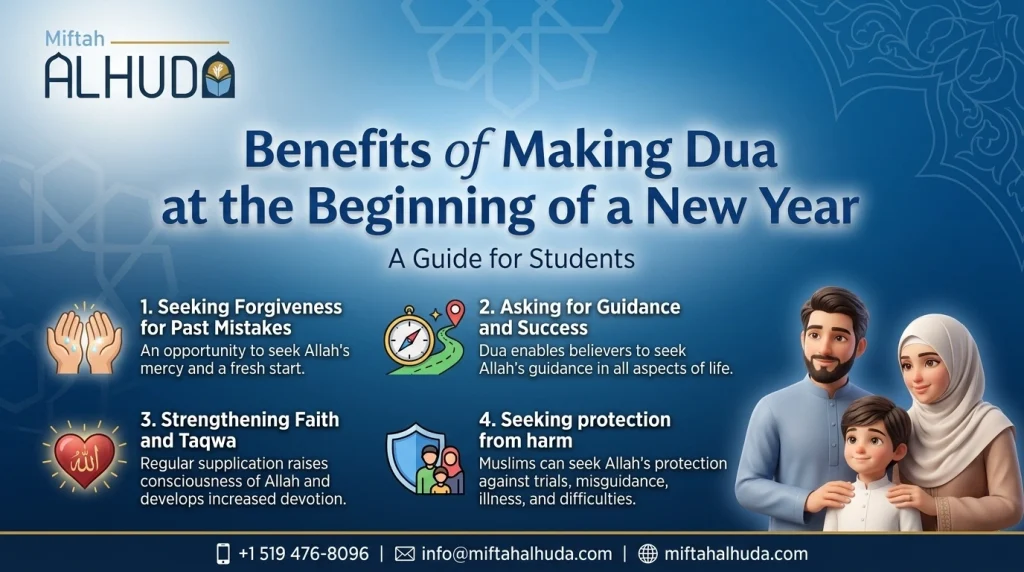
1. Seeking Forgiveness for Past Mistakes
Every believer made mistakes. The beginning of a new year is an excellent opportunity to seek Allah’s mercy and a fresh start.
2. Asking for Guidance and Success
Life is full of decisions and challenges. Dua enables believers to seek Allah’s guidance in all aspects of life.
3. Strengthening Faith and Taqwa
Regular supplication raises consciousness of Allah and develops increased devotion.
4. Seeking protection from harm
Muslims can seek Allah’s protection against trials, misguidance, illness, and difficulties throughout the year.
Best Times to Make Dua During the New Year
-
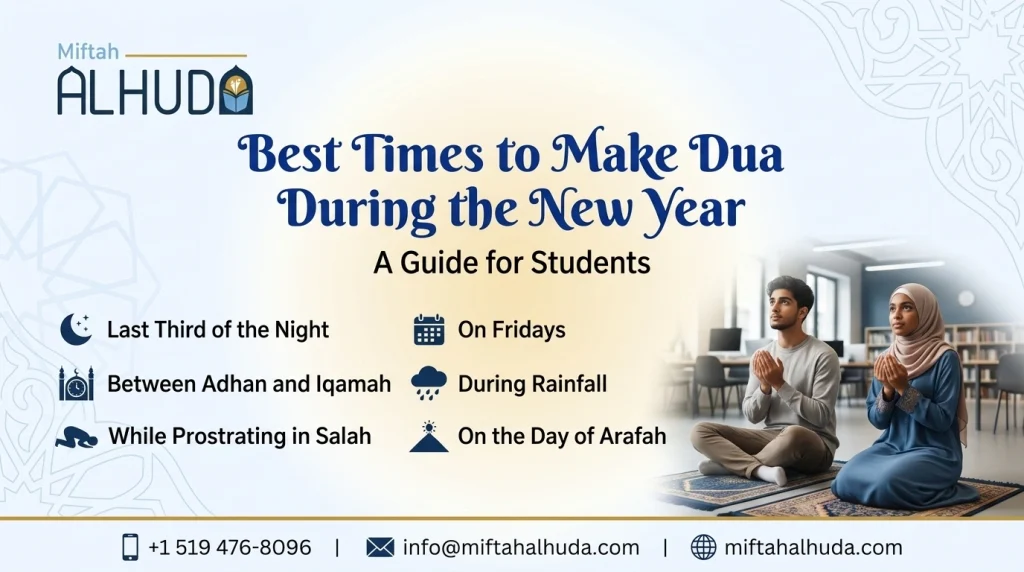
During the Last Third of the Night
This is one of the most favorable times for supplication. The believer can stand in prayer and beg Allah for all his worldly and spiritual needs.
-
Between the Adhan and Iqamah
It is strongly advised to make dua during the period between the call to prayer and the commencement of prayer.
-
While Prostrating in Salah
Prostration is one of the closest times a servant has with Allah.
-
Before Saying Salam in Prayer
This is another good moment for personal supplications.
-
On Fridays
Fridays have a specific hour where Allah accepts supplications.
-
While Fasting and Before Breaking the Fast
A fasting person’s supplication is extremely valuable and meaningful.
-
During Rainfall
Rain is a time of mercy, making it an ideal time for heartfelt supplication.
-
On the Day of Arafah
One of the greatest days to make duas and ask Allah for mercy.
-
While Traveling
Travelers are encouraged to make more supplications because their duas have special status.
Essential Manners of Making Dua
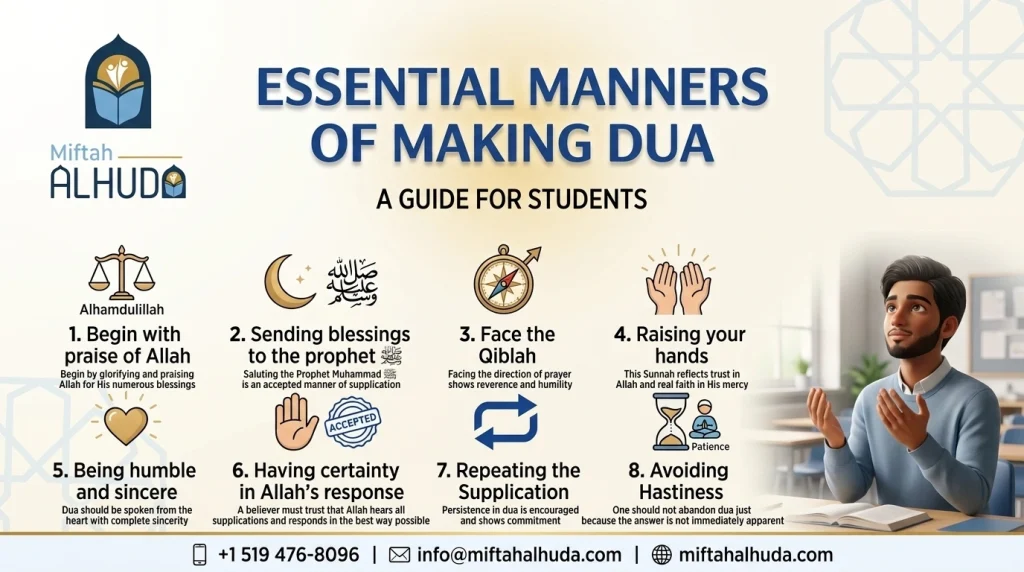
1. Begin with praise of Allah
Begin by glorifying and praising Allah for His numerous blessings.
2. Sending blessings to the prophet ﷺ
Saluting the Prophet Muhammad ﷺ is an accepted manner of supplication.
3. Face the Qiblah
Facing the direction of prayer shows reverence and humility.
4. Raising your hands
This Sunnah reflects trust in Allah and real faith in His mercy.
5. Being humble and sincere
Dua should be spoken from the heart with complete sincerity.
6. Having certainty in Allah’s response
A believer must trust that Allah hears all supplications and responds in the best way possible.
7. Repeating the Supplication
Persistence in dua is encouraged and shows commitment.
8. Avoiding Hastiness
One should not abandon dua just because the answer is not immediately apparent.
Setting Spiritual Goals Alongside Your Dua
A meaningful Islamic dua for New Year should be accompanied by achievable spiritual aspirations.
- Salah is getting better.
- Continue reading the Quran.
- Improving Charity and Family Relationships.
- Making Worship Consistent.
These goals help transform supplications into lasting positive change.
The Relationship Between Dua and Positive Change
Dua is not a substitute for effort. Muslims are instructed to trust Allah while actively carrying out beneficial acts. When heartfelt supplication is accompanied with constant effort, believers achieve spiritual growth and a stronger reliance on Allah.
Throughout the year, retaining hope, patience, and appreciation strengthens faith and connects hearts to their Creator.
Islamic New Year Greetings in Canada and the USA
Many Muslims in Canada and the United States welcome the New Year by sharing emotional duas and good wishes while adhering to Islamic principles. Common greetings are, “May Allah bless your year with faith, peace, and barakah” and a “May Allah guide you to all that is good in the coming year.” This approach enables Muslims to spread positivity and strengthen social connections while remaining focused on faith, thankfulness, and spiritual development.
Discover Travelling Dua in Islam how invoking Allah’s protection and blessings can transform your journey into a peaceful, faith-filled experience.
Whether you are setting off on a long flight, heading out on a road trip, or commuting every day, learning the Travelling Dua connects you to a timeless Sunnah that brings safety, barakah, and peace of mind.
Read the full guide to discover:
-
The Authentic Meaning: Understand the powerful words and spiritual significance behind the supplication.
-
Key Spiritual Benefits: Learn how reciting the dua shields you from hardship and elevates your travel into an act of worship.
-
Exact Times to Recite: Master the ideal moments from stepping into your vehicle to returning home to earn continuous rewards.
 [Read the Full Article Now] to equip yourself with the blessings and protection of the Sunnah for your next journey!
Conclusion
An Islamic dua for New Year reminds us that every new year is an opportunity to return to Allah, develop ourselves, and set important spiritual goals. In addition to sincere supplication, receiving real Islamic knowledge can help turn these goals into long-term habits. Miftah Al-Huda Academy‘s Quran and Islamic studies programs help Muslims grow in faith, deepen their worship, and get closer to Allah’s pleasure every year.
Ready to Strengthen Your Faith This New Year?
Make this year the beginning of a deeper connection with Allah through authentic Islamic learning. Join Miftah Al-Huda Academy’s Islamic Studies Courses and learn from qualified teachers who can help you improve your understand Islamic teachings, and build lasting worship habits.
Start with a FREE Trial Class today and discover how personalized online learning can support your spiritual goals throughout the year.
Contact Us
- WhatsApp: +1 519 476-8096
- E-Mail: in**@**********da.com
- Facebook : https://surl.li/yqeyas
- Instagram:https://surl.li/smlfaq
- Youtube: https://surl.li/inbncd
- Tiktok:https://surl.li/ldzmww
Frequently Asked Questions
1. Should I make separate duas for worldly goals and spiritual goals?
You can combine the two, as Islam emphasizes seeking virtue in both this life and afterlife.
2. How can I stay consistent with dua throughout the year?
Relate your supplications to routines like after salah, before sleeping, and during morning and evening adhkar.
3. Can I ask Allah to help me develop better habits during the coming year?
Yes, asking Allah for discipline, consistency, and positive character attributes is an effective form of supplication.
4. How can learning the Quran improve the quality of my duas?
Studying the Quran teaches you Allah’s wonderful supplications, which increases the depth and meaning of your prayers.
5. What are the signs that Allah has answered a dua?
The response may occur immediately, later, in another form, or as a reward in the Hereafter.
6. Can dua change my destiny?
Allah may change things by heartfelt supplication, according to His wisdom.