
It is 4 a.m. on the third night of Ramadan, and you are sitting in the dark, feeding your baby, wondering if you are even allowed to be doing this instead of getting up for suhoor.
Your phone is open to three different fatwa websites. Your baby is asleep on your chest. You still have not decided what you are doing tomorrow.
This is the very time when so many nursing mothers come undone, and it doesn’t get any easier when it’s your second or third kid.
All the instructions on how to fast during Ramadan for nursing mothers keep being passed around in WhatsApp groups and through Instagram posts, but only in bits and pieces. One aunty says that you have to fast no matter what.
The other says you are totally exempt. Yet another one brings up fidyah, assuming everyone knows what that means.
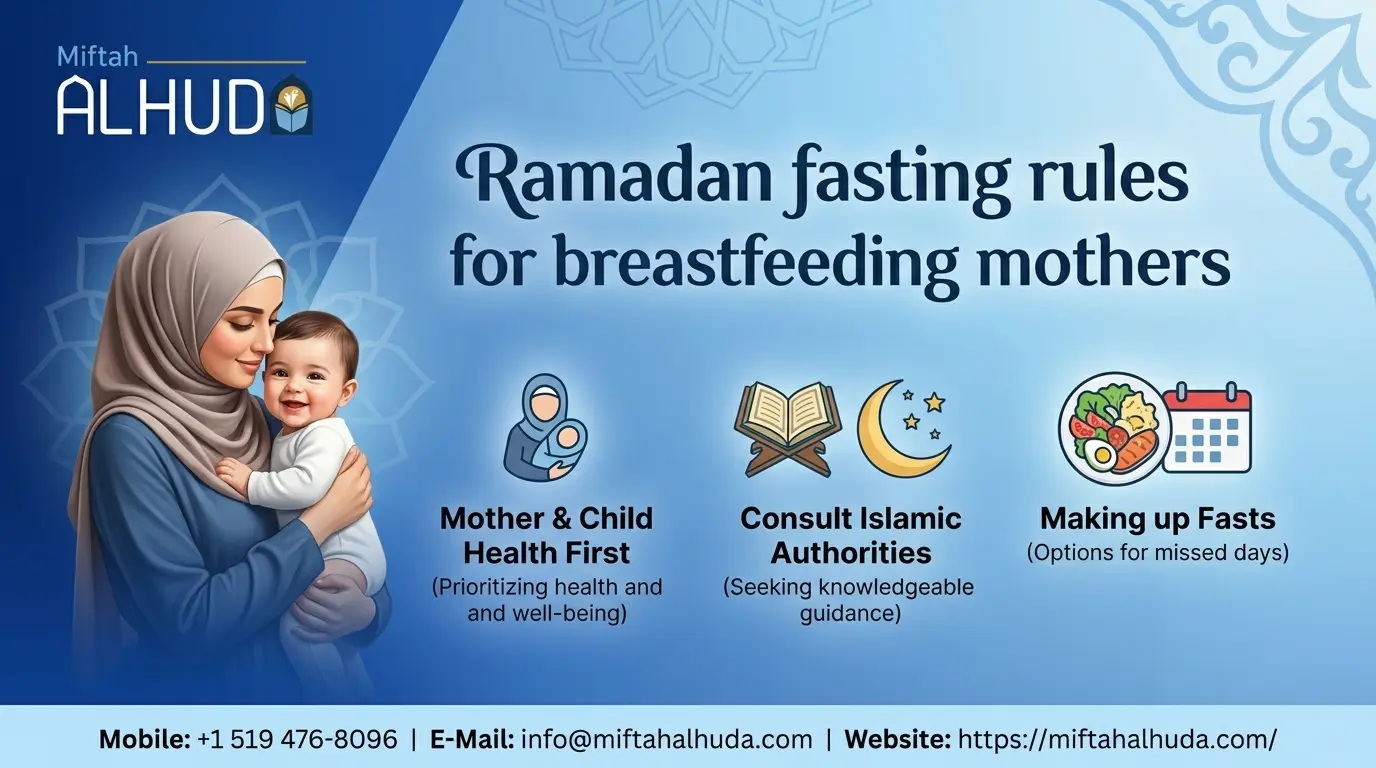
This article puts the pieces together in one place and discusses Ramadan fasting rules for breastfeeding mothers.
It walks through what the Quran and the authentic Sunnah actually say about fasting while breastfeeding, when the exemption applies, what fidyah and qada mean for your situation, and how to protect your body and your milk supply if you choose to fast. No fragments. No guesswork.
The Exemption Nobody Explains Properly
Islam does not leave nursing mothers guessing. The ruling comes from a hadith narrated by Anas ibn Malik al-Ka’bi, in which the Prophet ﷺ said that Allah has relieved the traveler of half the prayer, and has relieved the traveler, the pregnant woman, and the breastfeeding woman of the duty to fast.
Breastfeeding mothers receive special consideration in Islamic law just like travelers and sick persons if they experience difficulty or distress during the fasting period.
There are exceptions from fasting made by the Quran for people unable to fast due to hardship, whereas the Sunnah provides for a specific exception for pregnant and breastfeeding mothers.
To explain this point clearly:
- You do not have to fast in case you have concerns about your health and the wellbeing of your child.
- Just being a breastfeeding mother does not exempt one from fasting automatically. The exception arises out of fears about any possible harm.
- If you feel healthy and strong, and your milk production is not affected, you must fast.
So Should You Actually Fast This Year?
The simple fact is that it depends on the age of your baby, your health status, and how you react physiologically during the initial few days of the month of Ramadan, rather than one-size-fits-all guidelines applicable to all mothers equally.
Some guidelines offered by the scholars include:
- When your child is less than six months old and breastfeeds solely, the risks of fasting are high and need to be taken with caution, ideally after speaking with your doctor or a lactation consultant.
- If your baby is older and already eating solids, your body has more room to absorb the demands of fasting.
- If you notice dizziness, a sharp drop in milk supply, or your baby seems unsettled and less satisfied after feeds, that is a signal to stop, not push through.
- Darul Qasim and several contemporary scholars note that pregnant and breastfeeding women are not automatically exempt.
- They are supposed to fast unless it causes harm for them to do so, in which case taking care of their and the baby’s health is prioritized. It is not a lack of belief but rather an application of the mercy shown by the Prophet ﷺ in the hadith above.
- Others might decide to take the plunge and try out fasting one or two days before Ramadan to see the effect on the amount of milk produced.
It is a matter of personal choice, and consultation with a knowledgeable individual regarding the issue of the fiqh and their medical situation would be appropriate.
Fidyah or Qada: Which One Applies to You
There are three positions among the classical schools of thought.
- If you fear harm to yourself only, or to yourself and your baby together, the majority view is that you must make up the missed fasts later (qada), with no fidyah required.
- If you fear harm to your baby specifically, and not to yourself, some scholars, including many in the Shafi’i school, hold that you owe both fidyah and qada.
A smaller number of scholars hold that breastfeeding women only need to pay fidyah, feeding one poor person for each missed day, without making up the fast at all.
Ibn Abbas, a companion known for his deep knowledge of the Quran, connected this ruling directly to Surah Al-Baqarah 2:184, applying the fidyah verse to pregnant and breastfeeding women who find fasting genuinely difficult.
Because the scholarly opinions branch in different directions, the safest approach for most mothers is to plan for qada and consult a trusted local scholar about whether fidyah also applies in their specific case. This is not an area to guess your way through, especially if you have missed fasts across more than one Ramadan.
Protecting Your Milk Supply If You Choose to Fast
If your doctor has cleared you and you feel strong enough to fast, there are real, practical steps that make a measurable difference to your comfort and your baby’s feeding pattern.
- Keep your breastfeeding schedule the same. Do not stretch out feeds to conserve energy, since irregular nursing is more likely to affect supply than the fast itself.
- Drink at least three liters of fluid between iftar and suhoor, spread out rather than gulped all at once.
- Eat a suhoor that includes protein, healthy fats, and slow-releasing carbohydrates like oats or whole grains, since these keep you fuller and more stable through the day.
- Add roughly 300 to 500 extra calories to your normal intake to match the energy demands of nursing.
- Watch for warning signs: persistent dizziness, dark urine, a headache that will not lift, or a baby with fewer wet diapers than usual. Any of these mean it is time to break your fast and check in with your doctor.
Research on this subject, including data referenced by lactation experts at Johns Hopkins Aramco Healthcare, generally shows that the macronutrient content of breast milk stays fairly stable during fasting.
What can dip are certain micronutrients like zinc, potassium, and magnesium, which is exactly why suhoor quality matters more during Ramadan than any other time of year.
Talk to Someone Before You Decide
No article, including this one, should be the only voice in your decision. The hadith gives you the framework, but your baby’s age, your own medical history, and how your body is actually responding this Ramadan are details only you and the people around you can weigh properly.
At Miftah Alhuda, our Fiqh courses walk through exactly these kinds of everyday rulings, the ones that sound simple until you are the one living them at 4 a.m. with a baby on your chest. Understanding the reasoning behind a ruling, not just the ruling itself, tends to make the decision feel less like guesswork and more like something you can stand behind.
Explore our Fiqh Course to understand these rulings in depth.
Not sure where to start? Book a free trial session and speak with one of our teachers directly.
Contact Us
WhatsApp: +1 519 476-8096
E-Mail: in**@**********da.com
Facebook: https://www.facebook.com/MiftahAlhudaOfficial
Instagram: https://www.instagram.com/miftahalhudaa
Youtube: https://www.youtube.com/@MiftahAl-huda
Tiktok: https://www.tiktok.com/@miftahalhuda00
Frequently Asked Questions
Do breastfeeding mothers have to fast in Ramadan?
Not if fasting would harm you or your baby. If you are healthy and your milk supply is unaffected, fasting remains obligatory.
What if I am scared fasting will lower my milk supply, even without proof?
A genuine, reasonable fear of harm is enough to qualify for the exemption. You do not need a medical diagnosis to break your fast.
Do I pay fidyah, make up the fast, or both?
It depends on whether your fear was for yourself, for your baby, or both. Scholars differ, so ask a trusted local scholar about your specific case.
How much is fidyah for one missed day?
Traditionally, the equivalent of feeding one poor person a full meal, or its value in food, for each missed day.
Can I fast some days and skip others during the same Ramadan?
Yes. You can assess it day by day based on how you and your baby are doing.
Will fasting affect the nutritional quality of my breast milk?
Studies suggest the main macronutrients stay stable, though some micronutrients can dip, which is why suhoor nutrition matters.
The Question Worth Sitting With
Every Ramadan, a new wave of nursing mothers will search these same terms at the same late hour, looking for permission they already technically have, just not the clarity to act on it. The rulings exist. The mercy is documented in the Quran and the Sunnah. What is often missing is someone walking a mother through it without rushing her to a conclusion.
Maybe the real question is not whether you are allowed to skip a fast. It is whether you have permitted yourself to make that decision without guilt, the same way Allah already has.
Learn the fiqh behind everyday decisions like this one with our Islamic Courses.