
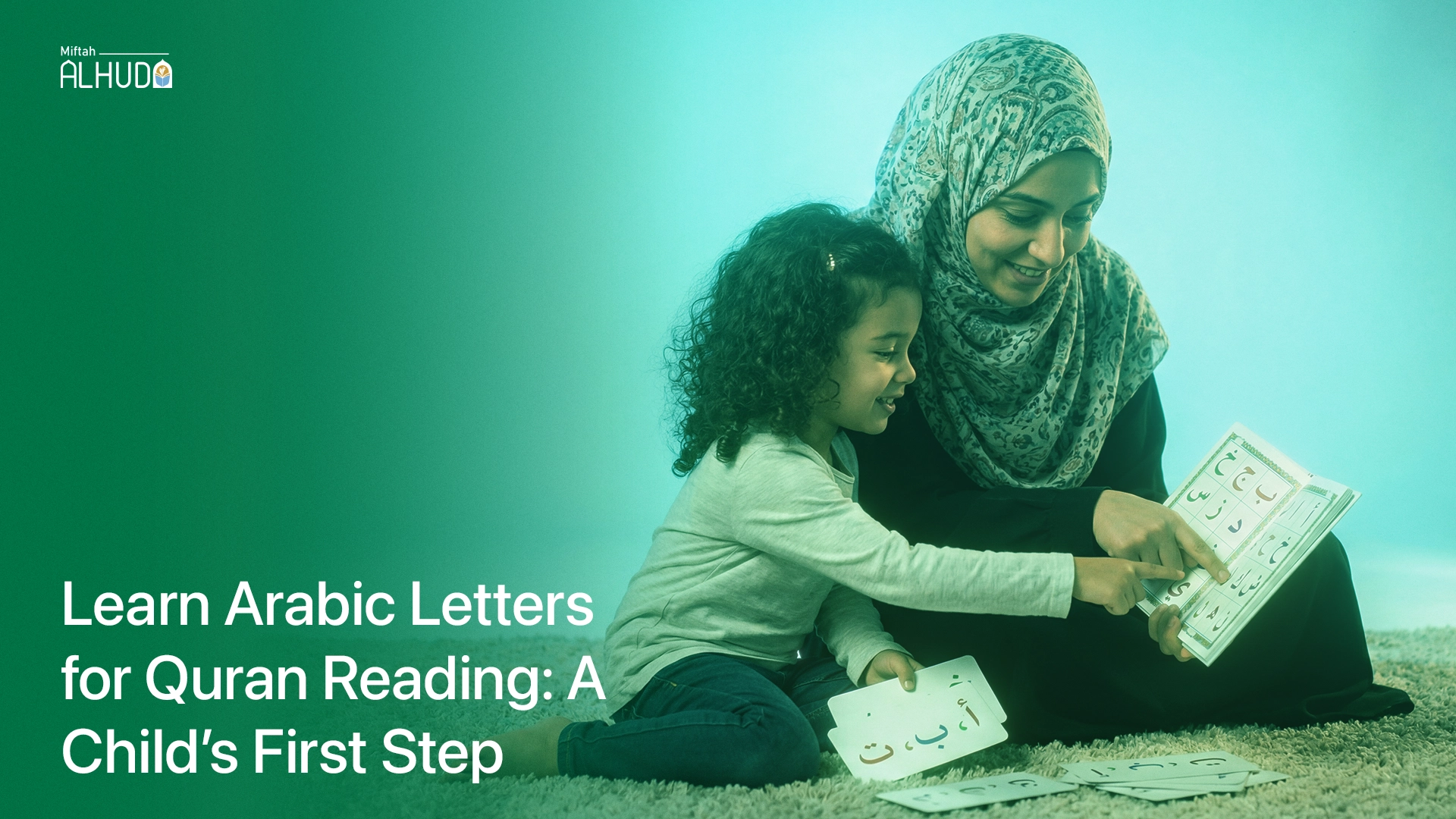
If you want your child to learn Arabic letters for Quran reading, starting with the right guidance is essential. The journey of Quran learning is not just about recognizing letters, it’s about nurturing a deep love for Tilawah, building Iman, and connecting your child to Allah and His Deen from an early age.
Learning the Arabic alphabet correctly sets the foundation for proper Tajweed, ensuring your child can recite the Quran beautifully and confidently. When children begin their Quran journey with care, they not only learn the letters but also develop an appreciation for Salah, Ibadah, and the spiritual meanings behind the words of the Mushaf.
Starting early with Arabic letters for Quran reading is more than an educational step, it’s a spiritual investment in your child’s Akhirah, helping them grow with love for the Quran and a strong connection to Taqwa.
The Full Arabic Alphabet for Quran Reading
The Arabic alphabet consists of 28 letters, each with a unique shape and sound. Learning these letters is the first step for children to learn Arabic letters for Quran reading accurately and with proper Tajweed.
Here is the complete Arabic alphabet chart with simple examples from the Quran and common Islamic phrases to help children connect letters to meaningful words:
| Letter | Name | Example Word |
| ا | Alif | الله (Allah) |
| ب | Ba | بسم (Bismillah) |
| ت | Ta | توبة (Tawbah) |
| ث | Tha | ثواب (Thawab) |
| ج | Jeem | جنة (Jannah) |
| ح | Ha | حلال (Halal) |
| خ | Kha | خير (Khair) |
| د | Dal | دُعاء (Dua) |
| ذ | Dhal | ذِكر (Dhikr) |
| ر | Ra | رسول (Rasul) |
| ز | Zay | زكاة (Zakat) |
| س | Seen | سلام (Salam) |
| ش | Sheen | شكر (Shukr) |
| ص | Sad | صدق (Sadaqah) |
| ض | Dad | ضياء (Diyaa) |
| ط | Ta | طه (Taha) |
| ظ | Dha | ظهر (Zuhur) |
| ع | Ain | عِلم (Ilm) |
| غ | Ghayn | غفران (Ghufran) |
| ف | Fa | فرحة (Farhah) |
| ق | Qaf | قرآن (Quran) |
| ك | Kaf | كتاب (Kitab) |
| ل | Lam | لطف (Lutf) |
| م | Meem | محمد (Muhammad) |
| ن | Noon | نور (Nur) |
| ه | Ha | هدى (Huda) |
| و | Waw | وصية (Wasiyyah) |
| ي | Ya | يمين (Yameen) |
How to Use the Alphabet Chart
Gradual introduction of letters with simple letters of Alif, Ba, Ta.
Read all the letters distinctly, and with emphasis on Makharij (points of articulation).
Relate letters with easy Quranic words or Duas to allow learning to be meaningful.
To strengthen recognition, encourage the children to draw letters on paper or to use interactive applications.
Children at Miftah Alhuda, Nour Al Bayan for Kids acquire all these 28 letters through the interactive lessons, fun activities and Quranic examples, and the foundation to read Quran throughout their life.
How Children Learn Arabic Letters for Quran Reading?
It is also a basic and thrilling process of teaching children to learn Arabic letters to read the Quran. At this level, children do not only know the letters, but they start to know how to pronounce letters properly, which are the keys to the right Tajweed and sure Tilawah.
1. The acknowledgment of Arabic Letters (Huruf).
Children begin to learn to recognize every Arabic letter, or Huruf, by its shape and sound. This also involves the identification of letters in single letters and in the initial, middle, and end of word.
This process is interesting and interactive due to visual aids, flashcards and colored charts. Early mastery of letters would mean that children are able to read the Mushaf correctly and easily.
2. Pronunciation and Phonetics.
It is important that Quran is recited with the correct pronunciation. The children are taught Makharij (points of articulation of every letter) as well as the Sifaat (characteristics) so that they can recite perfectly.
This careful attention helps children avoid common mistakes that could change the meaning of words, keeping their Tilawah pure and pleasing to Allah.
3. Connecting Letters to Words
When letters and sounds are mastered, children start to combine them into simple words. They say short Quranic words, phrases and even familiar Duas through practice.
This level strengthens their identity individuals and pronunciation ability but also brings the fun of reading actual Quranic text. Simple words such as Bismillah, Alhamdulillah or Allah names are learnt and give confidence and children are urged to love Allah.
In Miftah Alhuda, we have structured the classes in such a way that this process becomes interactive, fun and spiritually fulfilling. Children develop gradually with the help of strong teachers through attractive approaches, which insulate the reading abilities along with bonding with Deen.
Interactive Methods to Make Learning Fun
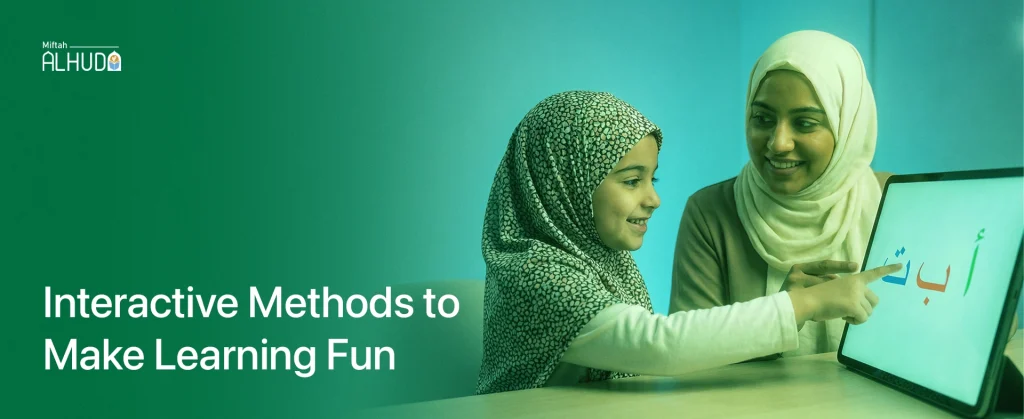
There is no need that learning to read the letters used in the Quran must be a boring and tense process. At Miftah Alhuda, we are of the opinion that the kids learn most when the lessons are interactive and enjoyable, and the lessons carry spiritual significance.
1. Fun Learning Tools
Children are good learners who react to visual and fun activities. They identify the letters by using colored Arabic charts, flashcards, and letter puzzles.
Even very simple games, such as matching letters to their sounds or following letters with their fingers, make the process of learning very exciting, and, at the same time, make a person love the words of Allah.
2. Songs and Rhymes
It is a fun but also effective way to learn by singing the Arabic alphabet. This is the best way of familiarizing kids with Bismillah, Alhamdulillah and SubhanAllah and makes them involved and would promote repetition which is an important aspect of mastering pronunciation and Tajweed.
3. Storytelling with Quranic Words
Stories of all kinds are loved by the children and it is easy to connect the letters with the Quranic words or short phrases that the children retain and learn better.
As an example, learning letters by using words such as Jannah, Akhirah or Salah connects learning with significant ideas in Deen and a spiritual association with the Quran.
4. Interactive Online Classes
Learning is made personalized and flexible with the help of online platforms. Children are also able to communicate with professional teachers in a small classroom setting, seek clarifications, and get feedback instantly.
Under the support of the teachers in Miftah Alhuda, children are motivated, confident and regular in their studies enjoying the advantages of Tilawah, Tafsir with Ibadah at the convenience of their homes.
Through the use of visual, auditory, and interactive techniques, children not only obtain the knowledge of letters used in reading the Quran in an efficient way but also get to love the Quran in a lifelong manner.
Tips for Parents to Support Their Child’s Learning
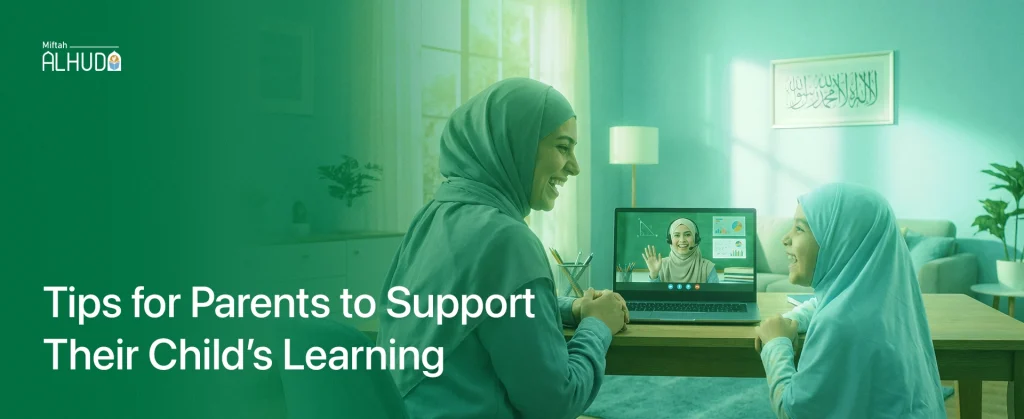
Parents are very crucial in making their children familiar with reading Arabic letters of Quran. The learning process can be enjoyable, effective and spiritually rewarding with your guidance, encouragement and participation.
1. Practice Together Daily
Read Arabic letters and simple Quranic words to your child after Salah or when at home quiet time. The repetition of such words as Bismillah, Alhamdulillah, and SubhanAllah supports the right pronunciation and has an association between the learning process and everyday worship (Ibadah).
2. Create a Positive Learning Environment
Create an uninterrupted learning environment. Praise children such as MashaAllah and applaud little achievements. Positive atmosphere develops confidence and affection towards the Quran.
3. Use Interactive applications and tools.
Integrate classroom instruction with interactive applications such as Quran alphabet applications, colorful charts, and flashcards. Interactive learning influences the child to remember what has been learned and makes the process enjoyable and thus he will have a tendency of doing it regularly.
4. Be Patient and Consistent
It may be a slow process to learn the letters. Short and frequent practice sessions instead of long and overwhelming lessons. When errors occur, encourage your child to patiently continue by using words such as InshaAllah in order to encourage patience and persistence.
5. Connect Learning to Spiritual Concepts
Learn letters and words in basic Quranic words, Duas, or Allah names. Connecting the concept of Deen, Tilawah, as well as the idea of Jannah or Akhirah, brings a spiritual bond and a long-term affection towards the Quran.
6. Enroll in Structured Classes
While home practice is important, professional guidance ensures children learn letters correctly and develop proper Tajweed from the start. Programs like Miftah Alhuda provide structured lessons, interactive teaching, and expert teachers who make learning Arabic letters both fun and spiritually enriching.
By combining daily practice, patience, interactive tools, and expert guidance, parents can help their children learn Arabic letters for Quran reading confidently while nurturing their love for Allah, the Quran, and Deen.
FAQs
1. Why is learning Arabic letters important for Quran reading?
Learning Arabic letters is the first step in reading the Quran correctly. It lays the foundation for proper Tajweed, correct pronunciation, and understanding of Quranic words. Early mastery helps children recite beautifully, confidently, and with love for Tilawah.
2. How many letters are there in the Arabic alphabet for Quran reading?
The Arabic alphabet consists of 28 letters. Each letter has a unique shape and sound, and recognizing them properly is crucial for reading the Quran accurately and applying Tajweed rules.
3. How do children learn Arabic letters for Quran reading?
Children start by recognizing each letter (Huruf), learning its pronunciation (Makharij), and understanding its characteristics (Sifaat). They gradually combine letters to form words, simple Quranic phrases, and Duas, connecting reading with meaning and spirituality.
4. Can non-Arabic speaking children learn to read Quran letters?
Yes. With interactive lessons, visual aids, color-coded charts, and online guidance, children of all language backgrounds can learn Arabic letters effectively and confidently.
5. What are some effective methods for teaching Arabic letters to kids?
Interactive tools: Colored charts, flashcards, puzzles
Songs and rhymes: Helps memorize letters and short Quranic words
Storytelling: Connect letters to Quranic words or meaningful concepts
Online classes: Personalized lessons with professional teachers for instant feedback
6. How can parents support their child in learning Arabic letters?
Practice daily in short, consistent sessions
Create a positive learning environment with praise and encouragement
Use interactive applications and tools at home
Connect learning to spiritual concepts like Duas and Allah’s names
Enroll in structured classes for professional guidance
7. At what age should children start learning Arabic letters for Quran reading?
Children can start as early as 3–5 years old. Early learning takes advantage of their natural curiosity and ability to absorb new sounds, building a strong foundation for reading the Quran and practicing Tajweed.
8. How long does it take for children to learn the Arabic alphabet?
The duration varies depending on the child’s age, pace, and consistency of practice. With daily short sessions, interactive lessons, and expert guidance, most children can recognize and pronounce all letters confidently in a few months.
Conclusion
Learning Arabic letters is the first and most important step for any child who wants to read the Quran beautifully and correctly. By starting early, children not only master the Arabic alphabet but also develop a deep love for Tilawah, strengthen their Iman, and build a lasting connection with Allah and His Deen.
For parents seeking the best start for their child, Miftah Alhuda Nour Al Bayan for Kids offers expert teachers, interactive classes, and a spiritually enriching environment.
Enroll your child today and watch them take their first step toward beautiful Quran recitation, lifelong love for Allah’s words, and a strong foundation in Deen, Salah, and Ibadah.