
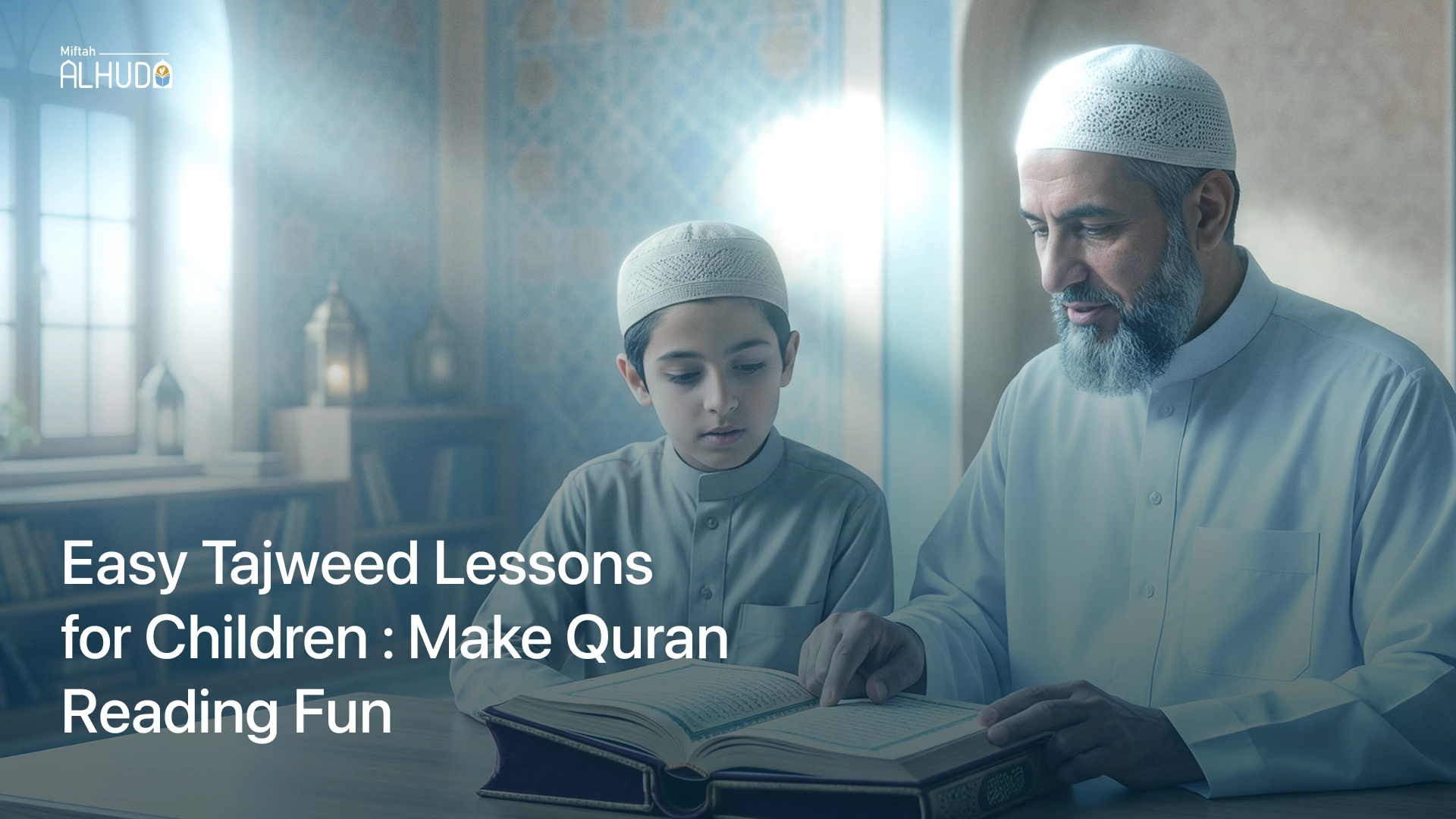
Suppose you have a child and find him opening the Mushaf, and reciting the Quran in the same melody with the same sound and pronouncing each letter and each word with the same correctness and with the same harmony as a perfect Qari. This is the strength of Tajweed lessons for children: the science of making Quranic recitation beautiful in a manner that develops the heart and the mind.
Tajweed is not just rule adherence, but is a gift of God that helps in safeguarding the purity of Allah’s words. Tajweed in an easy language to be understood by kids means to read the Quran accurately and beautifully so that all Tilawah they are reciting are the reflection of the Quran in its original state as it was revealed to the Prophet ﷺ.
To most children who are raised in non-Muslim countries, the Quranic recitation may be difficult to learn. Arabic words and characters might not be familiar, and minor errors can alter meanings.
This forms the gap where tajweed lessons among children fill the gap, in that there is a sound foundation on pronunciation, rhythm, and reverence towards the Quran.
Early Tajweed builds not just the Iman of a child, but also gives him or her confidence in Salah, Ibadah, and even in meeting the community where he/she may or may not have to recite aloud.
Children with proper instructions can not only read the Quran correctly but also fall in love with it and have a lifetime relationship with Allah and his words.
Why Start Early? The Benefits of Tajweed for Children?
The benefits of introducing tajweed lessons for children at a young age are unbelievable, both academically and spiritually. Like the Prophet ﷺ encouraged teaching children the Quran at a young age, studies and experience demonstrate that little minds are more welcoming to learning languages, sounds, and patterns.
1. Linguistic Precision: The Golden Age of Learning
Children have an easy time absorbing sounds as compared to adults. This period of learning the alphabet enables them to learn how to pronounce the Arabic letters and the fine distinction between similar sounds, like the distinction between Qalb (heart) and Kalb (dog).
Children can also achieve the best articulation with early practice at Tajweed, and thus, their Tilawah becomes beautiful as well as correct.
2. Saving the Meaning: Each Letter Counts.
It is possible to alter the meaning of a word by the slightest error in pronunciation. As a result of tajweed Lessons for children, your child is taught to give due respect to every letter of the Quran to ensure the divine word is left just as Allah sent it. This enhances their comprehension of Deen, a firmer Iman, and a love of the Quran.
3. Developing Self-efficacy: Building Confidence in Your Child.
Not only Tajweed is a matter of recitation, but italso improves self-esteem. Children are proud to speak properly and recite in Salah or during other events in the community when they pronounce letters correctly and recite without hesitation.
This trust does not just stop at Quranic studies, as they are taught to be disciplined, focused, and given the pleasure of learning.
Miftah Alhuda Quran Classes and Kids allows parents to be sure their children enter the program at an early age within organized and well-structured program to teach children that combines fun, faith, and proper recitation.
Tajweed is taught to the children through interactive classes, individual instruction, and highly qualified teachers, making it seem natural and enjoyable, and something that is of great significance.
The Big 5 Tajweed Rules for Beginners
When children begin learning about tajweed, it is better to pay attention to several basic rules that will ensure that recitation is not only beautiful but also right. The following are the 5 basic rules that must be learned first:
1. Makharij (Articulation Points)
Makharij are the points in the mouth and throat, where each Arabic letter has its origin. Training children to recognize these positions will guarantee that they will pronounce letters in the right way, starting with the deep ones of the throat up to the gentle ones of the tongue.
Knowing Makharij the children can guard against errors that are committed frequently and can put a solid background of consistent and valid Tilawah.
2. Ghunnah (Nasalization)
When doubled or bearing a shaddah, ghunnah is the soft nasal sound in such letters as Noon (ن) and Meem (م), which is represented. Through Ghunnah, children receive training in providing the Quran with the right rhythm and flow, turning ordinary recitation into a melodious experience that echoes the beauty of the Prophet’s ﷺ Tilawah.
3. Qalqalah (The Bouncing Sound)
Qalqalah produces a slight bouncing effect on some letters, such as the letters Ba (ب), Dal (د), and Qaf (ق) when they come in a specific place.
Children are fond of this rule, as it gives the letters a kind of vivacity and playfulness, as a little echo. Qalqalah helps the children to pay attention to all the letters, and their recitation becomes perfect.
4. Madd (Elongation)
Madd not only teaches children the places where they have to prolong the vowel in the Quran, but also the duration. To recite the verses properly and to keep the rhythm of Tilawah, it is necessary to elongate.
Studying the Madd at a young age enables the child to read fluently in the Mushaf and avoid some errors that alter meanings.
5. Heavy vs. Light Letters
There are hard sounds and soft sounds of Arabic letters (heavy) and (light) (Tafkheem). The identification of such differences is the key to the correct pronunciation and the beautiful recitation.
This is due to teaching kids to differentiate between deep, strong sounds and soft, gentle sounds, which develops confidence in them and makes their recitation respectful of the text of the Quran.
With these five rules in mind in tajweed classes for children, parents are able to provide their children with a good foundation of Quranic recitation. Such programs as Miftah Alhuda Quran lessons for Kids make all these rules entertaining and interactive by means of games, visuals, and simple explanation of the rules in order to make the children not only learn but also enjoy the process of learning the Quran.
Tajweed: How to make it fun Using Modern Teaching Methods
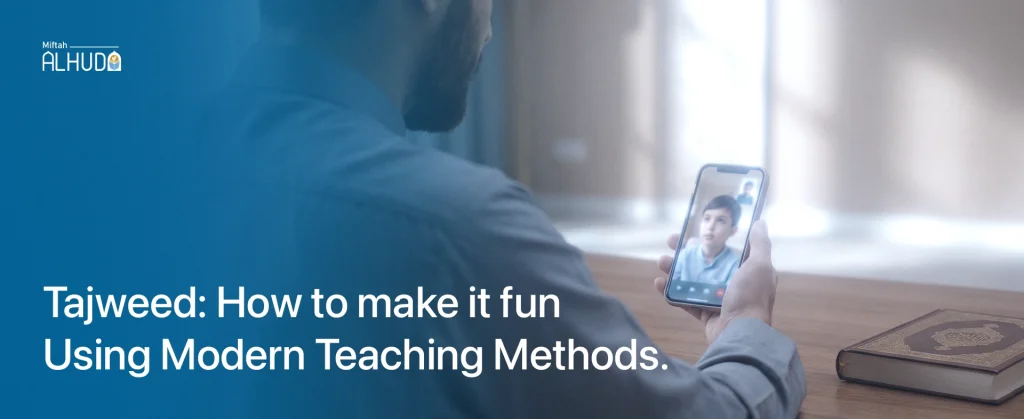
Tajweed does not necessarily need to be a rigorous, rules-intensive process. Tajweed lessons taught in a creative, interactive manner can turn into a fun and motivating exercise that can make kids eager to pick up their Mushaf and repeat the Quran daily.
1. Gamification: Learning through Play.
Playing games makes practice sound like playtime! Children are eager to learn with the help of such activities as Tajweed Bingo, flashcards, and digital badges. Any right pronunciation will reward them, and they will strive to continue improving and enhance their knowledge of Makharij, Ghunnah, and Madd.
2. The “Mirror Method”: See and Learn
Some letters may pose a challenge when it comes to pronouncing them. By using a mirror, it is possible for these kids to see how their tongues and mouths move as they recite, making it simpler for those who find pronouncing some letters challenging.
3. Storytelling and Analog
Lessons are retained in children’s memory if they are made fun and practical. For example, one can describe Qalqalah as “the ball bouncing” or Ghunnah as “humming with the nose.” Such simple explanations make Tajweed rules easy to follow and remember, and learning practice recitations becomes an interesting journey.
4. The Power of Imitation
Children learn in the best possible way when they can hear and repeat. Child-friendly reciters and listening to correct Tilawah will enable kids to absorb the correct sounds instead of memorizing the rules. This will help develop proper pronunciation and affection towards the Quran.
5. Engaging Tools and Technology
Nowadays, online Quran learning programs incorporate various interactive tools such as multimedia, quizzes, and graphics to excite learning processes. Children can learn at home while being closely monitored by qualified tutors who know their pace.
In Miftah Alhuda Quran lessons for Kids, the modern approaches are integrated with the child-centered method that ensures learning and play are well-balanced.
The children are taught not just the rules of Tajweed, but they will also instill within themselves a genuine love for the Quran, enhance their Iman, and appreciate the entire recitation process.
Top Resources for Parents
Helping your child with tajweed at home can go a long way in your child’s learning. The following are some of the top resources you can use to reinforce learning in an entertaining and productive manner:
1. Books
Noorani Qaida: This is a traditional starter used for children when teaching the Arabic alphabet, pronunciation, and basic rules of Tajweed.
Tajweed Untangled: A simple, visual guide to explain the rules of Tajweed to kids.
Color Coded Quran: Aids children to recognize the Tajweed rules instantly and hence reading the Quran correctly with greater efficiency.
2. Apps
TajweedMate: The software provides educational lessons, audio examples, and quizzes to teach kids correct pronunciation.
Quran Games: Engaging games to practice recitation rules like Makharij, Ghunnah, and Qalqalah to keep children motivated
Interactive Tajweed Videos: Many applications have child-friendly video tutorials where kids get to listen, imitate, and practice how to recite.
3. Visual Aids & Tools
Mirrors for Tongue Placement: Assists children in observing the correct positioning of the tongue to form difficult letters.
Flashcards and Reward Charts: Make learning fun and interactive with the use of flashcards and reward charts.
Recitations by Child-Friendly Qaris: Kids can learn best through listening and following the example of others, thus imbibing the rhythm and pronunciation properly.
Through a systematic learning approach in a program such as Miftah Alhuda Quran lessons for children, parents can give their children a great learning experience by using the mentioned aids to create a favorable atmosphere.
Children will not only enhance their Tajweed skills but will also develop a strong love for the Quran and every aspect of their relationship with the words of Allah.
Frequently Asked Questions
1. How long will it take for a child to learn Tajweed?
The pace of learning depends upon the age of the child and how often he/she is practicing. With regular training and proper attention, children can learn the fundamentals of Tajweed within a short period of time.
It is essential to note that the art of Tajweed is a skill acquired throughout a lifetime of devotion and practice.
2. Must my child know Arabic first?
No, children do not need to be fluent in the Arabic Language before starting any Tajweed Class. Courses such as Miftah Alhuda Quran Classes for Kids begin with basic foundations in the Arabic lettering system, Makharij, as well as basic Tajweed rules, before advancing into more complex rules. Learning this happens hand in hand with Tajweed.
3. How can I, if I don’t know Tajweed, help my child?
You don’t have to be experts! You can promote daily practice through structured lessons. Listen to audio recitations of child-friendly Qaris.
Use apps, flashcards, and color-coded Qurans. Celebrate milestones with rewards and positive reinforcement.
4. Can my child be taught Tajweed as well as Hifz?
Totally! The program combines Tajweed and Hifz so that your child not only memorizes the Quran correctly, but also comprehends the rules of Quranic Recitation, the meaning of verses, and the values of Akhlaq and Tawq.
Conclusion
Teaching your child Tajweed is more than just helping them read the Quran correctly; it’s an investment in their Iman, Taqwa, and connection to Allah that will last a lifetime.
By enrolling in tajweed lessons for children, parents give their children the gift of beautiful Tilawah, confidence in Salah, and a deep love for the Quran that will guide them through both Dunya and Akhirah.
Starting early ensures that children develop proper pronunciation, understand the meanings of the verses they recite, and embody the values of Akhlaq, Ibadah, and Sunnah in their daily lives. With the right guidance, Tajweed becomes not just a skill but a joyful and meaningful part of their spiritual journey.
Give your child the gift of beautiful Quran recitation today! Enroll them in Miftah Alhuda Quran Classes for Kids and watch as they grow in faith, confidence, and love for Allah’s words.
Book a trial class now to get started on a rewarding journey of learning, understanding, and delighting in the Quran.